
Florida's Uninvited Wildlife Houseguests
Raccoons, rats, armadillos, bats, and more! Learn about which wildlife shows up in Florida homes, the damage they cause, and what to do about it.
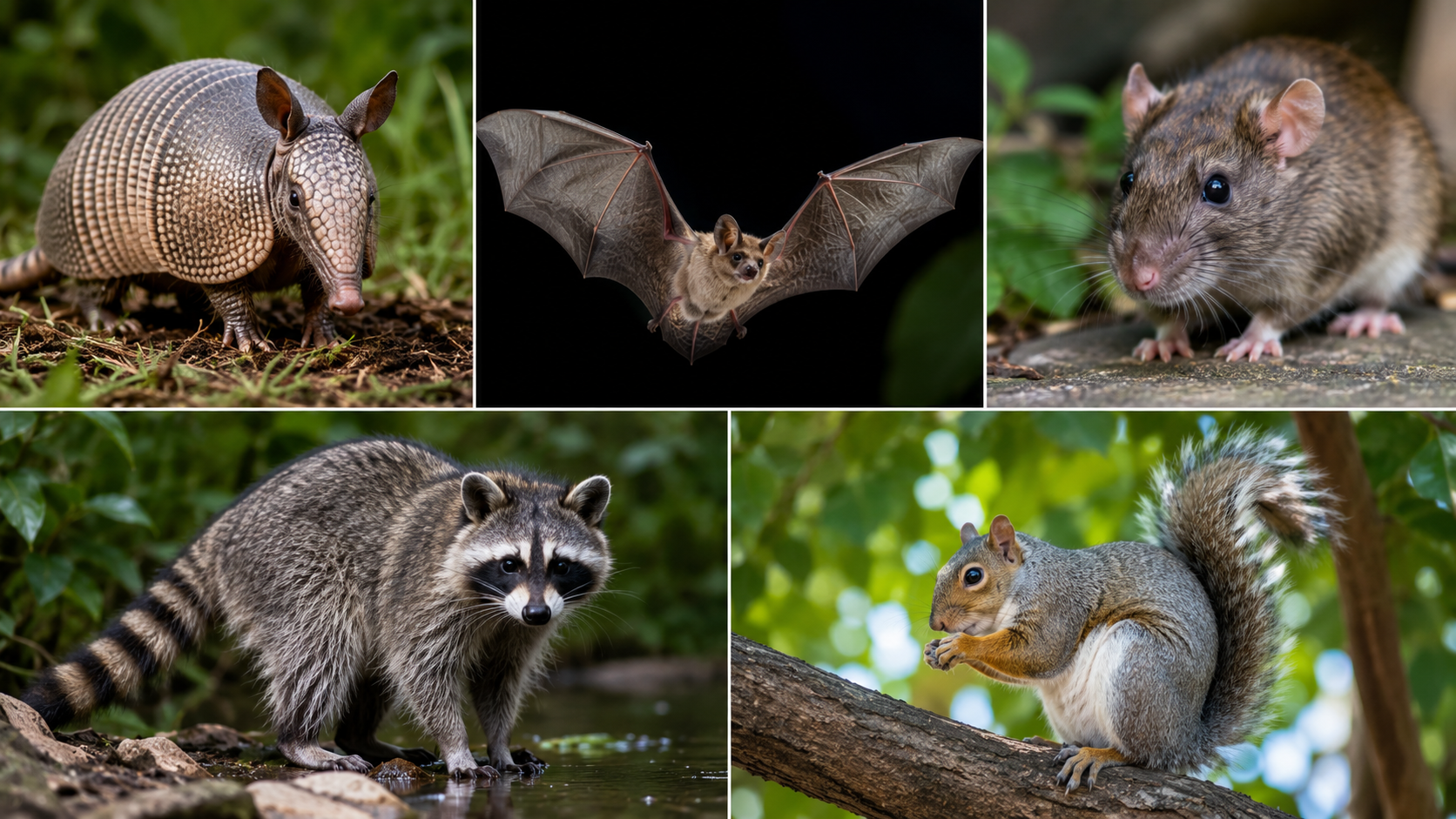
Florida is a great place to live — but wildlife thinks so too. Raccoons in the attic, rats in the walls, armadillos digging up the yard — these problems happen to Tampa Bay homeowners all the time. And they can get worse fast if you don't catch them early.
This guide covers the most common wildlife found in and around Florida homes. You'll learn where each animal shows up, how it gets in, what damage it causes, and what signs to look for.
Why Florida Has a Year-Round Wildlife Problem
Most states have a season when wildlife slows down. Florida doesn't. It's warm all year, so animals never stop looking for food and shelter. As more homes are built near natural areas, wildlife and people end up sharing the same space more and more.
The result is that wildlife problems can happen any time of year — and a small gap in your roof or a hole near your foundation can turn into a big problem faster than you'd expect.
What is nuisance wildlife? It's any wild animal that moves onto your property and causes damage, health concerns, and other issues. In Florida, this usually means raccoons, roof rats, armadillos, squirrels, opossums, bats, and birds.
Common Wildlife Found in Florida Homes
Every animal behaves differently and causes different types of damage. Here's what you need to know about each one.
- Where They Show Up
- Attics, wall spaces, and ceilings — they are great climbers and love to be up high
- How They Get In
- Any gap about the size of a quarter near the roofline, vents, or where pipes come through walls
- Damage They Cause
- Chew through wires, insulation, and wood. Leave droppings and urine in the attic that can make people sick
- Key Signs
- Scratching sounds at night, dark smear marks along wood beams, droppings in the attic, chewed wires
- Where They Show Up
- Attics and rooflines — they are strong enough to break through weak spots
- How They Get In
- Rip open damaged soffits or roof vents, and squeeze through any large gap they can find
- Damage They Cause
- Tear up insulation, break ductwork, and leave behind a lot of waste that smells bad and causes health concerns
- Key Signs
- Loud thumping in the attic, torn vents or soffits, a strong smell coming from above, tracks near the roof
- Where They Show Up
- Yards, gardens, and areas near the house — they stay outside but can do a lot of damage
- How They Get In
- They don't enter homes, but they dig under foundations, driveways, and landscaping
- Damage They Cause
- Digging tears up lawns and plants. Holes near the foundation can weaken the soil over time
- Key Signs
- Round holes 3–5 inches wide across the yard, messed-up mulch and plant beds, tunnels along the foundation
- Where They Show Up
- Attics and wall spaces — gray squirrels are active during the day, flying squirrels come out at night
- How They Get In
- Small gaps near the roofline, broken fascia boards, or tree branches that hang over the roof
- Damage They Cause
- Chew on wood, wires, and insulation. Chewed wires can cause fires. Nesting materials pile up fast
- Key Signs
- Daytime scratching (gray squirrels) or nighttime noise (flying squirrels), chewed holes at the roofline, nuts stored in the attic
- Where They Show Up
- Attics, roof gaps, and behind fascia boards — they often go unnoticed for months
- How They Get In
- Gaps as small as 3/8 of an inch near vents, soffits, and where the roof meets the walls
- Damage They Cause
- Their droppings (called guano) pile up and damage insulation, cause bad smells, and can be a health risk if stirred up
- Key Signs
- Dark stains around small gaps on the outside of the home, ammonia smell in the attic, squeaking sounds at dusk, bats flying out at sunset
- Where They Show Up
- Under decks, porches, and crawl spaces — they like low, hidden spots close to the ground
- How They Get In
- Open foundation vents, gaps under decking, and any unsecured crawl space opening
- Damage They Cause
- Leave waste that smells bad and draws in other pests. Their presence means there are open gaps that other animals will use too
- Key Signs
- Musty smell under the home or deck, tipped-over trash cans, hissing sounds at night, tracks near foundation vents
Signs That Wildlife May Already Be in Your Home
Most wildlife is active at night and hides inside walls or attics. That means many homeowners don't know there's a problem until it's already gotten bad. Here's what to watch for:
Why You Should Act Quickly
Wildlife problems don't go away on their own. Once an animal finds a way into your home, it will keep coming back — and it may have babies inside before you even realize it's there.
Getting help quickly stops the damage, handles the health risks, and — most importantly — closes up the entry points so the animals can't come back.
How to Keep Wildlife Away From Your Home
There's no way to guarantee wildlife will never come near your home, but these steps make it much less likely:
- ✓ Check your roofline once a year. Look for gaps around vents, soffits, and where pipes or wires enter the home. A hole the size of a quarter is big enough for a roof rat.
- ✓ Trim tree branches away from the roof. Branches that touch the roof act like a bridge for squirrels and rats. Keep at least 6 feet of space.
- ✓ Lock up food sources. Use trash cans with lids that latch, bring pet food inside at night, and pick up fallen fruit from yard trees.
- ✓ Cover foundation vents and crawl space openings. These are common entry points for opossums, rats, and armadillos. Heavy wire mesh works better than regular screen.
- ✓ Clear out hiding spots. Wood piles, leaf piles, and thick bushes near the house give wildlife a place to hide before they move inside.
- ✓ Fix leaks and standing water. Wet areas around the home attract rats and other pests. Check under sinks and along the foundation for drips.
- ✓ Get a professional inspection. Most homeowners never look in their attic. A pro can spot early entry points and damage before it turns into a bigger problem.
Important note about bats: Bats are protected by law in Florida. They cannot legally be removed between April 15 and August 15 — that's when they raise their young. If you think you have bats, call a licensed professional right away so they can plan a removal that follows the law.
Why You Should Call a Professional
Trying to handle wildlife on your own usually doesn't work — and can make things worse. If you trap an animal but don't seal up the entry points, another animal will use the same spot. And if young animals are left behind inside a sealed attic, you'll have a much bigger problem on your hands.
A professional takes care of the whole job: finding the animal, removing it effectively, cleaning up the mess, and sealing every entry point so it can't happen again. For bats, a licensed pro isn't just a good idea — it's required by law.
Hearing Something in Your Attic? Don't Wait.
Wildlife damage gets worse fast in Florida's heat. InsectIQ checks for all common wildlife species in the Tampa Bay area, finds every entry point, and gets the problem taken care of for good.
Schedule a Wildlife Inspection