
Armadillo Damage in Florida Yards & Properties
Armadillo damage in Florida can impact lawns, foundations, and health. Learn the risks and when professional removal is needed.
Armadillo Damage in Florida: The Risks Homeowners Should Know
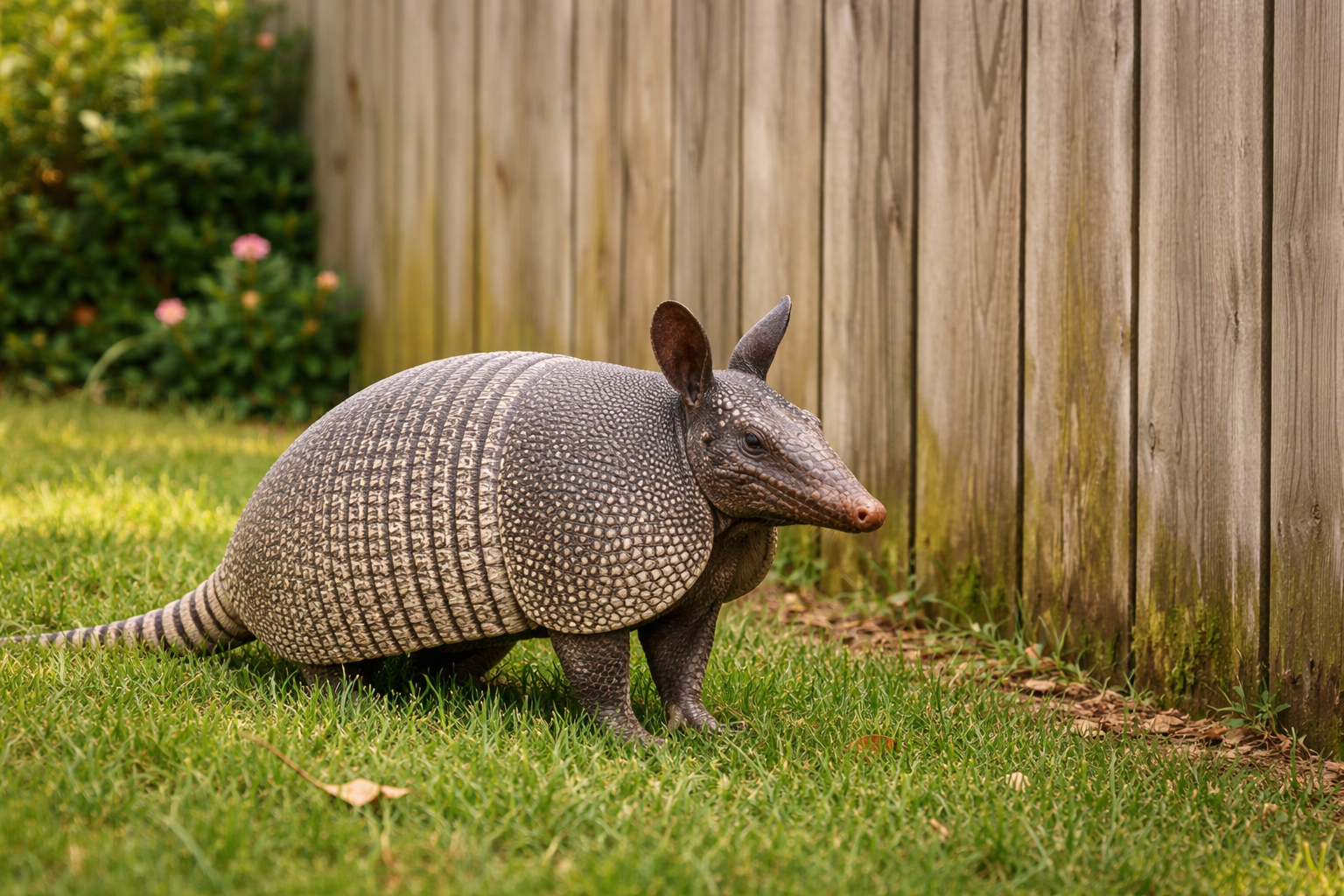
Armadillo activity is a growing nuisance wildlife problem across Florida. While these animals may seem harmless, the damage they cause can quickly escalate. From torn-up lawns to weakened soil near foundations, armadillos pose real risks to both property and health. Many homeowners underestimate the problem until the damage becomes extensive and costly to repair.
Understanding the risks associated with armadillo damage is essential to protecting your home.
Why Armadillos Are Drawn to Florida Properties
Florida’s warm climate and insect-rich soil make residential yards ideal feeding grounds for armadillos. These animals are nocturnal foragers, spending most nights digging for insects just beneath the surface.
Once an armadillo identifies a consistent food source, it will return repeatedly. Without intervention, this behavior often leads to expanding damage across lawns, landscaped areas, and zones near structures.
Signs of Armadillo Damage Around Your Home
Armadillo damage often appears suddenly and worsens quickly. Because they are active at night, homeowners usually discover the problem the following morning.
Common warning signs include:
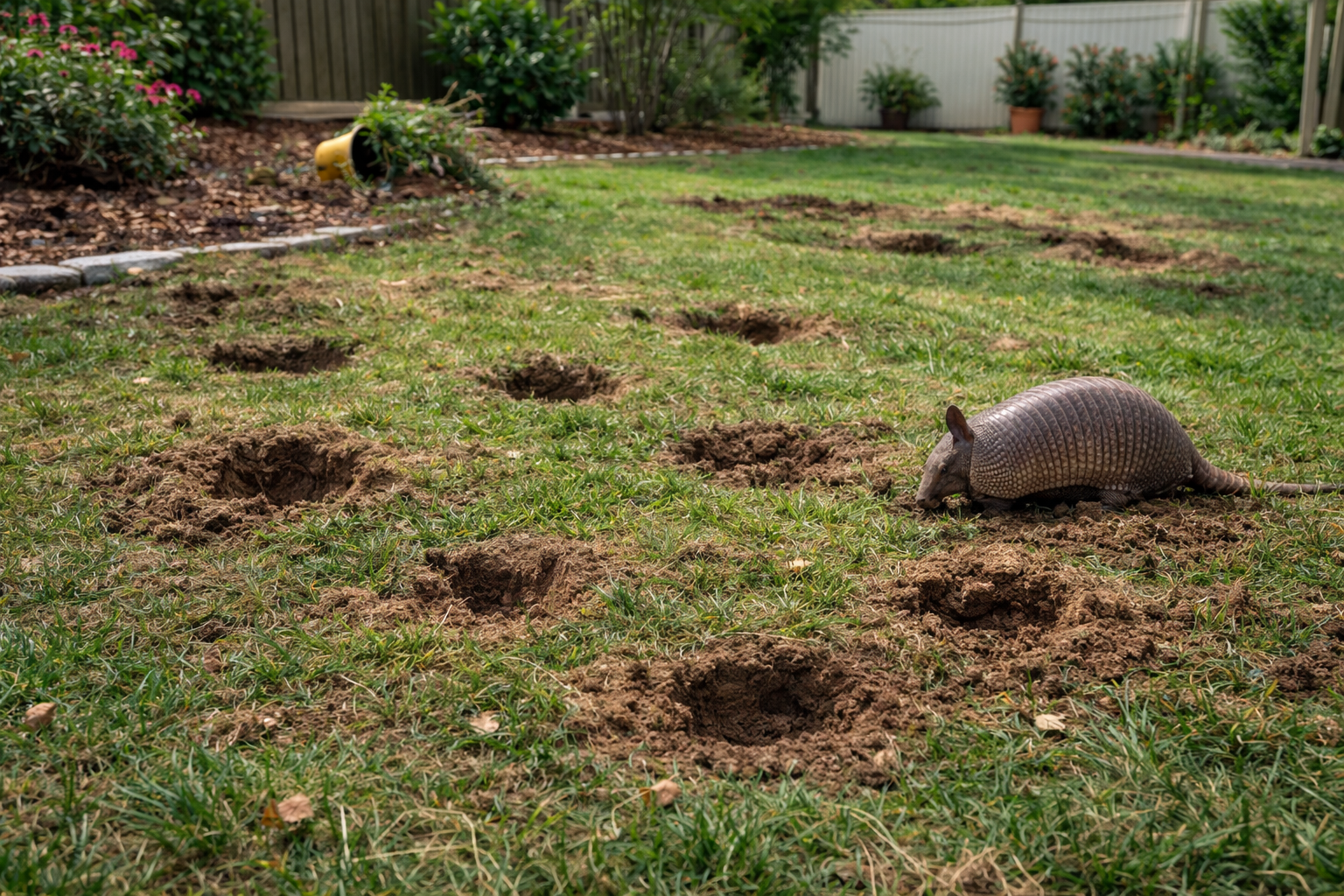
- Small, cone-shaped holes scattered throughout the lawn
- Torn-up flower beds and landscaping
- Loose or sunken soil near patios, walkways, or foundations
- Burrows along fence lines or structural edges
Early detection is critical to limiting further damage.
The Risks of Ignoring Armadillo Damage
Ignoring armadillo activity can lead to serious consequences. Repeated digging weakens soil stability, increases erosion, and can undermine areas near foundations, driveways, and walkways. Over time, this damage creates uneven ground that poses risks for children, pets, and visitors.
Beyond property damage, armadillos also present potential health concerns. They are known carriers of bacteria associated with Hansen’s disease (Leprosy), which in rare cases can be transmitted through direct contact or contaminated soil. While transmission is uncommon, the risk increases when armadillos repeatedly visit residential areas where people and pets spend time.
Unaddressed armadillo activity may also attract additional nuisance wildlife, compounding the problem and increasing long-term repair costs.
Why DIY Armadillo Control Often Fails
Many homeowners attempt to solve armadillo problems using repellents or home remedies. Unfortunately, these methods rarely work. Armadillos are persistent animals, and surface-level deterrents do not eliminate the food source drawing them in.
Improper trapping or handling can also be dangerous and may violate wildlife regulations. Without professional removal methods, armadillos often return, restarting the cycle of damage.
Professional Armadillo Control in Florida
When armadillo damage is present, professional wildlife control is the most effective solution. Insect IQ specializes in nuisance wildlife management throughout Florida. Our team identifies the cause of the activity and removes the armadillo humanely.
Contact Insect IQ today at 813-930-2847 to schedule an inspection and protect your property from ongoing armadillo damage.