
Bats in the Attic? Here’s What Homeowners Need to Know
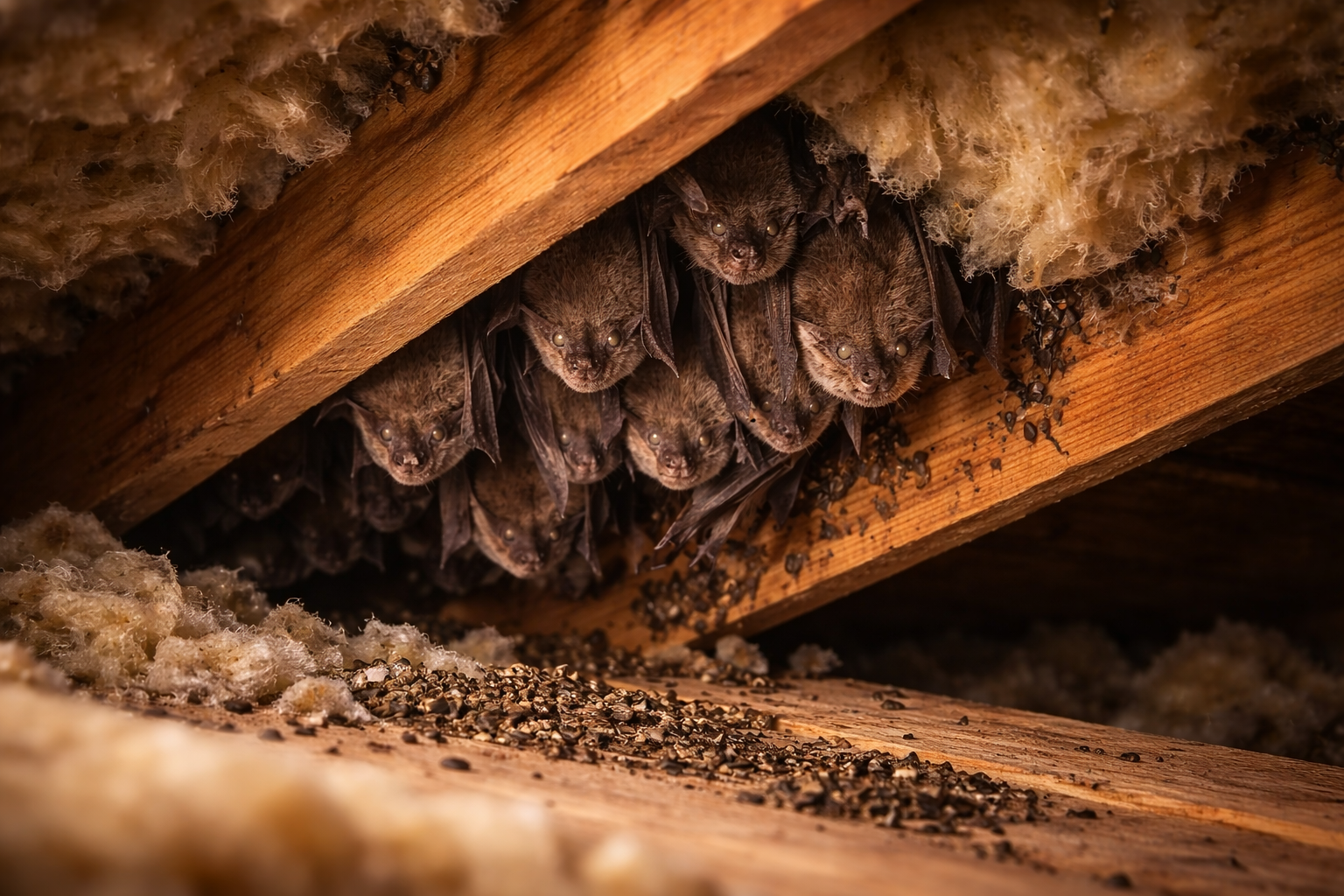
Hearing scratching or fluttering in your attic at dusk? Noticing small droppings near vents or soffits? You may have bats roosting in your home.
If you’re dealing with bats in the attic, timing is everything, especially here in Florida. Bat season begins on April 16th, and after that date, removal options can become limited. Let’s break down why.
Why Are Bats in My Attic?
Like for many Nuisance Wildlife, attics provide the perfect bat habitat: warm temperatures, safety from predators, and high roosting points. Bats don't chew their way in; they exploit gaps as small as 3/8 of an inch.
- Warm, stable temperatures
- Safe shelter from predators
- Easy access through roof gaps or vents
Signs of Infestation
- Fluttering/scratching at dusk
- Chirping sounds
- Dark staining near rooflines
- Ammonia-like odor
- Small, pellet-shaped droppings (guano)
What Is “Bat Season”?
“Bat season” refers to the maternity season, when female bats gather in colonies to give birth and raise their young. In Florida, this typically runs from mid-April through mid-August.
During this time, baby bats cannot fly. Excluding bats (blocking them out) would trap flightless young inside, leading to death and severe contamination.
Why April 15th Is the Cutoff
April 15th is generally considered the deadline to complete bat removal before pups are born. After that date, exclusions cannot be completed or will be postponed until late summer.
Why The Season Exists
Bats are beneficial to the ecosystem and are protected in many states. It is illegal to harm or kill them. Improper removal during maternity season can lead to:
- Severe odor problems
- Maggot infestations
- Legal issues for improper removal
Why You Shouldn’t DIY
Attempting to trap or seal bats yourself can violate wildlife laws and increase health risks (guano can carry fungal spores).
Professional exclusion uses one-way devices that allow bats to exit but not return.
What to Do If You Have Bats Right Now
Do not seal entry holes immediately and avoid disturbing the colony. Early action gives you the most options.
- Call a licensed wildlife professional
- Schedule an inspection before April 15th
- Prepare for humane exclusion and seal-ups
Schedule Your Bat Inspection
If you’re hearing fluttering, scratching, or chirping in your attic, don’t wait. Delays can mean months of continued activity and damage. Call Insect IQ at 813-930-2847 to schedule a quote today.
Schedule Your Inspection