
Carpenter Bees In Florida Homes
Learn how to spot, prevent, and control carpenter bees in Florida before they damage your home. Expert solutions available.
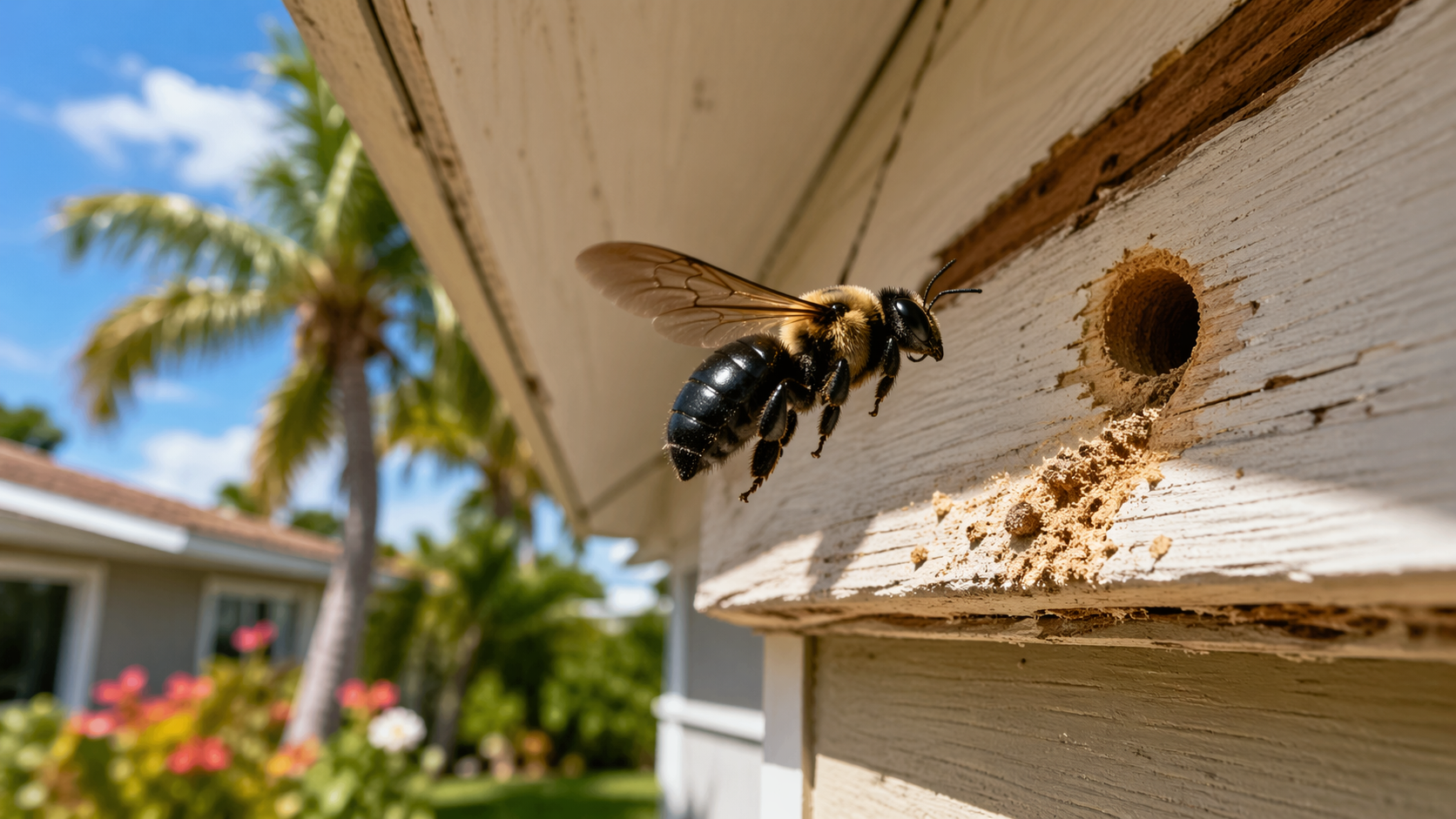
Carpenter Bees in Florida: Protecting Your Home from Hidden Damage
Carpenter bees may seem harmless at first glance, but they can quietly cause serious damage to your home. In Florida’s warm climate, these wood-boring insects thrive, especially around untreated or exposed wood. What starts as a few small holes can quickly turn into an ongoing nesting problem.
Over time, these bees return to the same areas, expanding their tunnels and weakening key structures around your property. Understanding the signs and acting early can make all the difference in protecting your home.
Signs and Identification
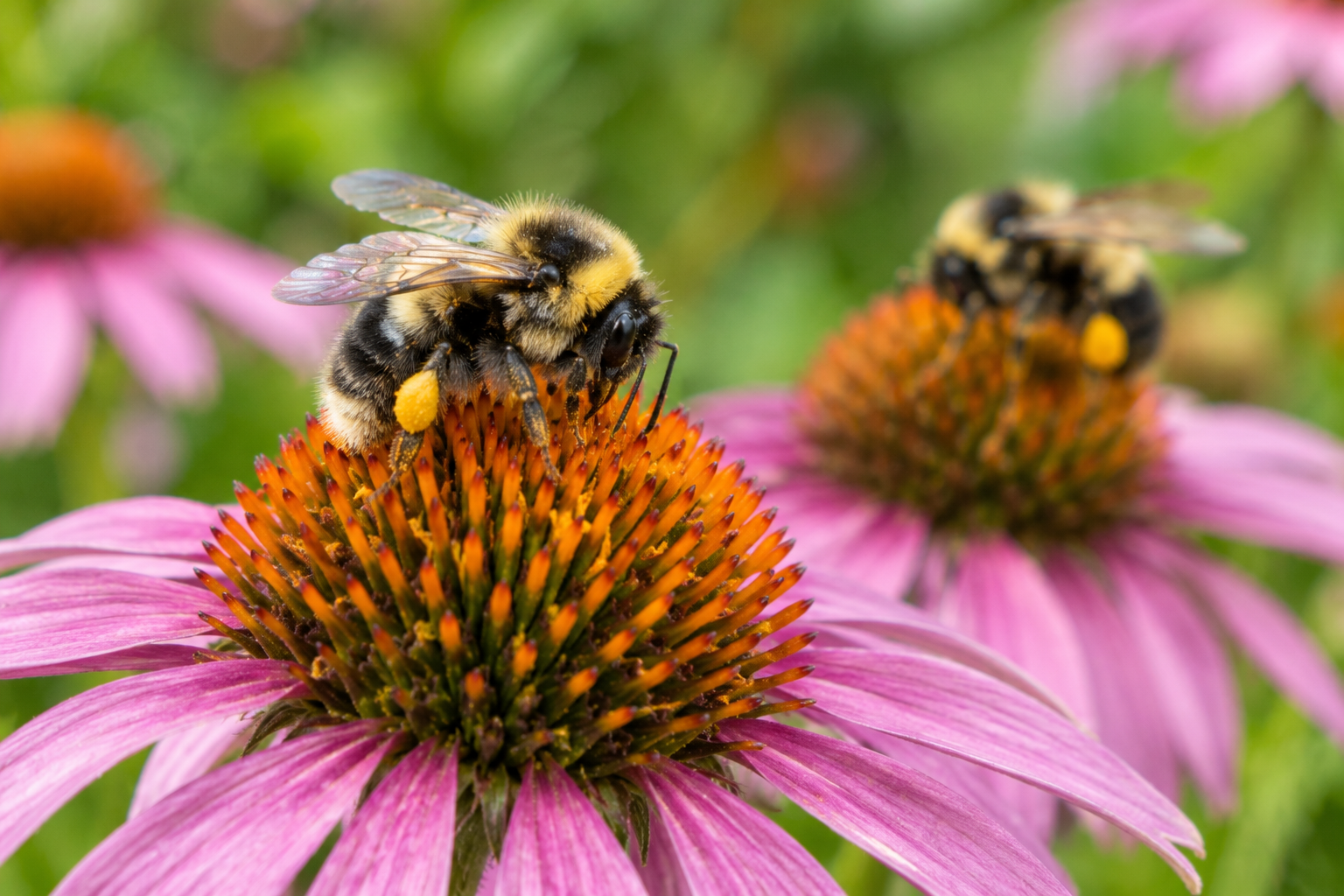
Carpenter bees are often mistaken for bumblebees, but there are clear differences. Use these three indicators to identify an issue:
Physical Appearance
Unlike fuzzy bumblebees, carpenter bees have a smooth, shiny black abdomen.
Hovering Behavior
You may see them hovering near eaves, soffits, and decks. Males often hover near people but do not sting.
Round Holes & Frass
Look for perfectly round holes in wood with small piles of sawdust-like "frass" beneath them.
Hidden Damage to Florida Homes
Carpenter bees do not eat wood, but they excavate it to create nesting galleries. These tunnels start as a single hole but can expand into complex networks over time. As the tunnels grow, they weaken the structural integrity of the wood.
Risks and Prevention
Why DIY Often Fails
Simply spraying visible bees does not eliminate the larvae hidden inside. Without professional treatment, new bees will continue to emerge and enlarge the same galleries year after year.
Prevention Tips
- Paint or stain all exposed wood
- Seal existing cracks and crevices
- Use treated hardwoods for outdoor structures
- Target active nesting sites immediately
Effective control requires targeting active nesting sites and applying preventative treatments to vulnerable areas. A comprehensive approach not only removes current activity but also helps stop future infestations before they begin.
Protect Your Home from Carpenter Bees Today
Carpenter bees will not go away on their own. The longer they remain, the more damage they can cause. Taking action early helps protect your home and avoid costly repairs down the line.
If you are seeing signs of carpenter bees around your property, now is the time to act. Contact Insect IQ today for professional inspection and effective removal.
Schedule Your Service