
Termite Swarm Season Florida 2026
Florida's 2026 termite swarm season is more active than usual. Learn the 3 types of swarming termites, how to spot them, and what to do.
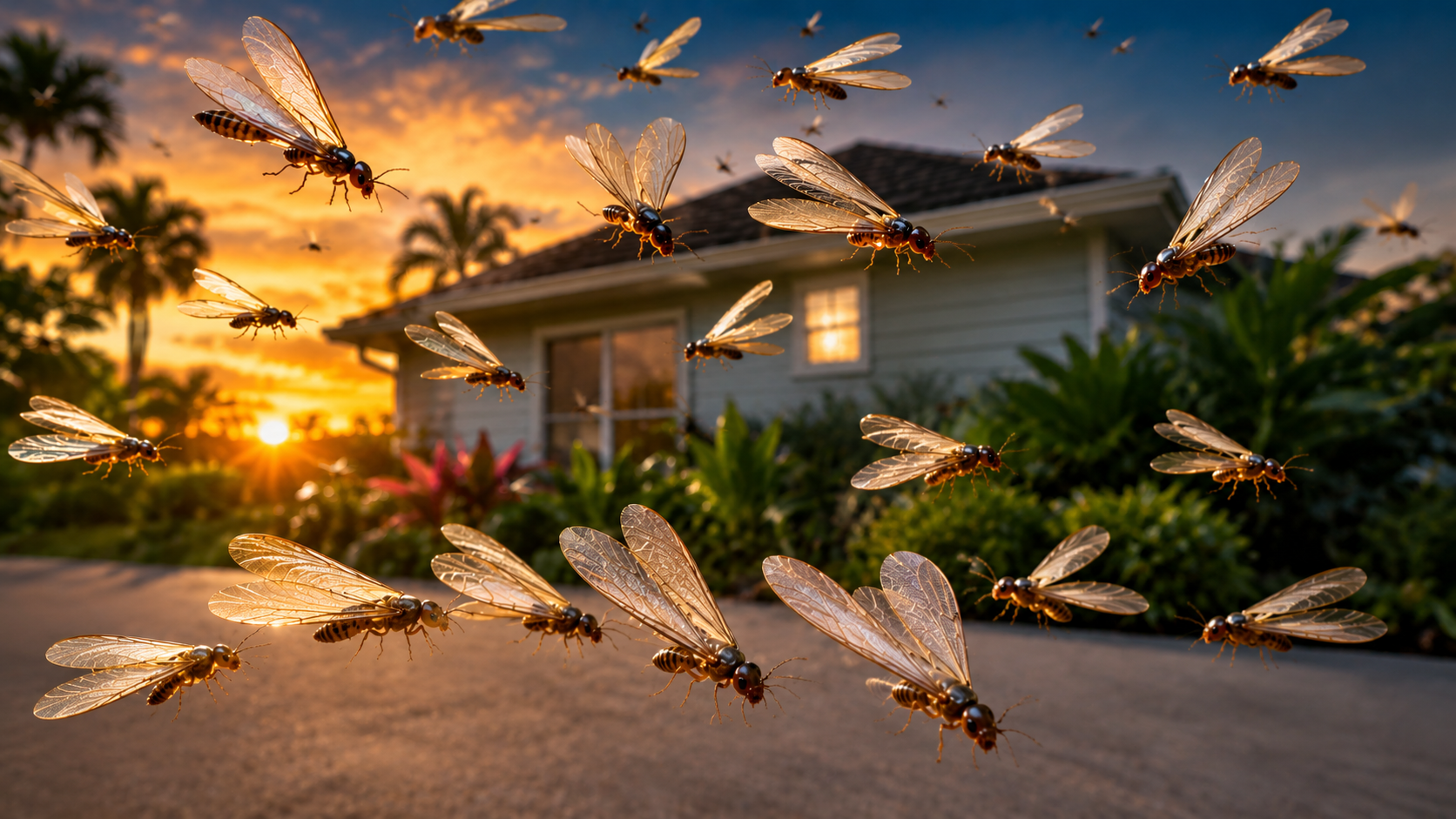
Step outside on a warm Florida evening and you might notice something unsettling — a cloud of winged insects gathering around your porch light, your windows, or rising from the ground near your foundation. Your neighbor's yard has them too. So does the parking lot down the street.
This is termite swarm season — and in 2026, it is hitting harder than usual across the Tampa Bay area.
Seeing a swarm does not automatically mean your home is already infested. What it does mean is that termites are actively searching for a new place to start a colony, and your home is a candidate. The more you understand about what is flying, which species it is, and what to do next, the better position you are in.
Why Florida's 2026 Termite Swarm Season Is More Active Than Usual
Termite swarms are not random. They are triggered by a specific combination of temperature, humidity, and rainfall — and this season, Florida has delivered all three in abundance.
A milder-than-average winter across the Tampa Bay region meant termite colonies never experienced the population suppression that cooler temperatures normally provide. Colonies that would typically lose worker numbers during cooler months instead continued growing, entering spring larger and more mature than usual. Larger colonies produce more swarmers — and more new colonies attempting to establish.
Pest professionals throughout the region are reporting higher-than-normal swarm activity beginning earlier in the season than expected. If it feels like there are more swarms this year, that observation is correct.
What is a swarm, exactly? The winged termites you see — called alates — are the reproductive members of an established colony. They leave their original colony to mate and start new ones. Every swarm originates from a colony that already exists somewhere nearby. The swarm itself is a symptom. The colony is the problem.
The 3 Types of Swarming Termites in Florida
Florida is home to several termite species, but three are responsible for the vast majority of swarms and structural damage homeowners encounter. Each behaves differently, swarms at a different time of year, and requires a different approach to treatment.
- Swarm Season
- Late winter through spring — morning/afternoon after warm rain
- Appearance
- Small, dark brown-black body, equal-length smoky wings
- Where They Live
- Underground; access wood via mud tubes along foundations
- Damage Style
- Feed along wood grain, leaving a hollow interior
- Swarm Season
- Late spring through early summer — at dusk, near lights
- Appearance
- Yellowish-brown body, densely veined wings
- Where They Live
- Underground; colonies of millions + carton nests in walls
- Damage Style
- Extremely aggressive — can damage wood, insulation, and soft metals in months
- Swarm Season
- Late summer through fall — warm afternoons after rain
- Appearance
- Larger, reddish-brown body, clear wings
- Where They Live
- Inside the wood itself — no soil contact needed
- Damage Style
- Hidden inside wood; detected by frass (pellet piles) near baseboards
Flying Ants vs. Swarming Termites: How to Tell Them Apart
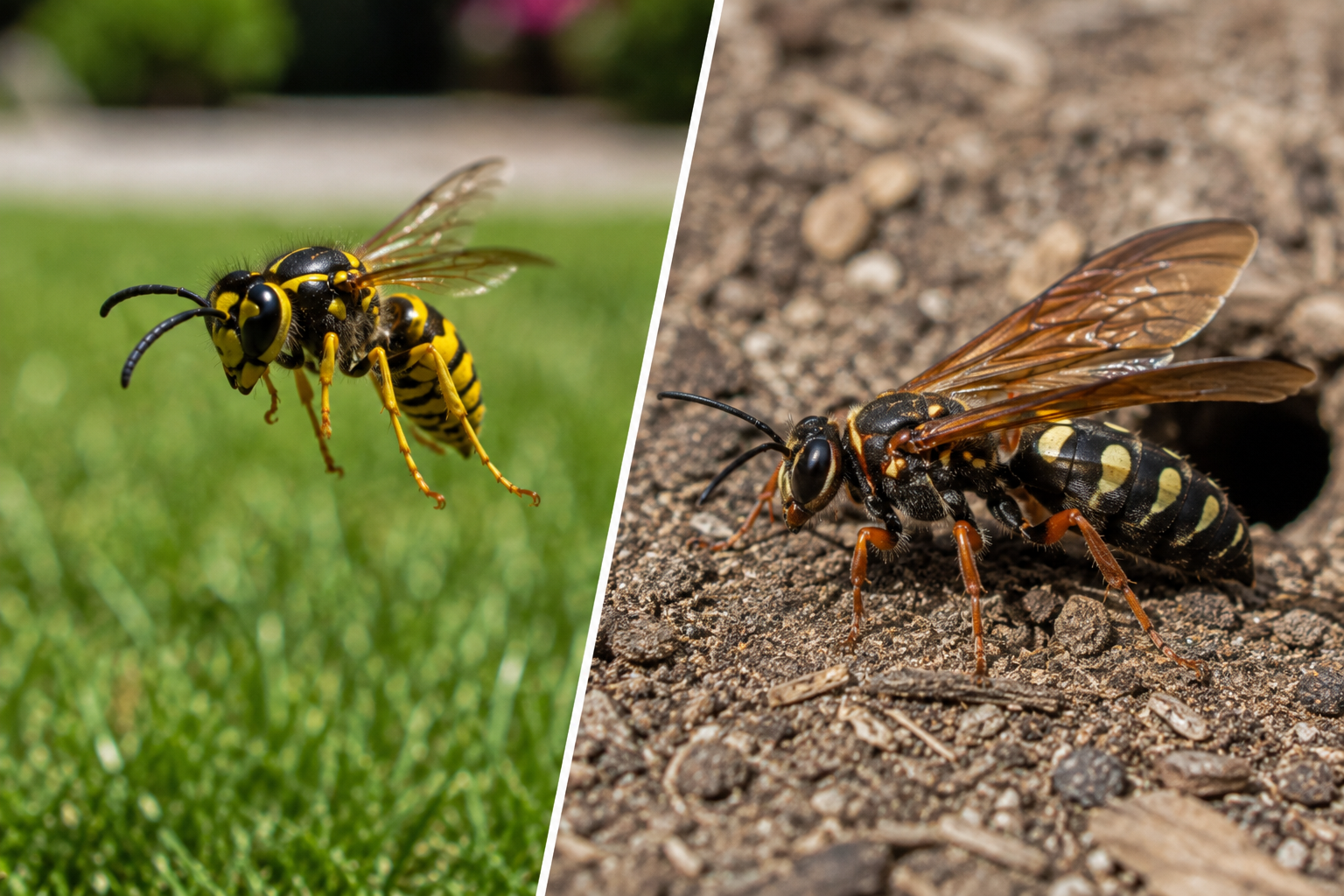
Both flying ants and swarming termites are winged, appear suddenly in large numbers, and look similar at a glance. Misidentifying one for the other leads to the wrong treatment — or no treatment when treatment was urgently needed. There are four reliable ways to tell them apart.
| Feature | Termite | Flying Ant |
|---|---|---|
| Waist | Broad and uniform — no pinch between thorax and abdomen | Sharply pinched "wasp waist" — the most reliable tell |
| Wings | Four wings of equal length extending well beyond the body | Four wings of unequal length — front pair noticeably larger |
| Antennae | Straight and beaded, running in a direct line | Elbowed with a distinct bend near the base |
| Color | Dark brown-black (subterranean) or reddish-brown (drywood) | Varies — color alone is not a reliable indicator |
Practical tip: If you find insects and are unsure, capture one or two in a clear zip-lock bag or sealed container before they die. Set it aside for your pest professional. Identification is much faster and more accurate with a specimen in hand — and it can determine the entire treatment approach.
What Homeowners Should Do If They See Swarming Termites
If You See a Swarm Outdoors
Do not panic — and do not spray. An outdoor swarm does not automatically confirm your home is infested. It does mean a mature colony exists somewhere in the area and swarmers are searching for a new location to establish. While the swarm is active, note the following details:
- ✓ What time of day did the swarm occur?
- ✓ Where were the insects concentrated — near the foundation, around lights, or rising from soil?
- ✓ How large was the swarm — dozens of insects or hundreds?
If You Find Wings or Dead Insects Inside
This is more serious. Shed wings near windows, on windowsills, or around light fixtures indoors means swarmers entered the home. Termite alates shed their wings immediately after landing — piles of detached wings are a strong indicator swarmers have come inside. Check these areas for additional signs:
- ✓ Mud tubes along the foundation, inside crawl spaces, or on interior walls (subterranean species)
- ✓ Frass — small pellet piles near baseboards, windowsills, door frames, or furniture (drywood species)
- ✓ Wood that sounds hollow when tapped
Do not disturb suspected damage areas. Leave them intact for the inspector — undisturbed damage provides more diagnostic information.
Collect Samples — This Matters More Than Most Homeowners Realize
One of the most valuable things you can do before a professional arrives is collect specimens. Species identification determines the entire treatment approach — subterranean and drywood termites require completely different methods, and Formosan infestations call for a different level of urgency. Here is what to collect and how:
Collect two or three live or freshly dead swarmers in a zip-lock bag or sealed container such as a pill bottle or small jar. Handle gently — intact wings are key to identification. Do not crush them.
Termites shed their wings almost immediately after landing. Collect a small sample of shed wings from windowsills, door frames, or near light fixtures. Place them in a dry bag or container — even shed wings can confirm the species.
If you see small pellet-like material near wood surfaces, collect a pinch in a bag. Drywood termite frass has a very distinct appearance and is one of the most reliable confirmation tools available to an inspector.
Note where each sample came from — "found near back window" or "from pile on bathroom windowsill." This helps the inspector understand where activity is concentrated and prioritize accordingly.
Samples dramatically speed up the inspection process and reduce the chances of a misdiagnosis. Even if insects have dried out by the time a professional arrives, they retain enough identifying features to be useful.
Reduce Conditions That Attract Termites
Regardless of whether an infestation is confirmed, these steps reduce your home's vulnerability:
- ✓ Fix moisture issues. Leaking pipes, poor drainage, and damp wood are major attractants for subterranean species. Check under sinks, around the water heater, and along the foundation.
- ✓ Store firewood properly. Keep it away from the home's exterior and elevated off the ground.
- ✓ Clear the yard. Remove dead stumps, scrap wood, and wood debris — these are ideal starter sites for new colonies.
- ✓ Maintain gutters. Water that pools against the foundation creates the moisture conditions subterranean termites require.
- ✓ Pull mulch back from the foundation. Maintain at least a 6-inch gap between mulch beds and the exterior walls.
Schedule a Professional Inspection
Termite damage is not covered by most homeowner's insurance policies. The cost of structural repairs caused by an undetected infestation almost always exceeds the cost of ongoing professional protection by a significant margin.
A professional inspection identifies not just active infestations but the conditions and vulnerabilities that make a home a target. For subterranean species, bait systems like Sentricon provide ongoing colony elimination and long-term protection. For drywood termites, localized spot treatment or whole-structure fumigation may be required depending on the scope of the infestation.
Swarm Season Is Short. The Damage Isn't.
Termite swarms last a few days to a few weeks. The colonies behind them last for years. If you have seen swarmers near or inside your home this season — or found wings, frass, or anything else that raised a concern — the right time to act is now.
Schedule Your Termite Inspection