
Ghost Ants in Florida: The Tiny Pest Taking Over Tampa Kitchens
Tiny white ants taking over your Florida kitchen? Learn how to identify ghost ants, why they keep coming back, and how to stop them
Ghost Ants in Florida: The Tiny Pest Taking Over Tampa Kitchens
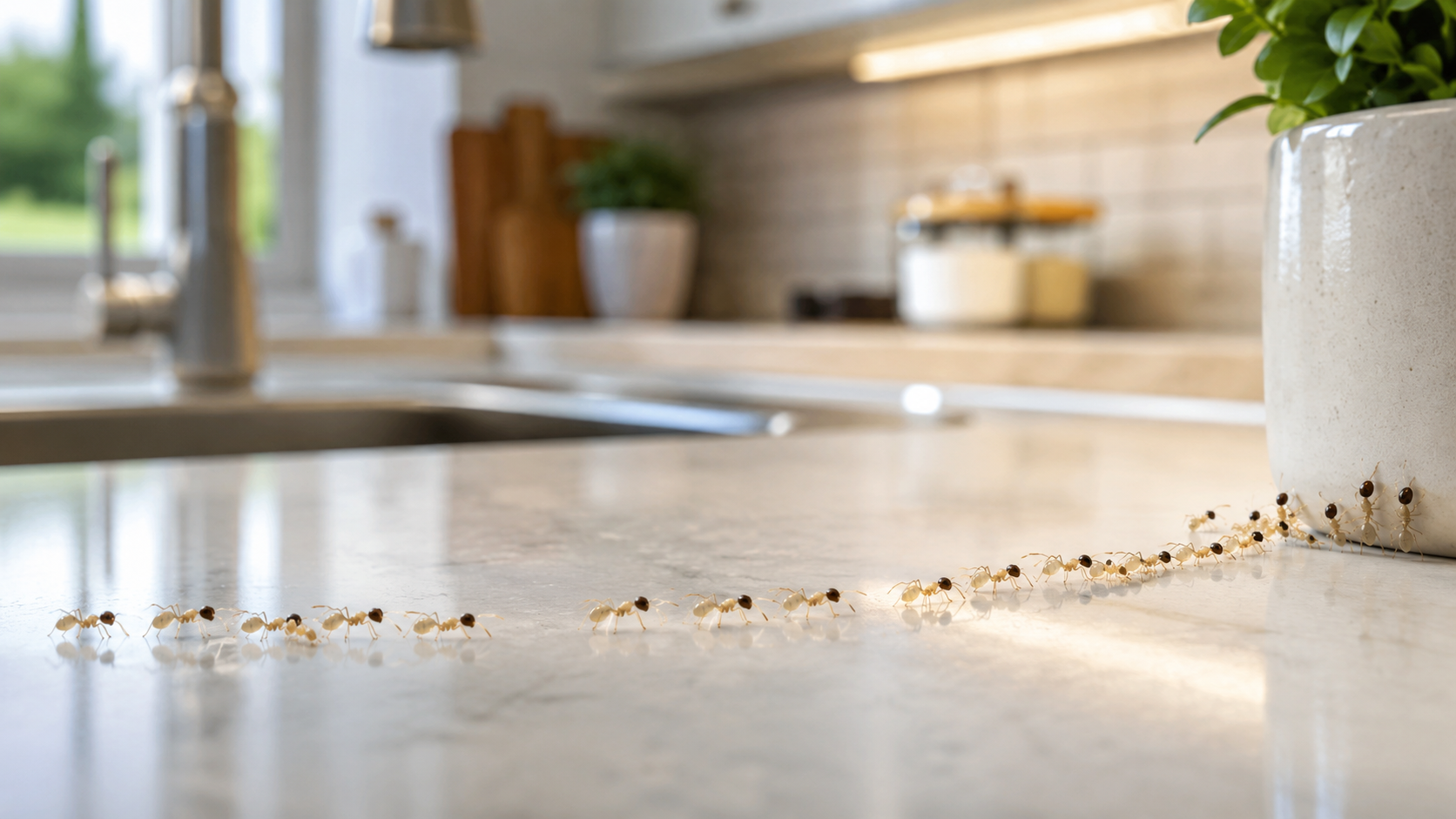
You spot a trail of ants crossing your kitchen counter. You lean in for a closer look — and almost lose them. They're so small and pale they seem to vanish against the surface. You wipe them up. They're back the next day.
If this sounds familiar, you're likely dealing with ghost ants. They're one of the most common and most frustrating pests in Tampa Bay homes. The good news? Once you understand what you're dealing with, you can take real steps to get rid of them.
What Are Ghost Ants?
Ghost ants ( Tapinoma melanocephalum ) are a tropical ant species that has made itself very much at home in Florida. They get their name from how difficult they are to see — they have a dark brown or black head, but their abdomen and legs are nearly transparent. On a light-colored countertop or floor, they practically disappear.
Here are a few key traits that help identify them:
Size
Tiny — about 1.5mm, roughly the size of a sesame seed.
Color
Dark head, pale translucent body.
Smell
When crushed, they release a faint odor similar to rotten coconut.
Behavior
They move in fast, erratic trails.
If you see tiny ants that seem to vanish when you try to follow them, ghost ants are almost certainly the culprit.
Why Ghost Ants Are So Common in Florida
Ghost ants are a tropical invasive species. They likely arrived in Florida through plant and cargo shipments, and our climate suits them perfectly. Florida's heat and humidity mean ghost ant colonies never experience a population-killing winter — they breed and expand year-round.
Tampa Bay is a particular hotspot. The combination of warm temperatures, moisture, and dense suburban landscaping gives ghost ants everything they need to thrive.
The Multiple Queen Problem
What makes them especially difficult to deal with is their colony structure. Unlike many ant species that have a single queen, ghost ants maintain multiple queens spread across multiple sub-colonies.
A single infestation can have dozens of active nests inside and outside your home at the same time. This is why they seem impossible to eliminate — because wiping out one group barely puts a dent in the overall population.
Where Ghost Ants Nest and How They Get Inside
Ghost ants nest in two main environments. Understanding both is key to getting rid of them. They enter through small gaps around pipe penetrations, window frames, door sweeps, and potted plants brought in from outside. The ants you see on your counter are likely foragers — the nest itself may be inside a wall or out in the yard entirely.
Outdoor Nesting Sites
- Soil and leaf litter
- Mulch beds near the home
- Potted plants
- Hollow plant stems and debris
Indoor Nesting Sites
Indoors, they gravitate toward moisture.
- Wall voids near kitchen or bathroom plumbing
- Behind baseboards
- Inside cabinets, especially near the sink
- Between stacked items left undisturbed
What Ghost Ants Are Looking For in Your Home
Ghost ants are primarily sweet feeders. In your kitchen, they're attracted to:
- Sugary spills and residue
- Open food containers
- Ripe or overripe fruit
- Residue on unwashed dishes
They also feed on honeydew — a sticky substance produced by aphids and whiteflies on outdoor plants. If you have a garden or landscape plants near your home with an aphid problem, that outdoor food source can actively draw ghost ants closer to your house.
When sweets aren't available, ghost ants will switch to grease and protein-based foods. This dual food preference is one of the reasons they're so persistent — they're not picky, and there's almost always something in a kitchen that appeals to them.
Why DIY Ghost Ant Treatments Usually Make Things Worse
This is the most important thing to understand about ghost ants: the most common DIY response actually backfires. When homeowners spot a trail, the instinct is to grab an over-the-counter repellent spray and hit the line directly. With ghost ants, this triggers a process called budding.
The surviving members of the disrupted colony split off and form new sub-colonies in different locations. Instead of one infestation, you now have two or three — spread further through your walls or yard.
Gel baits are more effective because forager ants carry the bait back to the colony, targeting the source. However, ghost ants require the right bait type. Because they switch between sweet and protein food sources, a single bait formula often gets ignored. Knowing when to use which bait, and rotating correctly, requires experience with how these colonies forage.
Professional treatment also addresses the full colony network — not just the visible trail on your counter. Without targeting the nests themselves, the infestation continues regardless of how many ants you eliminate at the surface.
How to Prevent Ghost Ants in Your Florida Home
Whether or not you're currently dealing with ghost ants, these steps make your home significantly less attractive to them:
- Seal food properly: Store pantry items in airtight containers. Don't leave fruit out on the counter during warm months.
- Fix moisture issues: Ghost ants are drawn to water as much as food. Repair dripping faucets and pipes under sinks.
- Caulk entry points: Seal gaps around baseboards, pipe penetrations, and window frames.
- Manage mulch: Pull mulch back at least 6 inches from your foundation — mulch beds are prime nesting habitat.
- Inspect potted plants: Before bringing outdoor plants inside, check them carefully for ants and aphids.
- Control aphids and whiteflies outdoors: Reducing these populations cuts off one of ghost ants' main outdoor food sources.
When to Call a Professional for Ghost Ants
Ghost ants reward fast action. A small trail in the kitchen can indicate a large, multi-queen colony already established inside your walls. The earlier the infestation is properly treated, the easier — and less costly — it is to eliminate.
If you've already tried sprays or store-bought baits without success, that's a strong signal the colony has either budded or is too established for surface-level treatment to reach. At Insect IQ, we identify the full scope of the infestation, treat both interior nesting sites and exterior entry points, and use the right bait chemistry for what the colony is actively feeding on.
Schedule an Inspection TodayInsectIQ proudly serves the Tampa Bay area, including Tampa, Clearwater, St. Petersburg, Sarasota, and surrounding communities.