
Chinch Bugs in Florida Lawns
Yellow patches spreading in your lawn? Learn the signs of chinch bugs in Florida and how to stop damage fast.
Chinch Bugs in Florida Lawns: Early Signs, Real Damage, and How to Stop Them
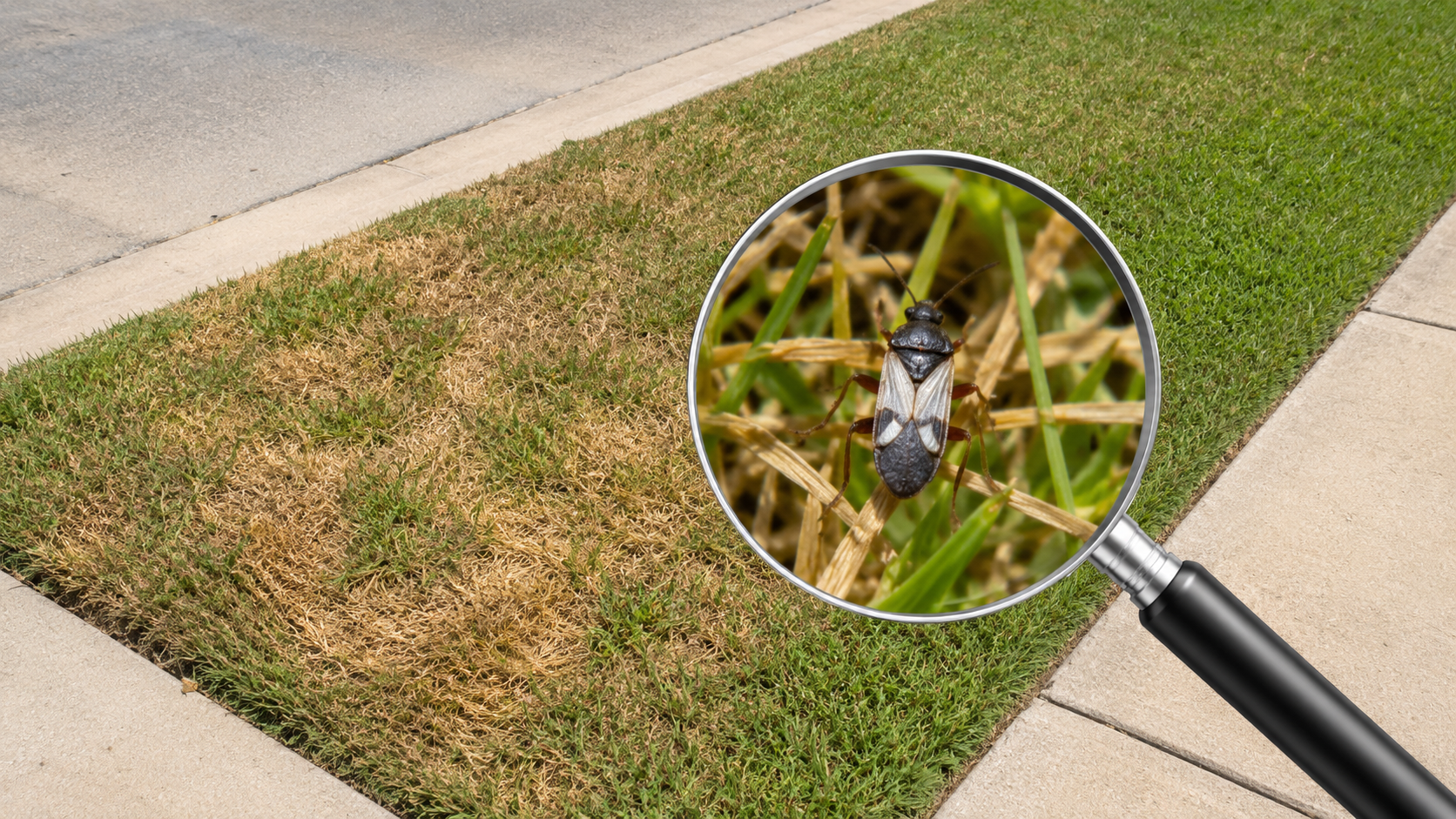
It's the middle of summer. You've been watering your lawn regularly, doing everything right—or so you think. But there's a patch near the sidewalk that keeps turning yellow. Then brown. Then it starts spreading outward in a slow, frustrating circle.
If that patch keeps expanding despite watering, there's a strong chance you're dealing with chinch bugs. This guide will help you identify the damage, confirm it with simple tests, and take the right steps before your lawn suffers serious loss.
What Are Chinch Bugs in Florida?
The primary culprit behind lawn damage in Florida is the southern chinch bug( Blissus insularis ). These insects are tiny—only about 1/5 of an inch long—but they can cause widespread damage in a surprisingly short amount of time.
Adult Appearance
Black bodies with white wings marked by a distinct black triangular shape.
Nymph Appearance
Smaller and wingless. Range from reddish-orange to dark brown as they mature.
Preferred Grass
Strong preference for St. Augustine grass—the most common lawn type across Florida.
Chinch bugs damage turf by piercing the grass blade and sucking out plant fluids. While feeding, they also inject a toxin that disrupts the plant's ability to transport water —which is why chinch bug damage looks so much like drought stress, even when your lawn is properly irrigated.
Signs of Chinch Bugs: How to Confirm It's Not Drought or Fungus
Correct identification is critical. Chinch bug damage is often mistaken for irrigation issues or fungal disease, which leads to ineffective treatments and worsening conditions.
🧪 The Flotation Test (DIY Confirmation)
One of the most reliable ways to confirm chinch bugs:
- Take a metal coffee can and remove both the top and bottom.
- Push the can a few inches into the soil at the edge of a damaged area.
- Fill the can with water.
- Wait about 5 minutes.
- If chinch bugs are present, they will float to the surface—small, fast-moving insects rising in the water.
🔍 Visual Inspection
Part the grass blades at ground level and look closely for tiny black-and-white insects moving quickly. Focus on the transition zone where green turf meets yellowing grass.
📍 Location Matters
Chinch bug damage almost always begins near heat-retaining surfaces. Drought stress tends to appear more evenly across the lawn, not concentrated along edges.
Chinch Bugs in Florida: When Are They Most Active?
Peak Season
June through September. Hot temperatures and dry conditions create the perfect environment for rapid population growth.
Year-Round Threat
In regions like Tampa Bay, mild winters allow chinch bugs to survive and reproduce continuously, building populations over time.
Risk Factors That Accelerate Damage
Dry spells significantly accelerate damage. Lawns already stressed by heat or poor soil conditions are especially vulnerable—and so are lawns with these conditions:
- Over-fertilization with nitrogen
- Excess thatch buildup
- Mowing too short
Why DIY Treatment Often Fails
Many homeowners attempt to treat chinch bugs with over-the-counter insecticides. Unfortunately, this approach often leads to frustration—and more damage.
The Resistance Problem: Chinch bugs in Florida—particularly in the Tampa Bay area—have developed resistance to commonly used insecticides like pyrethroids. This has been well-documented through university research.
What Typically Happens
Effective control requires rotational chemistry strategies to prevent resistance and target all life stages —eggs, nymphs, and adults. Timing and coverage are critical; missing even a portion of the population can allow the infestation to rebound quickly.
Prevention Tips That Work
Preventing chinch bugs starts with proper lawn care. While no lawn is completely immune, healthy turf is far more resistant to infestation and damage.
Avoid Over-Fertilizing
High nitrogen levels promote lush, tender growth that chinch bugs prefer. Stick to a balanced fertilization schedule for St. Augustine grass.
Maintain Mowing Height
Keep your lawn between 3.5 and 4 inches tall. Taller grass shades the soil, retains moisture, and reduces stress.
Reduce Thatch Buildup
Excess thatch creates a protective environment for chinch bugs to hide and reproduce. Regular dethatching helps limit their habitat.
Water Deeply, Not Frequently
Shallow, frequent watering creates ideal conditions for chinch bugs. Water deeply and less often to encourage strong root growth.
Monitor High-Risk Areas
Pay close attention to lawn edges near pavement. Early detection in these areas can prevent widespread damage.
Stop Chinch Bugs Before the Damage Spreads
Chinch bug damage doesn't fix itself. What starts as a small yellow patch can quickly turn into a large dead area requiring expensive re-sodding. If you're noticing yellowing patches near sidewalks or driveways this summer, it's time to take action.
Schedule Your Lawn Inspection