
Millipedes in Florida: Why Rain Sends Them Indoors
Finding millipedes all over your garage after it rains? Here's exactly why it happens and what Tampa Bay homeowners can do to stop it for good.
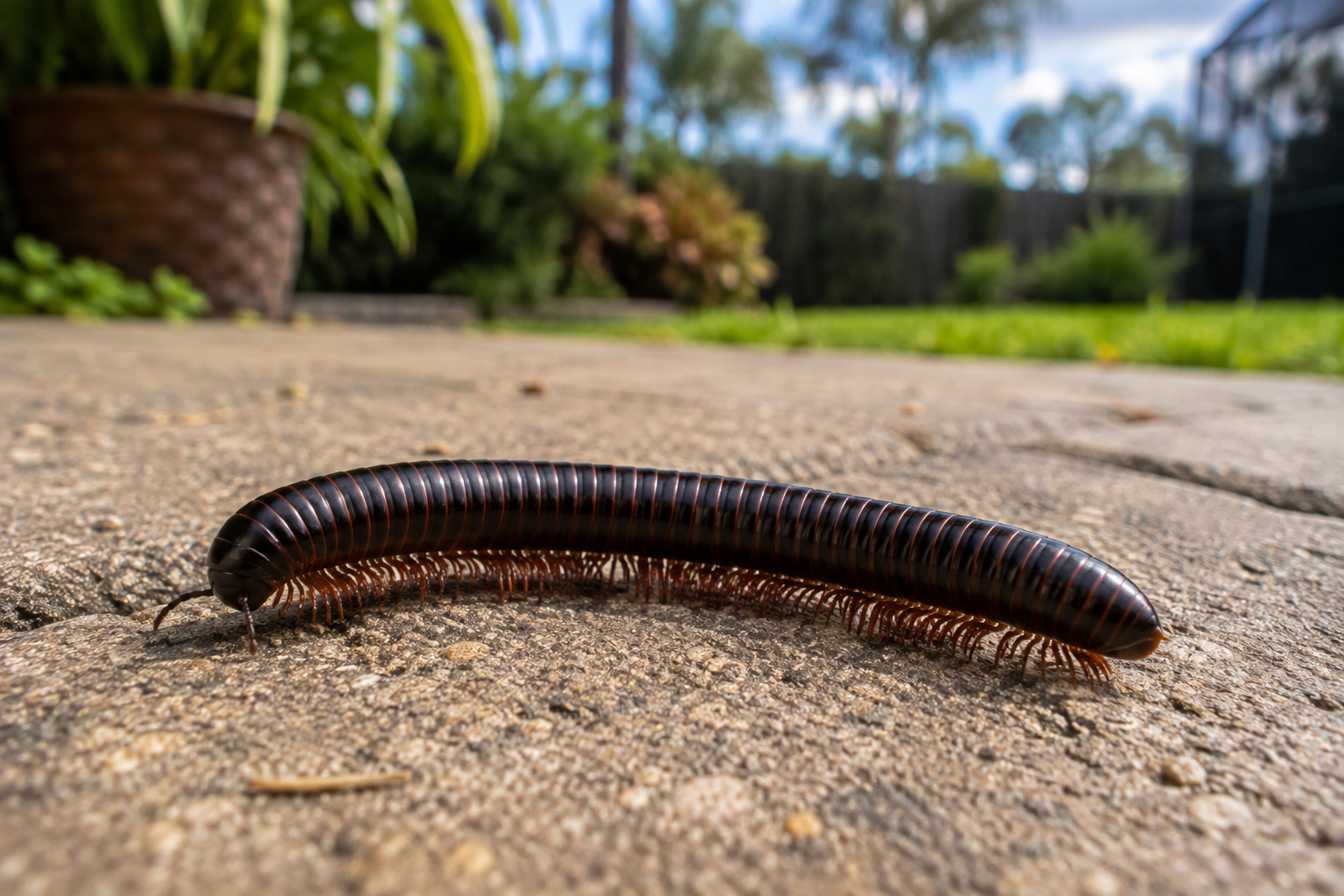
Millipedes: Why Florida's Rainy Season Can Send Them Straight Into Your Home
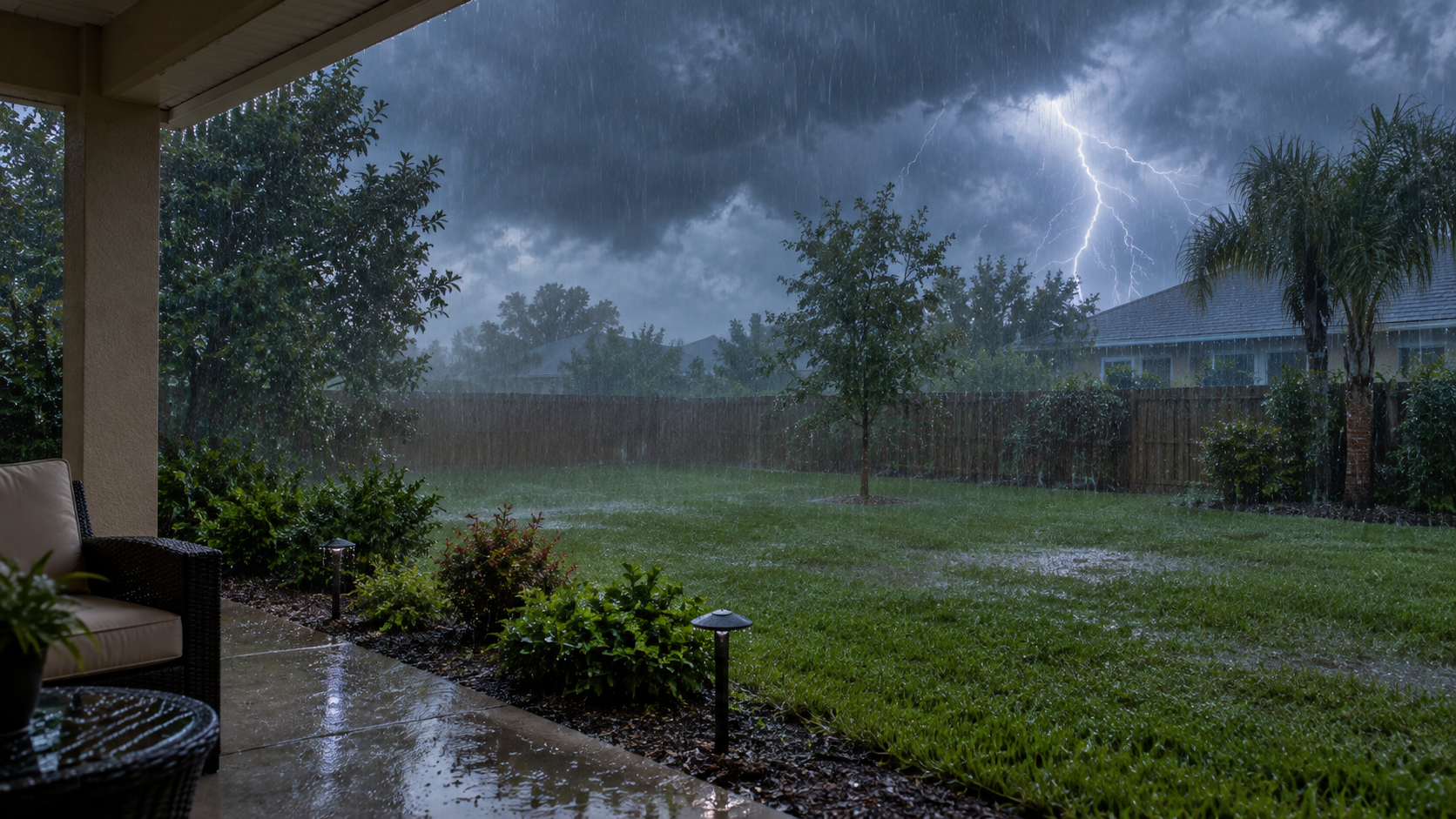
After a heavy afternoon storm, you walk out to your garage or slide open the back door — and find slow-moving, many-legged creatures crawling across the floor. If this has happened to you, you're not alone. It's one of the more startling pest surprises Florida homeowners can run into, and it almost always follows heavy rain.
Here's what millipedes actually are, why Florida's rainy season can push them indoors, and what to do if they show up at your home.
What Is a Millipede?
Despite what the name suggests, millipedes don't actually have a thousand legs — most Florida species have somewhere between 30 and 400, depending on the species and age. What they do have is a lot of body segments, each carrying two pairs of legs, which gives them their distinctive slow, rippling movement when they walk.
Millipedes are not insects. They're arthropods — a class of their own — and Florida hosts more than 50 different millipede species. They live outdoors in damp soil, mulch, leaf litter, and decaying vegetation, where they feed on decomposing organic matter. They don't bite, they don't sting, and they don't damage your home's structure. But after heavy rain, saturated soil can push millipedes toward drier areas — that often means they crawl toward foundations, patios, garages, sliding doors, and entry points.
Are millipedes the same as centipedes? No — and the difference matters. Millipedes are slow-moving, rounded, and completely harmless. Centipedes are flat, fast, and can deliver a painful bite. The easiest way to tell them apart: millipedes have two pairs of legs per segment and move slowly; centipedes have one pair per segment and move very fast. If it sprinted across your floor, it was a centipede. If it plodded along slowly, it was a millipede.
Florida Millipedes You're Most Likely to Encounter
With over 50 species in the state, most Tampa Bay homeowners will encounter one of these three during rainy season.
- Scientific Name
- Anadenobolus monilicornis
- Appearance
- Black cylindrical body with distinct yellow or orange rings around each segment — very recognizable
- Size
- About 1 inch long
- Why You'll See It
- The most common species in Florida — frequently found on driveways, patios, and garage floors after rain
- Scientific Name
- Trigoniulus corallinus
- Appearance
- Smooth, uniformly reddish-brown or rust-colored body with no banding
- Size
- About 1/2 to 3/4 inch long
- Why You'll See It
- Very common on exterior walls, driveways, and garage floors after summer downpours — one of the three species most likely to be found around Tampa Bay homes after a summer storm
- Scientific Name
- Various species in the order Polydesmida
- Appearance
- Flattened body with wide lateral extensions on each segment, giving a distinctly flat appearance compared to cylindrical millipedes
- Size
- Up to 2 inches long
- Why You'll See It
- More commonly found in mulch beds and leaf litter; can appear in large numbers and release a stronger-smelling defensive secretion when disturbed
Why Rain Sends Millipedes Into Your Home
Millipedes need moisture to survive — their bodies lose water easily, which is why they stay buried in damp soil and mulch during dry conditions. When Florida's afternoon storms drench the yard, the soil they live in becomes completely saturated. With nowhere else to go, they move upward and outward, looking for drier ground.
Your home's foundation, patio, and garage floor are exactly the kind of elevated, dry surface they're looking for. After heavy rain, the soil and mulch around the home may become saturated, and millipedes may move upward or toward drier shelter, then slip through small gaps around doors, sliding glass doors, garage edges, foundation cracks, or window frames. It's the same flood-driven behavior that pushes ants indoors — and it happens for the same reason. Our guide on why ants invade your home after rain covers how this pattern works across different pest species.
Are Millipedes Dangerous?
Millipedes are not poisonous. They do not possess venom and are harmless to humans and pets. However, when threatened, some species may secrete a defensive fluid that can cause mild skin irritation or allergic reactions in sensitive individuals. This fluid also has an unpleasant odor, which is why crushing millipedes indoors is a bad idea — it leaves behind a smell that's hard to get rid of. The best approach is to sweep or vacuum them up rather than stepping on them.
Millipede vs. Centipede: How to Tell Them Apart
| Feature | Millipede | Centipede |
|---|---|---|
| Legs Per Segment | Two pairs (four legs) | One pair (two legs) |
| Body Shape | Round and cylindrical | Flat and elongated |
| Movement Speed | Slow and deliberate | Very fast |
| Bites or Stings? | No — completely harmless | Yes — can deliver a painful bite |
| Defense Mechanism | Curls into a ball; may secrete mild fluid | Bites with venomous front claws |
| What They Eat | Decaying plant matter and organic debris | Live insects and other arthropods |
Signs Millipedes Are a Recurring Problem at Your Home
What to Do When Millipedes Invade After Rain
Sweep or vacuum millipedes instead of stepping on them. Crushing them releases a defensive fluid with an unpleasant odor that's difficult to clean up from flooring and baseboards.
After the rain stops, pull mulch and leaf litter back from the foundation. Removing their hiding spot close to the house reduces how many make it to your door next time.
If millipedes show up in large numbers after every storm, a professional perimeter treatment around the foundation creates a barrier that stops them before they get inside.
How to Keep Millipedes Out of Your Home This Rainy Season
- ✓ Keep mulch pulled back at least six inches from the foundation. Mulch beds that touch the house give millipedes a moist, sheltered highway straight to your walls.
- ✓ Remove leaf litter, wood piles, and organic debris near the house. These are prime millipede habitat — the closer they are to the foundation, the shorter the trip inside after heavy rain.
- ✓ Fix yard drainage problems that cause the soil to stay saturated. The longer the ground stays wet after rain, the longer millipedes keep moving toward your home. Our yard drainage guide covers the specific fixes that reduce this pressure the most.
- ✓ Seal gaps under doors, around sliding glass doors, and along the garage threshold. These are the most common entry points — a proper door sweep or threshold seal stops millipedes before they get in.
- ✓ Reduce moisture near the foundation. Fix any dripping outdoor faucets, direct downspouts away from the house, and avoid overwatering plants or lawn areas close to the structure.
- ✓ Schedule a perimeter treatment before rainy season peaks. A professional barrier applied around the foundation is the most reliable way to stop a recurring millipede problem — especially for homes near wooded areas, retention ponds, or heavily landscaped lots.
Finding Millipedes After Every Storm?
InsectIQ has an entomologist on staff who can assess the conditions around your property driving the problem and recommend the right treatment to stop it. Contact us today to get a quote.
Contact Us for a Quote