
Bug of the Week: Velvet Ant
That fuzzy red "ant" in your yard isn't an ant — it's a wasp with one of the most painful stings in Florida. Learn what velvet ants are and what to do.
Velvet Ants: The "Cow Killer" That Isn't Actually an Ant
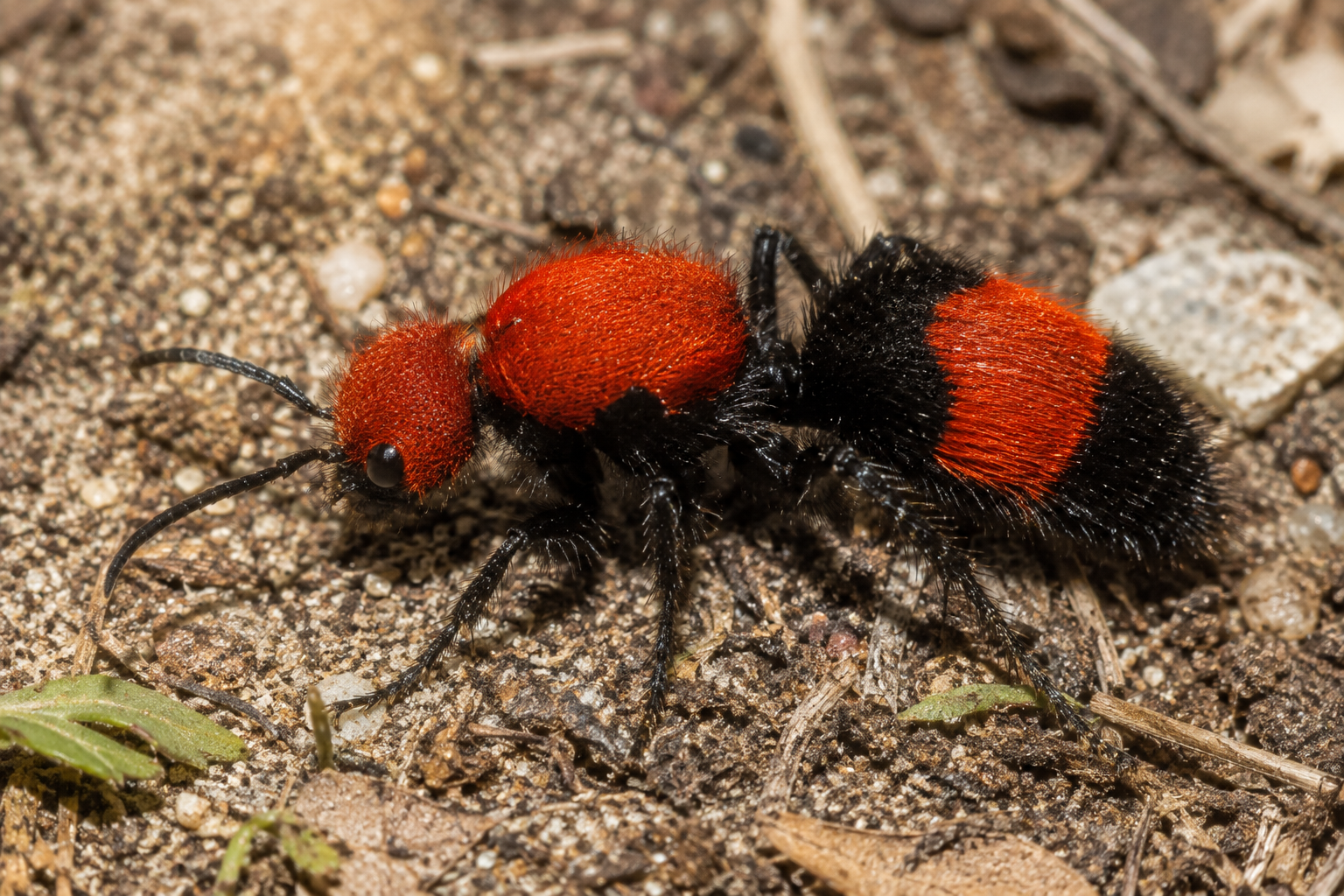
You're walking through the yard and spot what looks like a large, fuzzy, bright red ant moving fast across the ground. Before you reach down to pick it up — stop. That is not an ant. It's a velvet ant, and the female carries one of the most painful stings of any insect found in Florida.
Here's what velvet ants really are, why they look the way they do, and what you should actually do if you find one in your yard.
What Is a Velvet Ant?
Despite the name, insects in the family Mutillidae are often referred to as "velvet ants" because female members of the family lack wings and have coarse setae that cover most of their body, making them resemble hairy ants. To the surprise of most people, mutillids are not ants at all — they are wasps.
Fifty species in seven genera are found in Florida. The one most people recognize is the cow killer, Dasymutilla occidentalis — the large, bright red and black species that earned its nickname from stories about a sting painful enough to kill a cow. Those stories are an exaggeration, but the sting itself is very real and very memorable.
Why do they look like ants? The female velvet ant's wingless, fuzzy body is thought to be a survival adaptation. Moving along the ground without wings, she needs strong armor and a warning signal to deter predators. The bright red coloring is a classic warning pattern in nature — it says "I can defend myself." The dense hair also provides physical protection and makes it harder for other insects to sting or bite her.
Male, Female, and Florida's Most Common Species
Male and female velvet ants look so different from each other that they were classified as separate species for a long time. Understanding both helps explain why this insect is so often misidentified.
- Appearance
- Wingless, densely covered in bright red or orange fur with black banding — moves quickly along the ground
- Can She Sting?
- Yes — females have a long, smooth stinger with no barb, meaning she can sting repeatedly
- Warning System
- Produces an audible squeaking sound called stridulation when threatened — an advance warning before she stings
- Appearance
- Has wings and looks much more like a traditional wasp — same color pattern as the female but noticeably different in shape
- Can He Sting?
- No — male velvet ants have no stinger and cannot sting under any circumstance
- Behavior
- Flies in search of females to mate with; less commonly seen because he spends less time on the ground
- Scientific Name
- Dasymutilla occidentalis — the largest and most recognized velvet ant in Florida
- Appearance
- Striking bright red and black fur; up to 3/4 inch long — hard to miss on the ground
- The Nickname
- Named for a sting said to be painful enough to kill a cow — an exaggeration, but it reflects just how intense the sting actually is
What Velvet Ants Actually Do
Velvet ants are solitary parasitoid wasps. That means instead of building their own nest, females have the difficult job of locating potential hosts. They search the ground for the underground nests of other solitary wasps and bees — including ground-nesting bumblebees. Once she finds a suitable nest, the female lays her egg on the host larva. When her egg hatches, her young feeds on the host as it develops underground.
This lifestyle is why female velvet ants are always seen moving fast and purposefully along the ground — they're hunting, not wandering. They cover a lot of ground searching for host nests, which is when most homeowners encounter them crossing a driveway, patio, or open lawn area.
How Dangerous Is a Velvet Ant Sting?
Velvet Ant vs. Other Insects People Confuse It With
The velvet ant's distinctive look causes a lot of confusion. Here's how it compares to the insects it gets mistaken for most often.
| Insect | Wings? | Stings? | Key Difference |
|---|---|---|---|
| Velvet Ant (Female) | No | Yes — very painful | Covered in dense fur; squeaks when threatened |
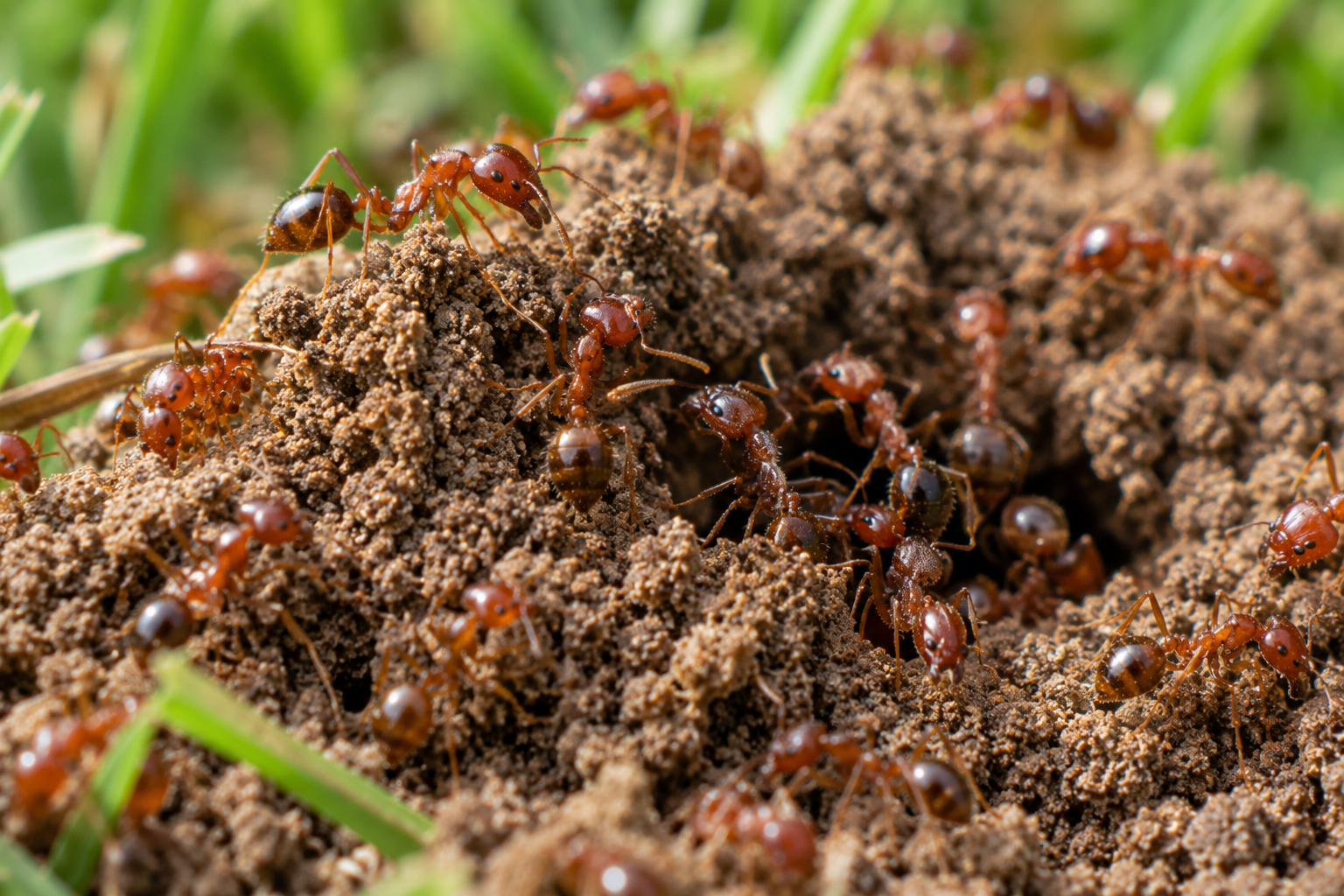
| Fire Ant | No (workers) | Yes — swarms aggressively | Much smaller, no fur, reddish-brown not bright red |
| Red Velvet Mite | No | No | Eight legs (arachnid), much smaller, round body |
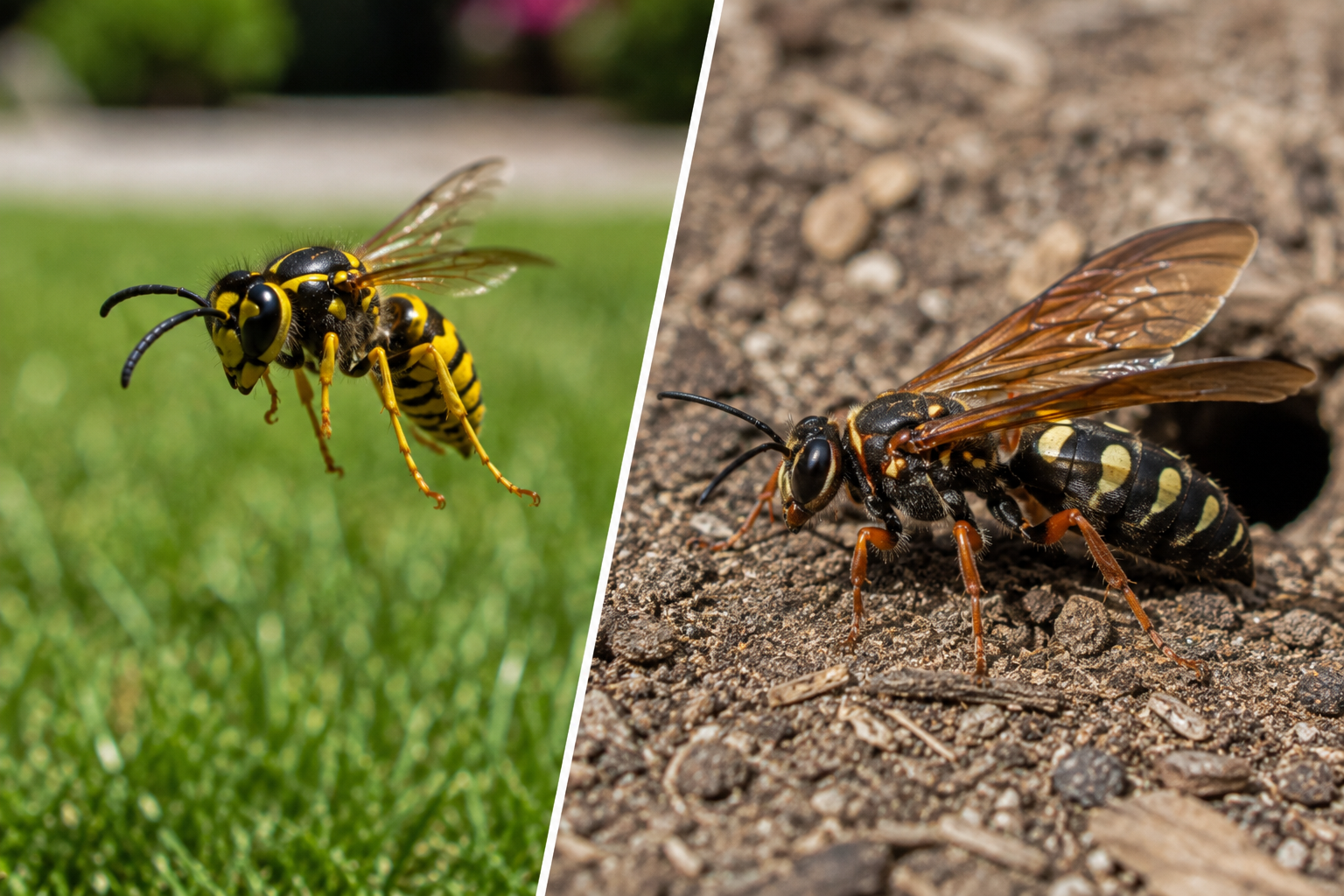
| Eastern Cicada Killer (Female) | Yes | Rarely stings people | Much larger, yellow and black, no fur — see our cicada killer post |
Signs Velvet Ants Are Active in Your Yard
What to Do If You Find a Velvet Ant
The sting is purely defensive. Leave it alone and it will move on. Never pick up a velvet ant with bare hands — even a gentle touch can trigger a sting.
Children and dogs are the most common accidental sting victims. If you spot one in a high-traffic area of the yard, watch it until it moves off before letting anyone back into that area.
Wash the sting site with soap and water. A cold compress and over-the-counter antihistamine or pain reliever can help with swelling and pain. Seek medical attention if any allergic reaction occurs.
How to Reduce Velvet Ant Encounters Around Your Home
- ✓ Wear shoes when walking in sandy or open lawn areas. Most velvet ant stings happen to bare feet — the simplest protection is keeping footwear on outdoors.
- ✓ Keep children and pets away from areas where you've spotted one. Velvet ants are fast and not easy to track once they start moving — creating distance is the best option.
- ✓ Reduce bare or sandy soil patches in the lawn. A thick, well-maintained lawn gives velvet ants fewer areas of exposed ground to cross and fewer host nests to hunt for.
- ✓ Don't try to kill or handle one yourself. Velvet ants are extremely difficult to crush and nearly impossible to handle without being stung. If you need one removed from a specific area, a long-handled tool is more reliable than bare hands.
- ✓ Call a professional if you have concerns about stinging insects on your property. InsectIQ's entomologist can identify exactly what's active in your yard and let you know whether any treatment is warranted.
Not Sure What Stinging Insect You Found in Your Yard?
InsectIQ has an entomologist on staff who can identify exactly what you're dealing with and tell you whether it poses a real risk to your family or pets. Contact us today to get a quote.
Contact Us for a Quote