
Bug of the Week: Yellow Jackets
Yellow jackets are especially active in late summer. Learn how to spot a nest, why they’re dangerous, and what to do if you find one in your yard.
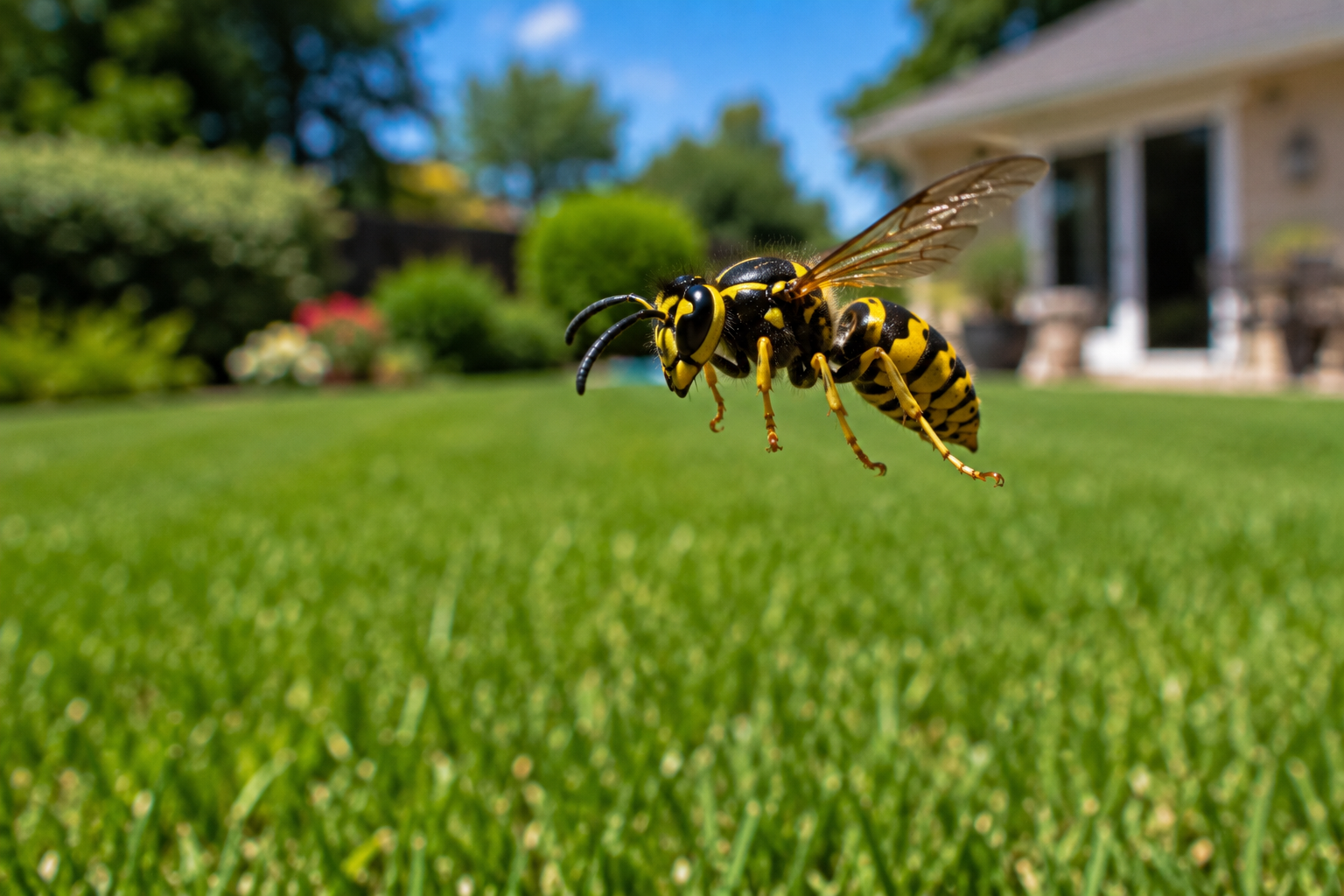
Yellow Jackets in Your Yard: Florida's Most Aggressive Backyard Wasp
You're mowing the lawn or trimming a hedge and suddenly something hits you — then hits you again. By the time you realize what's happening, you may already have several stings. Yellow jackets are responsible for more stinging insect emergencies in Florida than any other species, and most encounters happen because a nest was disturbed without anyone knowing it was there.
Here's what yellow jackets are, why they're so much more dangerous than other wasps in your yard, and what to do if you find a nest.
What Is a Yellow Jacket?
Yellow jackets are social wasps, which means they live in large colonies with a queen, workers, and a shared nest — and they defend that nest aggressively. Yellow jackets are an important predator of many damaging landscape pests; however, their ability to sting multiple times coupled with their aggressively defensive nature makes them one of those insects that people understandably want nowhere near their homes.
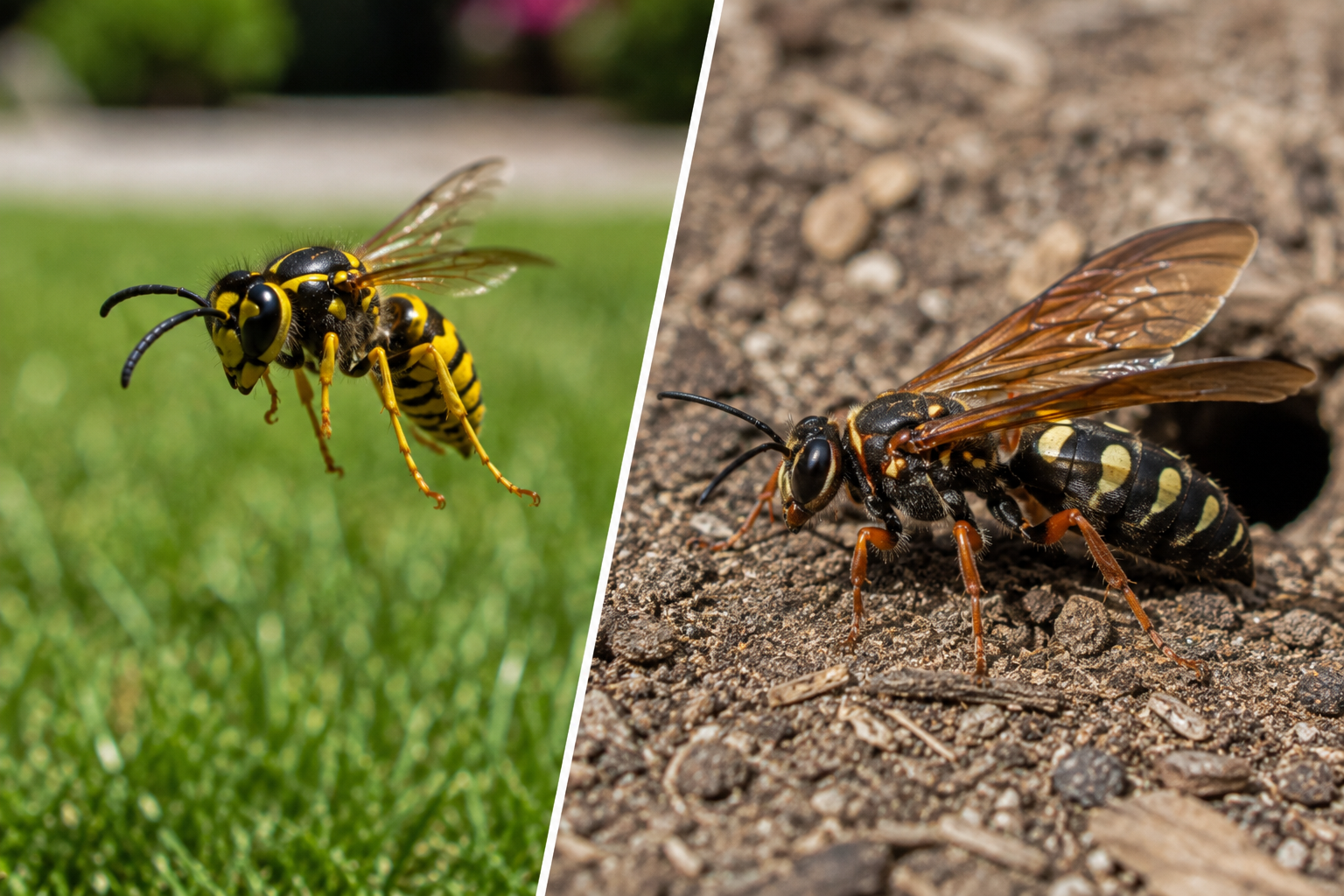
There are three species of yellow jacket in Florida: the Eastern yellow jacket (Vespula maculifrons), the Southern yellow jacket (Vespula squamosa), and the bald-faced hornet (Dolichovespula maculata). The Eastern and Southern yellow jackets have the classic yellow and black coloring most people recognize. The bald-faced hornet — despite its name — is technically a yellow jacket species too, distinguishable by its black and white coloring and large aerial nests.
Why yellow jackets are uniquely dangerous: Unlike honeybees, which die after a single sting, yellow jackets can continue to sting their target. And even if one yellow jacket is hurt, it releases an alarm pheromone, drawing aggressive and defensive behavior from the whole colony. This means a single accidental disturbance near a nest can result in dozens of stings within seconds — before most people have any chance to get away.
Florida's Three Yellow Jacket Species
Each species nests differently and shows up in different parts of your property, which matters for how they're found and treated.
- Scientific Name
- Vespula maculifrons
- Appearance
- Classic yellow and black banding with a smooth, shiny body; no hair like a bee
- Where It Nests
- Almost exclusively underground — frequently in old rodent burrows, making nests very hard to spot until they're disturbed
- Aggression Level
- Highly aggressive when the ground nest is disturbed by lawn equipment, foot traffic, or vibration
- Scientific Name
- Vespula squamosa
- Appearance
- Similar yellow and black pattern to the Eastern; slightly larger queens
- Where It Nests
- Both underground and in wall voids, attics, and hollow trees — more versatile than the Eastern species
- Aggression Level
- Equally aggressive; colonies can grow very large by late summer and early fall
- Scientific Name
- Dolichovespula maculata
- Appearance
- Black and white coloring rather than yellow and black; larger than the other two species
- Where It Nests
- Large, gray, papery aerial nests in trees, shrubs, and under eaves — distinctive and visible once large enough
- Aggression Level
- Extremely aggressive near the nest; these nests are considered too dangerous for DIY removal
How Dangerous Are Yellow Jackets?
Yellow Jacket vs. Other Florida Stinging Insects
Yellow jackets get confused with bees, paper wasps, and other species. Knowing the difference matters because each one behaves — and nests — differently.
| Insect | Body | Nest Location | Sting Behavior |
|---|---|---|---|
| Yellow Jacket | Smooth, shiny, no hair | Underground, wall voids, or aerial | Stings repeatedly; whole colony responds |
| Honeybee | Fuzzy, hairy body | Hollow trees, wall voids, hives | Stings once then dies; less aggressive |
| Paper Wasp | Slender, smooth, longer legs | Open umbrella-shaped nests under eaves | Stings multiple times; less aggressive than yellow jackets |
| Eastern Cicada Killer | Large, fuzzy-looking, yellow and black | Individual ground burrows | Females rarely sting people — see our cicada killer post |
Signs There May Be a Yellow Jacket Nest in Your Yard
What to Do If You Find a Yellow Jacket Nest
If you stumble onto a nest while working in the yard, don't swat or run — move away calmly and quickly. Swatting triggers the alarm pheromone and makes the response significantly worse.
Once safely away, mark the nest entrance with a visible object so others know to avoid it. Do not mow, trim, or work near the area until the nest has been treated.
Yellow jacket nests — especially underground or inside wall voids — are not safe for DIY removal. A professional can treat and eliminate the nest safely without triggering a mass defensive response.
How to Reduce Yellow Jacket Activity Around Your Home
- ✓ Inspect the yard carefully before mowing or trimming. Walk the area first and look for wasps flying in and out of the ground, especially around old stumps, rodent burrows, and mulch beds.
- ✓ Keep outdoor food and drinks covered. Yellow jackets are strongly attracted to sweet foods and proteins — open cans, uncovered plates, and fallen fruit are all draws that bring them closer to people.
- ✓ Empty and clean trash cans regularly. Outdoor bins with food residue are a consistent yellow jacket attractant, especially in late summer when their food-seeking behavior intensifies.
- ✓ Seal gaps around eaves, soffits, and wall vents. Yellow jackets use the same entry points as rodents and squirrels to get into wall voids — sealing them reduces nesting opportunities inside the structure.
- ✓ Address rodent burrows in the yard. Eastern yellow jackets frequently take over old rodent burrows as ready-made nesting sites — filling or treating active burrows removes one of the most common underground nest locations.
- ✓ Never attempt to treat a nest yourself. Yellow jacket nests are one of the few pest situations where DIY treatment consistently makes things significantly worse. A professional treatment is the only safe option for an active colony.
Found a Yellow Jacket Nest in Your Yard?
InsectIQ has an entomologist on staff who can identify exactly what you're dealing with and treat it safely. Yellow jacket nests require professional removal — don't risk it on your own. Contact us today to get a quote.
Contact Us for a Quote