
Pharaoh Ants vs Fire Ants
Pharaoh ants and fire ants need totally different treatment. Learn how to tell them apart before you spray in your Tampa Bay home.
Pharaoh Ant or Fire Ant? Why Mixing Them Up Can Cost You
Not all small ants in your Tampa Bay home or yard call for the same response. Pharaoh ants and fire ants are both common in Florida, but they behave so differently that treating one like the other can actually make the problem worse.
One is a tiny indoor pest that's notoriously hard to get rid of. The other is an outdoor mound-builder known for its painful sting. Here's how to tell them apart before you decide what to do.
Why People Mix Them Up
Both pharaoh ants and fire ants come in shades of yellow, orange, and reddish-brown, and both can show up in large numbers fast. But that's about where the similarities end. Their size, where they nest, and how they react to being disturbed are all completely different — and those differences matter a lot when it comes to getting rid of them.
Side-by-Side Comparison
Pharaoh Ant
- Size
- About 1/16 inch, one of the smallest household ants
- Color
- Light yellow to amber, almost see-through
- Nest Location
- Indoors in warm, humid spots like wall voids, behind baseboards, and near pipes
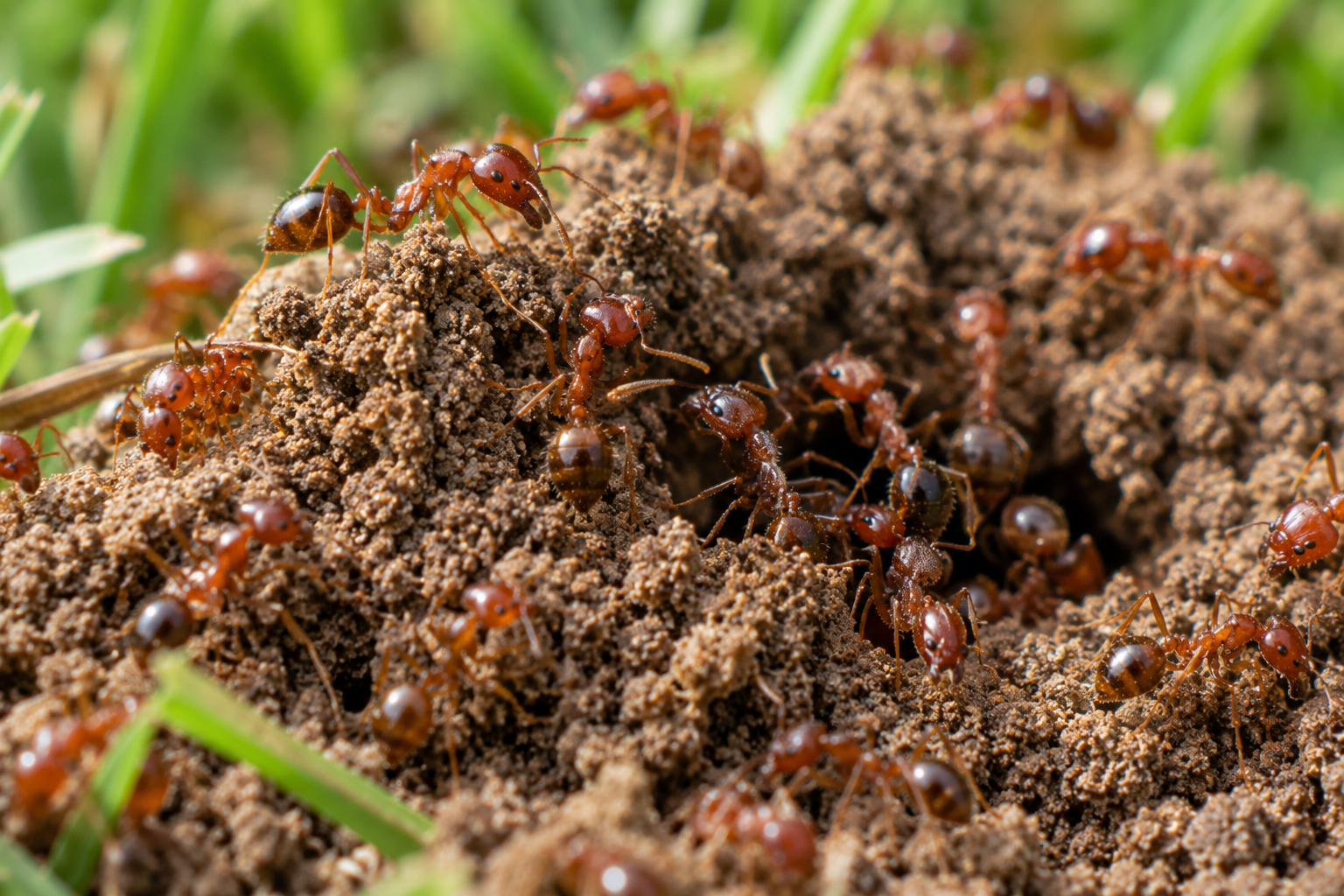
Fire Ant
- Size
- 1/8 to 1/4 inch, workers come in noticeably different sizes
- Color
- Reddish-brown body with a darker abdomen
- Nest Location
- Outdoors in visible dirt mounds in lawns, near sidewalks, and in open fields
The Behavior Giveaway
- Pharaoh Ant
- Forages quietly indoors along faint trails; rarely noticed until numbers grow large
- Fire Ant
- Swarms aggressively out of the mound and stings repeatedly when disturbed
Don't spray a pharaoh ant trail. Disturbing a pharaoh ant colony with sprays or repellents can cause it to split into several smaller colonies, a behavior called budding — which turns one indoor problem into several. Bait-based treatment is the standard approach for a reason. Fire ants are the opposite problem: their mounds are easy to spot, but disturbing one can trigger a defensive swarm, so keep your distance and see our fire ants guide for handling tips.
More Small Ants Worth Knowing
Pharaoh ants aren't the only tiny indoor ant Tampa Bay homeowners deal with. If the ants you're seeing are dark and give off a coconut-like smell when crushed, they may be a different species covered in our kitchen ants guide.
Comparison at a Glance
| Feature | Pharaoh Ant | Fire Ant |
|---|---|---|
| Size | About 1/16 inch | 1/8 to 1/4 inch |
| Color | Light yellow, almost see-through | Reddish-brown with darker abdomen |
| Where They Nest | Indoors, in wall voids and warm hidden spots | Outdoors, in visible dirt mounds |
| Reaction to Disturbance | Splits into more colonies if sprayed or disturbed | Swarms and stings aggressively |
| Best Treatment Approach | Slow-acting bait, never contact spray | Professional mound treatment |
Signs You Might Have One or the Other
Faint ant trails near sinks, baseboards, or electrical outlets indoors
A loose dirt mound in the lawn with no obvious entrance hole
Multiple stings after brushing against grass or a mound outdoors
What to Do
Watch Before You Treat
Note where the ants are trailing and whether the activity is indoors or centered on an outdoor mound.
Skip the Spray
Avoid spraying visible ants directly, since it can scatter a pharaoh ant colony or provoke a fire ant mound.
Call for the Right Treatment
A professional can confirm which ant you have and apply the correct bait or mound treatment for lasting control.
Keeping Both Ants Away
- Seal cracks around pipes, baseboards, and outlets where pharaoh ants can enter
- Keep food sealed and counters wiped down to reduce indoor ant trails
- Check the lawn periodically for new dirt mounds after rain
- Keep kids and pets away from any unfamiliar mound until it's identified
- Avoid DIY sprays on either ant type; let a professional confirm the species first
Not Sure Which Ant You're Dealing With?
InsectIQ has an entomologist on staff who can identify the species and recommend a treatment that actually works.
Contact Us for a Quote