
Brown Patch Fungus in Florida St. Augustine Lawns
Round brown patches in your St. Augustine lawn? Learn how to tell brown patch fungus from chinch bugs and how to help your lawn recover.
Brown Patch Fungus in Florida St. Augustine Lawns: Fungus or Bugs?
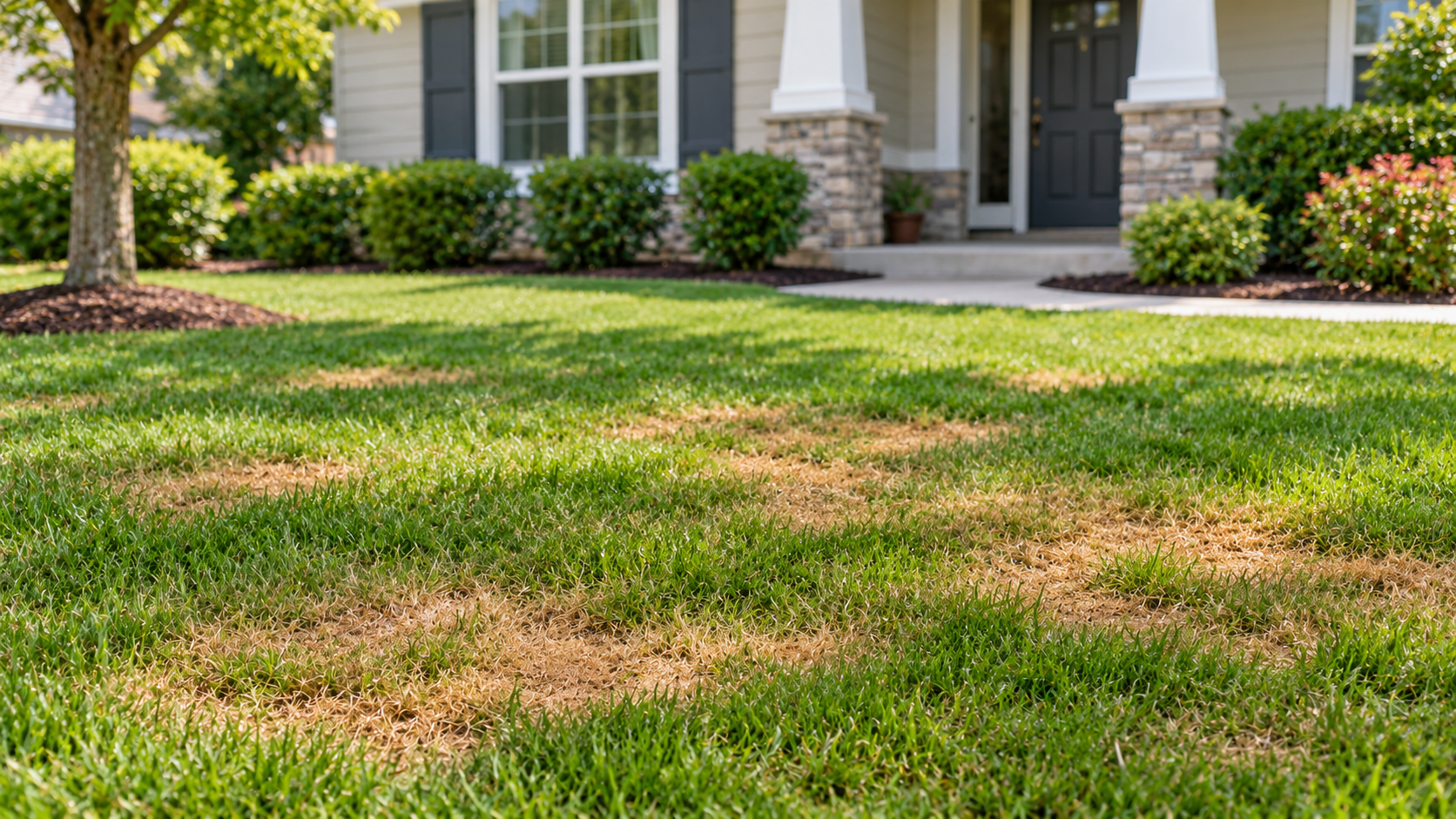
Are round brown patches showing up in your lawn as the weather cools? Many people blame chinch bugs right away. But the real cause may be a fungus called brown patch.
The two problems can look alike, but they need very different fixes. Here is how to tell them apart and what to do about each one.
What Is Brown Patch Fungus?
Brown patch is a lawn disease caused by a fungus that lives in the soil and thatch. Lawn experts also call it large patch. It can attack any warm-season grass, but it hits St. Augustine and zoysia lawns the hardest. That makes it a common problem across Tampa Bay.
Here is something that surprises people. The fungus attacks the base of the grass blades, not the roots. That is why many lawns can grow back once the weather warms up and the lawn care is fixed.
One note on names. You may also hear “brown patch” used for a different lawn disease that shows up in summer. This post is about the cool-season fungus, since that is the one most people see this time of year.
When Does It Show Up?
Brown patch likes cool, damp weather. It is most often seen when temperatures drop below 80 degrees, usually from about November to May. It often gets started in fall, when cooler nights and wet weather arrive together.
Fall
- Weather
- Cooler and damp. Perfect for the fungus.
- What you see
- Round, discolored patches start to form.
Winter and Spring
- Weather
- Cool until the heat returns.
- What you see
- Patches grow wider. The edge turns darker and sometimes orange. The center looks brown and sunken.
Summer
- Weather
- Hot, so the fungus slows down.
- What you see
- Grass may grow back into the dead spots. But if nothing changes, the problem returns next fall.
Try the pull test. Grab a blade of grass from the outer edge of a patch and tug. If it slides right out and the bottom is dark and smells rotten, a fungus is the likely cause.
Fungus or Bugs? How to Tell
Chinch bugs are the top insect pest of St. Augustine lawns, so they get blamed a lot. Drought can also leave brown spots. This table shows the clues that set them apart. Learn more about these bugs in our guide to chinch bugs in Florida lawns.
| Clue | Brown Patch Fungus | Chinch Bugs | Drought Stress |
|---|---|---|---|
| Shape | Round or ring-shaped patches with a darker edge. | Uneven patches that spread outward in odd shapes. | Browning across wide areas of the lawn. |
| Where it starts | Anywhere the lawn stays damp. | Hot, sunny spots near driveways, sidewalks, and foundations. | Sunny, dry areas often go first. |
| When it happens | Cool, damp months, from about November to May. | Hot, dry weather, but it can last much of the year in Florida. | During dry spells. |
| What you find | Blades pull out easily. The base is dark and smells rotten. | Tiny bugs near the soil line along the edge of the damage. | No bugs and no rotten smell. |
| After watering | No help. Extra water can make it worse. | The grass does not green up. | The grass perks up. |
Do not treat until you know what you have. Bug spray will not stop a fungus, and fungus treatment will not stop bugs. Weed killer damage can look like brown patch, too. The difference is that with weed killer damage, the base of the blade is not dark and rotten.
Other lawn pests can leave brown spots as well. Chewed, ragged blades may point to sod webworms. Spongy ground with small tunnels may mean mole crickets.
Signs of Brown Patch in Your Lawn
Round patches that keep getting wider
A dark or orange-looking edge around the patch
A brown, sunken center
Blades that pull out easily with a dark, rotten base
Patches that appear as nights turn cool and damp
The same spots coming back every fall
What to Do: 3 Simple Steps
Do the Pull Test
Pull a few blades from the outer edge of a patch. Look at the base. Dark, rotten, and easy to pull points to fungus.
Look for Bugs
Part the grass along the edge of the damage and look near the soil. Check sunny spots by the driveway and sidewalk first.
Fix Your Lawn Care
Water just once a week through February, water in the morning, and go easy on lawn food. Small changes can help the lawn recover.
How to Manage Brown Patch
The best fix is also the best prevention. Moisture is the biggest driver of this fungus, so the goal is to keep your lawn from staying wet.
Our recommendation: water once a week from now through February. Days are shorter and the weather is cooler, so your lawn needs far less water than it did in summer. Extra watering keeps the grass damp for longer, and that can promote fungus problems like brown patch. If you are still running your sprinklers on a summer schedule, cutting back is the easiest change you can make today.
- Cut your watering back to once a week from now through February. Established Florida lawns do not need water every day, and the lawn needs even less when the days are short.
- Water in the morning, so the grass dries out during the day.
- Use only slow-release nitrogen, and use it sparingly. Nitrogen is plant food, and too much can feed the fungus.
- Mow the sick areas last. Then clean your mower blades so you do not spread the fungus to healthy grass.
- Fix soggy spots and poor drainage. See our guide to yard drainage problems.
- Keep up with a lawn care plan that fits the season. Our post on getting the lawn of your life is a good place to start.
If lawn care changes are not enough, fungicides are an option. A fungicide is a product that stops fungus from growing. They work best in spots that had brown patch in past years, and when applied about two weeks before it usually shows up. If you apply after patches appear, they slow the fungus, but you may need to apply again. Always read and follow the product label. If the lawn is otherwise healthy, grass usually grows back on its own over time.
Not Sure What Is Hurting Your Lawn?
Brown spots can mean fungus, bugs, or both. Our experienced staff can identify what is causing the problem in your lawn, so you can fix the right thing the first time.
Contact Us for a Quote