
Bug of the Week: Bumblebees
Big, fuzzy, and great for your garden. Learn how to identify Florida bumble bees and what to do if a nest shows up too close to home.
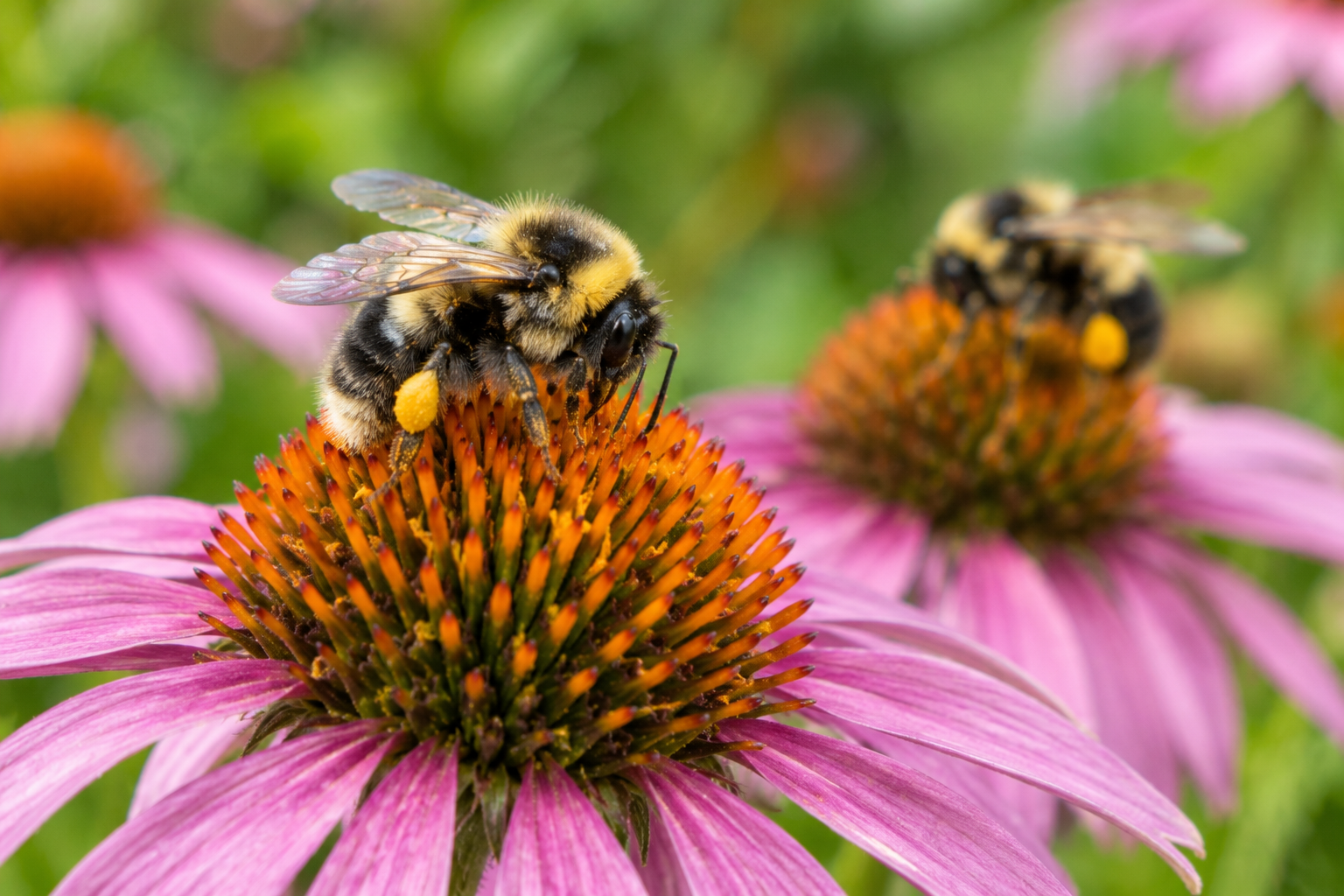
Bumble Bees in Florida: Big, Fuzzy, and Good for Your Garden
Bumble bees are some of the easiest bees to recognize in a Tampa Bay yard. They're big, round, and covered in thick fuzz, and they move from flower to flower with a slow, buzzing hum. Unlike honey bees, they don't live in a hive full of honeycomb, and unlike carpenter bees, they're not chewing into your deck.
They're also hard workers in the garden, pollinating a wide range of native and ornamental plants. Here's how to recognize one, where they nest, and what to do if a colony sets up somewhere you'd rather it didn't.
How to Recognize a Bumble Bee
Bumble bees are large, round, and covered head to tail in dense fuzz, with color patterns of black mixed with yellow, orange, or white depending on the species. The easiest way to confirm you're looking at a bumble bee rather than another large bee is to check the female's back legs for a smooth, shiny patch called a pollen basket, which she uses to carry pollen back to the nest. Florida is home to five bumble bee species, and they're more common in North and Central Florida, becoming rarer the further south you go. None are found in the Florida Keys.
A Few Species You Might Spot
Common Eastern Bumble Bee
- Look
- Black body with a solid yellow band near the front and a black abdomen
- Where
- One of the two most common species found throughout Florida
Two-Spotted Bumble Bee
- Look
- Yellow and black with two pale yellow spots on the abdomen
- Where
- Common across the state, active nearly year-round in Florida's mild climate
American Bumble Bee
- Look
- Black face with yellow hairs mixed in and notably long antennae
- Where
- One of the two most widespread species in the state
Their Yearly Routine
A bumble bee colony starts fresh every year. In late winter or early spring, a mated queen who spent the cooler months underground comes out and searches for a place to start a new nest. She doesn't build from scratch — bumble bees usually move into a space that's already there, like an old rodent burrow, a cavity under a shed, or even an abandoned birdhouse. From there, she raises the first batch of workers herself before the colony grows to its full size of a few dozen up to several hundred bees. Thanks to Florida's short, mild winters, bumble bees can be seen foraging nearly year-round, with new queens most active in late winter and males more common in late fall.
Cold-weather champs: Bumble bees handle cool mornings better than most bees. Their large, fuzzy bodies hold heat well, and they can even warm themselves up by vibrating their flight muscles before taking off.
Bumble Bee or Carpenter Bee?
These two get mixed up constantly, since both are large, round, and buzz loudly around the yard. The easiest way to tell them apart is the abdomen: a bumble bee's abdomen is fuzzy all over, while a large carpenter bee has a smooth, shiny, hairless abdomen. Carpenter bees are also the ones responsible for the round, perfectly drilled holes in wood decks, eaves, and fences — something bumble bees never do. For more on that species, see our carpenter bees guide.
They can sting more than once. Unlike honey bees, bumble bees don't lose their stinger after use, so a defensive bumble bee can sting multiple times. They're not aggressive by nature and mostly sting when a nest is disturbed, but a colony that's built too close to a doorway or play area is worth having removed by a professional.
Signs You Have Bumble Bees Nearby
Large, fuzzy bees moving slowly between flowers in the garden
Steady bee traffic in and out of a hole in the ground or under a structure
A low buzzing hum coming from a wall void, shed, or woodpile
What to Do If You Find a Nest
Give It Space
If the nest isn't near foot traffic, it's often fine to simply leave it alone and let the bees keep pollinating.
Watch for Problem Spots
A nest near a doorway, patio, or play area is worth addressing before activity picks up.
Call a Professional
Because bumble bees can sting repeatedly, nest removal near the home is best left to an experienced professional.
Living Alongside Bumble Bees
- Leave active nests alone when they're away from high-traffic areas
- Fill in unused rodent burrows if you'd rather not attract a nesting queen
- Keep kids and pets clear of any hole with steady bee activity
- Plant a variety of native flowering plants to support pollinators like bumble bees
- Have a professional remove nests that are too close to entryways or walkways
Found a Bumble Bee Nest Somewhere Tricky?
InsectIQ has an entomologist on staff who can confirm the species and remove a problem nest safely.
Contact Us for a Quote