
Bug of the Week: Stink Bugs
Not every stink bug is a pest. Learn to tell Florida's plant-damaging species from the beneficial ones that hunt garden bugs.
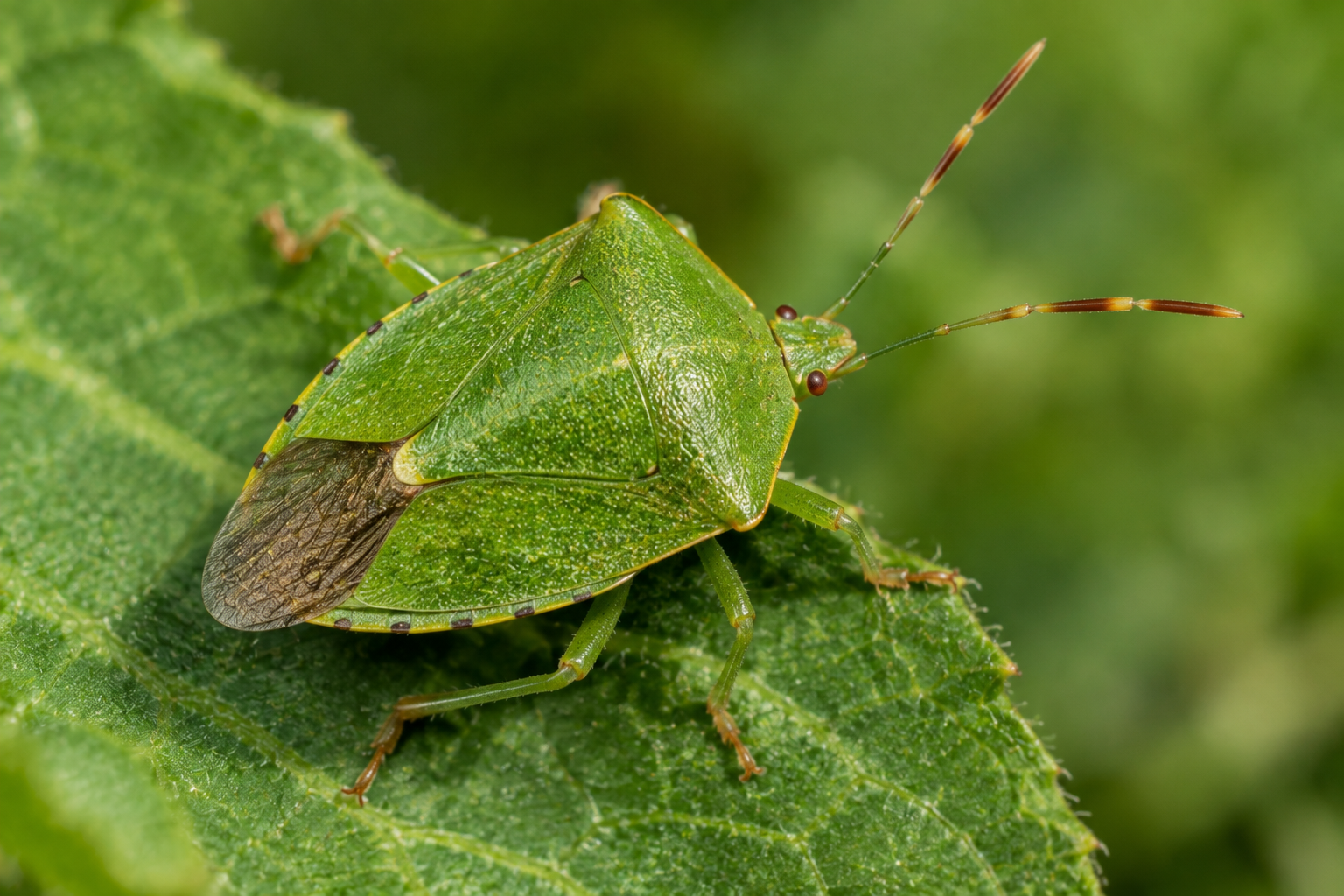
Stink Bugs in Florida: Not All of Them Are the Enemy
Shield-shaped, slow-moving, and famous for the smell they release when threatened, stink bugs are easy to recognize but not always easy to judge. Some species chew through tomatoes and ornamentals in the garden, while others are actually working for you by hunting caterpillars and beetles.
Here's how to tell Florida's most common stink bugs apart, and when one showing up in your yard or home is actually good news.
How to Recognize a Stink Bug
Most stink bugs share the same basic look: a broad, shield-shaped body, six legs, long antennae, and a tube-like mouthpart used for piercing and sucking. Color varies a lot by species and life stage, ranging from bright green to mottled brown to gray. Young stink bugs, called nymphs, often look like smaller, rounder versions of the adults and can be tricky to identify on their own. Eggs are usually laid in tight clusters on the undersides of leaves.
Meet Florida's Most Common Stink Bugs
Southern Green Stink Bug
- Look
- Bright green, shield-shaped, about 3/4 inch long
- Behavior
- Feeds on plant sap; the most common pest stink bug in Florida gardens
- Status
- Plant pest
Brown Marmorated Stink Bug
- Look
- Mottled brown, roughly 1/2 to 3/4 inch, with light bands on the antennae
- Behavior
- An invasive species that seeks shelter indoors in cooler months
- Status
- Nuisance pest, especially in fall
Florida Predatory Stink Bug
- Look
- Dark, metallic body with red or orange markings
- Behavior
- Hunts caterpillars, beetles, and other garden pests
- Status
- Beneficial predator
How to tell the good from the bad: Predatory stink bugs have sturdy, thick mouthparts built for grabbing prey, while plant-feeding species have thinner, more delicate mouthparts made for sipping sap. If you're not sure which one you're looking at, watching its behavior is the easiest clue — a stink bug actively feeding on another insect is one of the good guys.
When They Move Indoors
As the weather cools in fall, brown marmorated stink bugs in particular start looking for a warm, dry place to spend the winter, and homes fit the bill. They don't bite, sting, or reproduce indoors, but a cluster of them gathering on a sunny wall or window can be an unwelcome surprise. This is the same kind of seasonal indoor wandering we cover in our occasional invaders guide, and the prevention steps are much the same.
Signs Stink Bugs Are Around
Discolored or deformed spots on tomatoes, beans, or citrus fruit
Stink bugs gathering on sunny exterior walls or windows in fall
A strong, unpleasant odor after one is disturbed or crushed
What to Do About Them
Identify Before You Act
Take a close look at color and behavior to figure out whether it's a plant pest or a beneficial predator before doing anything.
Handle Gently
Avoid crushing stink bugs indoors, since disturbing them releases their signature odor. A vacuum works better than a swat.
Seal Up Entry Points
Check screens, door sweeps, and gaps around windows, especially before the fall months when they start looking for shelter.
Keeping Stink Bugs From Becoming a Problem
- Inspect vegetable gardens regularly for feeding damage on fruit and leaves
- Seal cracks around windows, doors, and siding before fall
- Leave predatory stink bugs alone if you spot them hunting other pests
- Remove garden debris where pest species can lay eggs
- Call a professional if fall populations are gathering heavily on your home's exterior
Not Sure Which Stink Bug You're Dealing With?
InsectIQ has an entomologist on staff who can tell the helpful species from the harmful ones and recommend the right next step.
Contact Us for a Quote