
Bug of the Week: Mud Dauber
Mud daubers are calm, spider-hunting wasps. Learn how to spot their mud nests and when to remove them from your Tampa Bay home.
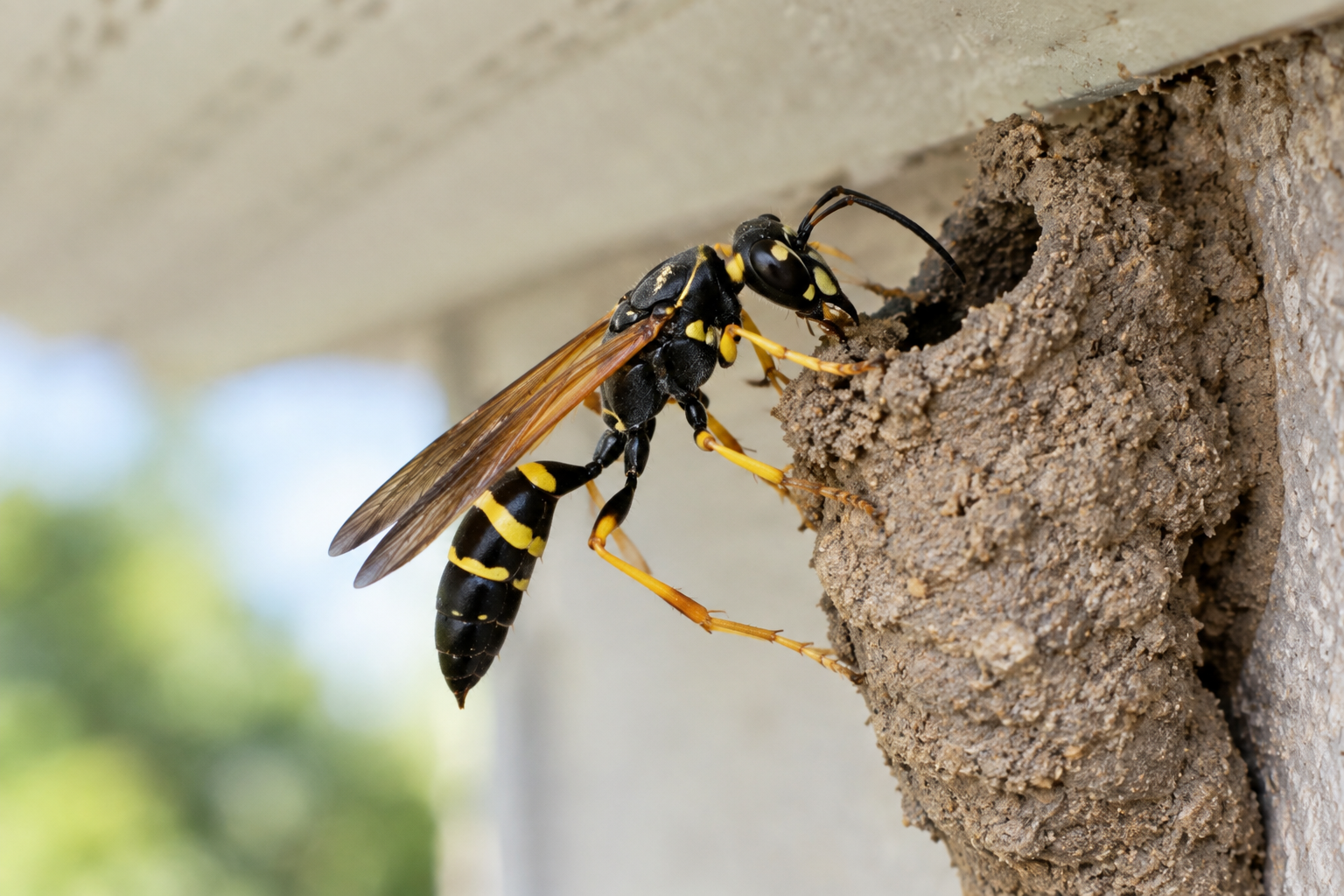
Mud Daubers in Florida: The Quiet Wasps That Hunt Spiders
Ever spot a small clump of dried mud stuck under your porch roof or inside the garage? That's the work of a mud dauber, a slim, slow-moving wasp that builds its nest out of dirt and water.
The good news: mud daubers are some of the calmest wasps in Florida. They keep to themselves, rarely sting, and spend their days hunting spiders. Here's how to spot them, what their nests look like, and when you might want to take one down.
What Is a Mud Dauber?
A mud dauber is a solitary wasp, which means it doesn't live in a big colony with a queen like yellow jackets or paper wasps do. Each female builds her own nest, stocks it with food, and lays her eggs alone. The name comes from how she builds: she carries small balls of wet mud in her jaws and shapes them into tubes or cells.
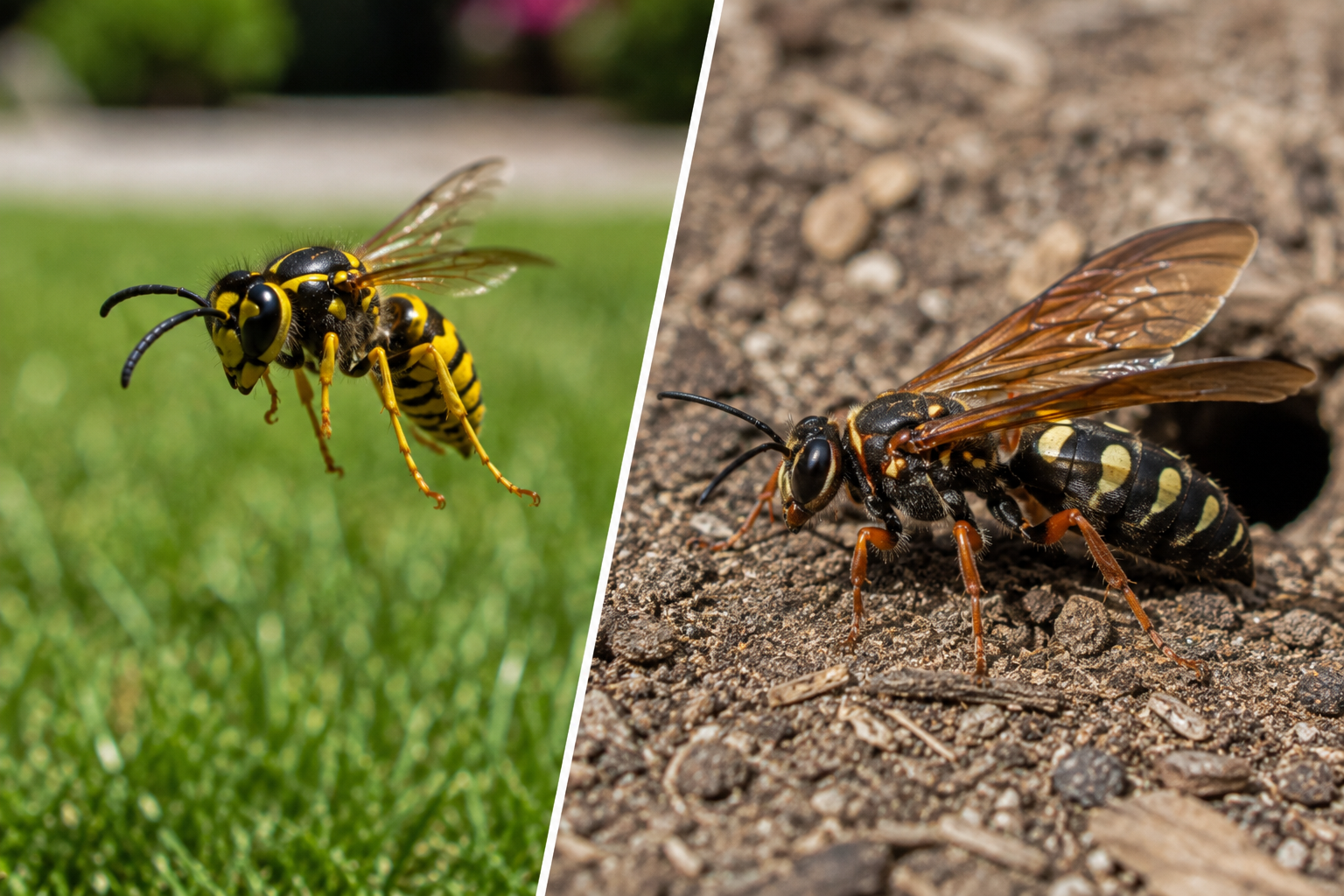
You can spot one by its long, thin body and a very narrow, thread-like waist between the chest and the rear. Colors range from black and yellow to shiny metallic blue depending on the species.
Three Mud Daubers You Might See
Black and Yellow Mud Dauber
- Look
- Black body with yellow markings and a very thin waist
- Nest
- Lumpy clusters of mud cells stuck to walls, eaves, and ceilings
Organ Pipe Mud Dauber
- Look
- Slim black wasp
- Nest
- Long, side-by-side mud tubes that look like the pipes of an organ
Blue Mud Dauber
- Look
- Shiny metallic blue-black body
- Nest
- Often reuses old nests built by other mud daubers instead of making a new one
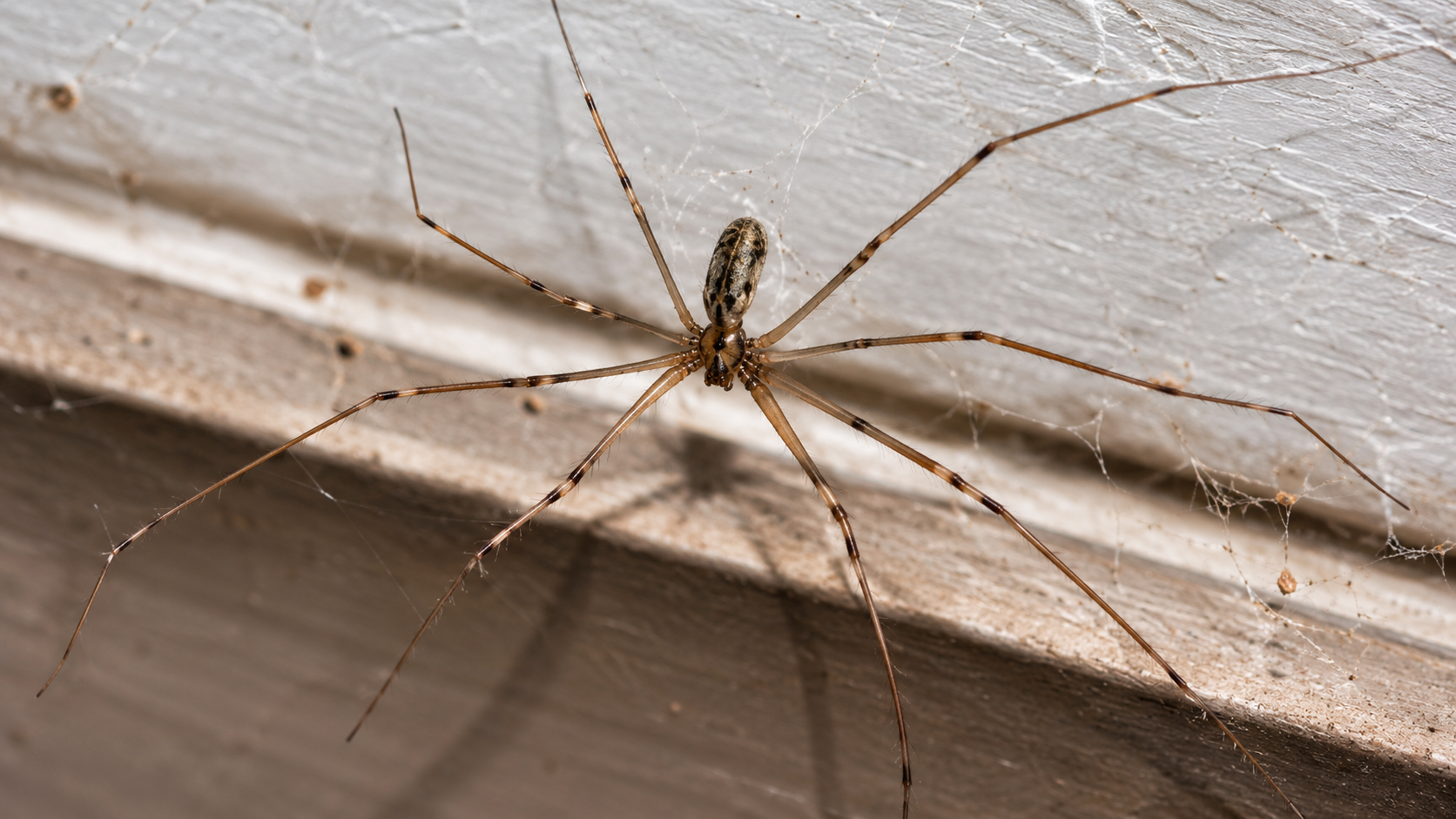
A helpful neighbor: Mud daubers catch spiders, paralyze them, and seal them inside the mud cells as food for their young. Some species, like the blue mud dauber, are known to go after black widows. That makes them a natural spider control team around your home.
Are Mud Daubers Dangerous?
Not really. Mud daubers don't defend their nests the way social wasps do, and they usually only sting if you grab or squeeze one. Because they hunt alone, there's no swarm to worry about. If you're curious how they compare with other Florida wasps, our solitary wasps guide covers the digger wasp side of the family, and our yellow jackets guide shows what a truly defensive wasp looks like.
Read the Nest to ID the Wasp
Wasp nests are often easier to identify than the wasps themselves. Here's a quick way to tell the most common Florida wasp nests apart:
| Wasp | What the Nest Looks Like | Where You'll Find It |
|---|---|---|
| Mud Dauber | Hard tubes or lumps of dried mud | Eaves, soffits, garages, sheds, and porch ceilings |
| Paper Wasp | Open, umbrella-shaped comb with visible cells | Under eaves, in shrubs, and on railings |
| Yellow Jacket | Enclosed papery ball with one small opening | Underground or inside wall voids |
For a closer look at the open-comb nest style, check out our paper wasp guide.
Signs You Have Mud Daubers
Small tubes or lumps of dried mud stuck to walls, ceilings, or eaves
Slim wasps hovering near puddles or wet dirt, gathering mud
Tiny round holes in old nests where young wasps have already left
What to Do About Mud Dauber Nests
Check If It's Active
Many mud dauber nests are old and empty. If you don't see wasps coming and going, the nest is probably abandoned.
Scrape It Down
Once a nest is empty, it's easy to scrape off with a putty knife. Doing it in the cooler part of the day keeps things calm.
Watch for New Nests
Females often come back to the same sheltered spots, so check eaves and garages every few weeks in warm months.
Keeping Mud Daubers From Settling In
- Scrape off old nests each season so females don't reuse them
- Seal gaps in soffits, garage vents, and shed walls
- Fix leaky hoses and sprinklers that leave wet mud puddles nearby
- Keep spider populations down, since spiders are what draw the wasps in
- Call a professional if nests keep coming back or are hard to reach
Wasp Nests Where You Don't Want Them?
InsectIQ has an entomologist on staff who can identify what's nesting on your home and recommend the safest way to handle it.
Contact Us for a Quote