
Bug of the Week: Asian Cockroach
Meet the Asian cockroach — a flying, outdoor roach that got its U.S. start near Tampa. Here's how to spot one in your yard.
Asian Cockroach: The Flying Roach That Started Right Here in Tampa Bay
If a "cockroach" just flew out of your mulch bed instead of scurrying away, you may be looking at an Asian cockroach. It's an outdoor flier that thrives in Florida landscaping, and it actually got its start in the United States right here in the Tampa Bay area.
Here's what makes this species tick, where it likes to live, and how to know when it's the one you're dealing with.
A Florida Newcomer With Local Roots
The Asian cockroach wasn't identified in the United States until 1986, when it turned up in Lakeland. A year later, an even bigger population was found near Brandon and Tampa. Since then, it's spread across much of Florida and into several nearby states. It's believed to have arrived from Japan, likely hitching a ride in cargo shipments.
How to Identify One
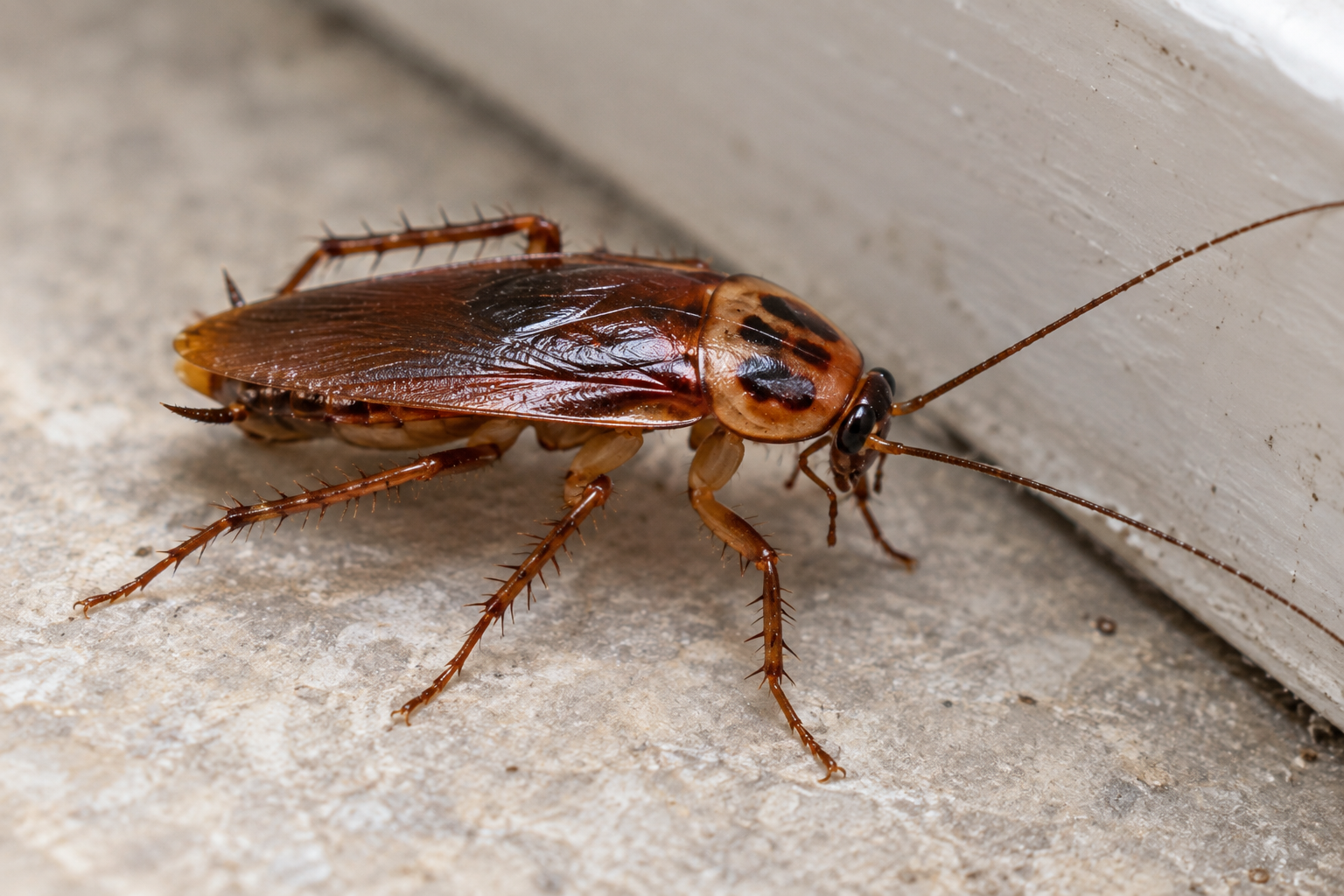
An Asian cockroach grows to about 5/8 inch long and is light to medium brown, with two darker stripes running down the area just behind the head. It has a slim, oval body and fully developed wings that cover its entire abdomen. In good light, you'll also notice it's a strong, confident flier rather than a bug that scurries for cover the moment it's spotted.
Where They Live and How They Behave
Outdoor Habitat
- Where
- Mulch beds, leaf litter, garden borders, and thick lawns
- Population
- Can reach tens of thousands per acre in the right conditions
Strong Flier
- Ability
- Capable of sustained flights over 100 feet at a time
- When
- Takes off quickly when disturbed by mowing, watering, or foot traffic
Drawn to Light
- Behavior
- Active at dusk and attracted to porch lights and light-colored surfaces
- Result
- Occasionally ends up indoors by accident near windows and doors
The mulch bed tell: If you're watering or mowing and small brown insects suddenly burst into flight like little moths, that's a classic sign of Asian cockroaches. Most other roaches you'd find outdoors don't take to the air like this.
How It Compares to the German Cockroach
The one lookalike worth knowing about is the German cockroach, since the two are nearly identical in size, color, and markings. The real difference is lifestyle: German cockroaches live indoors year-round, rarely fly, and are the species behind most home infestations in Florida. Asian cockroaches stay outdoors, fly readily, and only wander inside by accident. If what you're seeing is indoors and avoiding the light, it's worth a look at our German cockroach guide instead.
Signs You Might Have Asian Cockroaches
Small brown insects flying up out of mulch or grass at dusk
Roaches gathering near porch lights or brightly lit windows at night
Occasional flying roaches indoors near entry points, without a full-blown infestation
What to Do
Note Where You See Them
Outdoor sightings in mulch or lawn areas point toward Asian cockroaches rather than an indoor infestation.
Reduce Outdoor Habitat
Thinning out thick mulch and clearing leaf litter near the home can help lower outdoor populations.
Get a Confirmed ID
Since the two species look so similar, a professional inspection is the most reliable way to know which one you actually have.
Keeping Cockroaches, Asian or German, Away From Your Home
- Keep mulch layers thin and away from direct contact with the foundation
- Switch outdoor lighting to less attractive bulbs where possible
- Seal gaps around doors and windows to block accidental indoor entry
- Clear leaf litter and yard debris away from the home's perimeter
- Get a professional inspection if you're unsure which species you're seeing
Not Sure Which Cockroach You're Seeing?
InsectIQ has an entomologist on staff who can tell the difference and recommend the right plan for your yard or home.
Contact Us for a Quote