
Bat Season Florida: When You Can Legally Remove Bats
Florida's bat exclusion window opened on August 15. If you have bats in your home, now is the only time to legally remove them. Here's what you need to know.
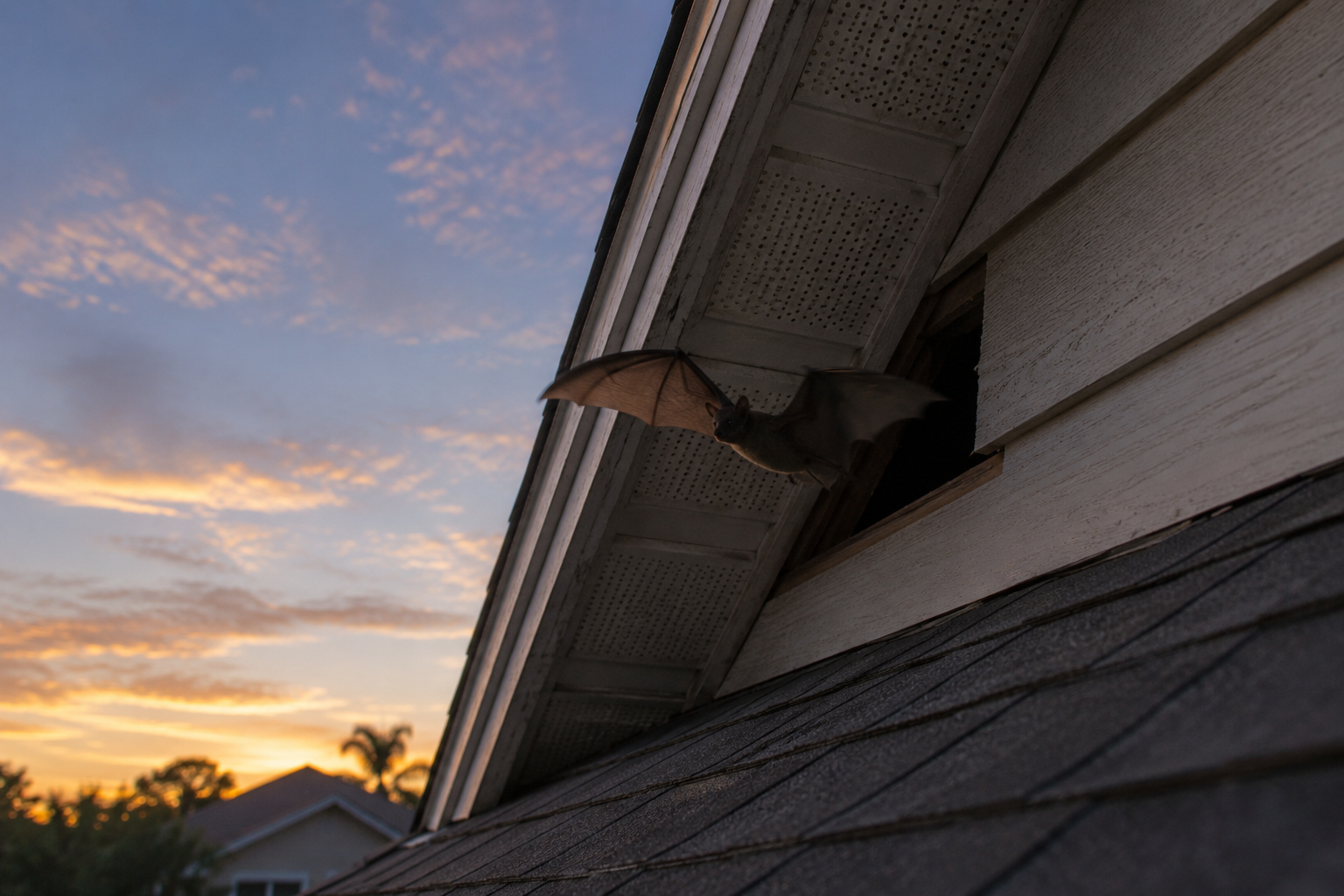
Bat Season Has Started: What Florida Homeowners Need to Know Right Now
Every summer, thousands of Florida homeowners notice bats flying out from their roofline at dusk, hear scratching in the walls, or find droppings collecting near an eave. Most of them wait — not knowing that there is a specific window of time each year when bat removal is legal, and that window just opened.
If you've suspected bats in your home this summer, right now is the time to act. Here's everything you need to understand why — and what to do about it.
Florida's Bat Law: Why Timing Is Everything
Florida is home to 13 native bat species, and every single one of them is protected under Florida law. It is illegal in Florida to kill or harm bats. The only legal method for removing bats from a home or structure is exclusion — a process that allows bats to exit the building on their own but prevents them from returning.
But exclusion can't be done at just any time. It is illegal to evict or exclude bats during the maternity season, which runs from April 16 through August 14, to prevent flightless young from being trapped inside structures. The only legal and effective method to remove bats from buildings is by using exclusion devices that let bats exit freely but prevent reentry, which can only be used from August 15 to April 15. That window opened two days ago — and it closes again on April 15.
Why the maternity season restriction matters: During the maternity season, female bats are congregating and raising baby bats known as pups. Pups are born hairless and require high temperatures to stay warm, especially when their mother is out finding food. Pups aren't able to fly for a few weeks after they are born, so any form of eviction during this time will result in baby bats being trapped along with adult bats that may not have emerged. Trapped bats will attempt to escape and may end up in the living space of the building. Also, the decay process of dead bats can produce strong odors and could attract unwanted pests such as cockroaches.
Florida Bat Species Most Commonly Found in Homes
Of Florida's 13 native bat species, a few are far more likely than others to roost in residential structures. These are the ones Tampa Bay homeowners encounter most often.
- Scientific Name
- Tadarida brasiliensis
- Appearance
- Dark brown to gray with a distinctly long tail that extends well beyond the tail membrane
- Colony Size
- The most common structure-roosting bat in Florida — colonies can reach hundreds or thousands of individuals in a single attic
- Where They Roost
- Attics, wall voids, under roof tiles, and behind soffits — prefers tight, warm spaces with easy exit access
- Scientific Name
- Myotis austroriparius
- Appearance
- Small and brownish-gray with large ears; one of Florida's smaller bat species
- Colony Size
- Smaller colonies than the Brazilian free-tailed bat, but still capable of causing significant guano accumulation
- Where They Roost
- Attics and wall voids, often in older homes with more gaps and loose structural materials
- Scientific Name
- Nycticeius humeralis
- Appearance
- Dark brown above with a black face, ears, and wing membranes; small and compact
- Colony Size
- Maternity colonies of up to several hundred individuals; typically smaller than free-tailed bat groups
- Where They Roost
- Behind shutters, under roof tiles, in wall spaces, and in attic areas with loose boards or siding gaps
What Bats Actually Do to Your Home
Bats are genuinely beneficial animals — a single bat can eat thousands of mosquitoes and other insects in a single night. But when they roost inside a structure, the damage they leave behind is significant and gets worse the longer they stay.
Signs You May Have Bats in Your Home
How Bat Exclusion Actually Works
Exclusion is the only legal and effective method for removing a bat colony from a Florida home. It's not a simple one-step process — it requires a thorough inspection, strategic installation of one-way devices, and proper sealing of every possible entry point.
A technician identifies every current and potential entry point on the structure — including gaps as small as 3/8 of an inch, which is all a bat needs to get inside.
Exclusion devices must be installed on key exit points, left up for a minimum of four nights, and the exclusion must be conducted when the overnight temperature is forecast to be 50°F or above. The devices allow bats to leave but not return.
Once the colony has vacated, all entry points are permanently sealed and the contaminated area is assessed for guano cleanup and insulation replacement if needed.
Why You Can't Handle This One Yourself
- ✓ Killing or harming bats is illegal under Florida law — no exceptions. Even if bats are in your home, you cannot poison, trap, or harm them. The penalty for doing so can include significant fines.
- ✓ Sealing the entry point yourself can trap bats inside. If bats are blocked from exiting, they will push deeper into the structure looking for another way out — often ending up in the living area of the home.
- ✓ Guano cleanup requires protective equipment. Bat droppings can carry histoplasmosis spores that become airborne when disturbed. Proper cleanup requires respiratory protection and safe disposal procedures.
- ✓ Missing even one entry point means the colony returns. Bats have strong homing instincts and will find their way back to the same roost site if any gap remains unsealed. A professional inspection is the only way to confirm every point is addressed.
- ✓ The exclusion window is limited — and the next one doesn't open until next August. If the problem isn't addressed before April 15, exclusion becomes illegal again until August 15 of next year. Acting now avoids another full year of damage accumulating in your attic.
The Bat Exclusion Window Is Open — Don't Wait
The legal window for bat exclusion in Florida runs from August 15 through April 15. If you noticed bat activity this spring or summer, now is the time to act. InsectIQ's wildlife team handles the full process — inspection, exclusion, sealing, and cleanup — so you don't have to navigate Florida's bat laws on your own. Contact us today to get a quote before the season books up.
Contact Us for a Quote