
Yellow Jacket or Cicada Killer? Florida ID Guide
Confused a giant wasp for a yellow jacket? Learn how to tell yellow jackets and cicada killers apart in Tampa Bay yards.
Yellow Jacket or Cicada Killer? How to Tell Florida's Two Big Yard Wasps Apart
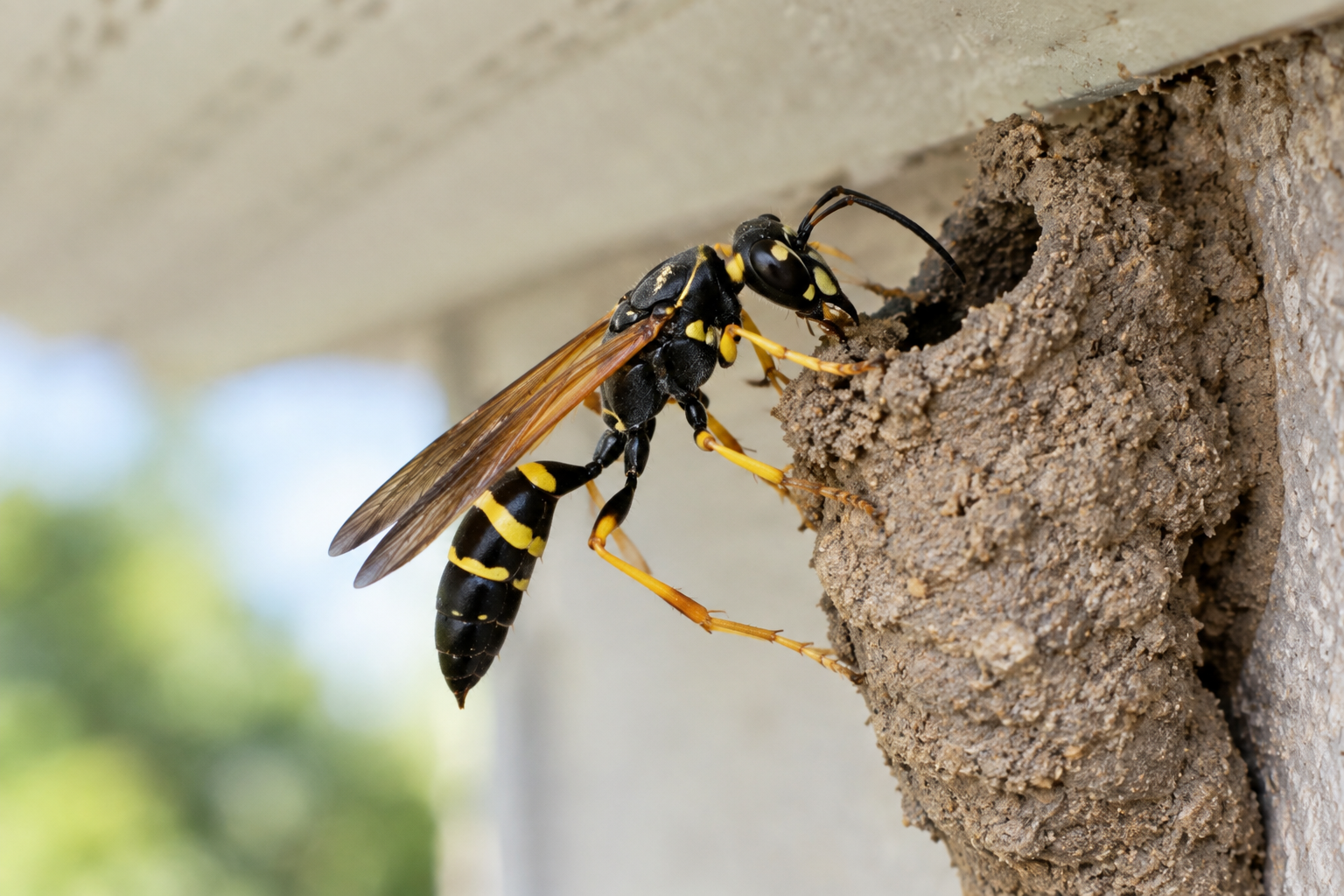
Every summer, Tampa Bay homeowners spot a huge, buzzing wasp patrolling the lawn and assume the worst. Often, it's not an angry yellow jacket colony — it's a cicada killer, a much bigger wasp that mostly minds its own business.
Telling them apart matters. One lives in a group and defends its nest hard. The other lives alone and rarely stings anyone. Here's how to know which one is actually in your yard.
Why People Mix Them Up
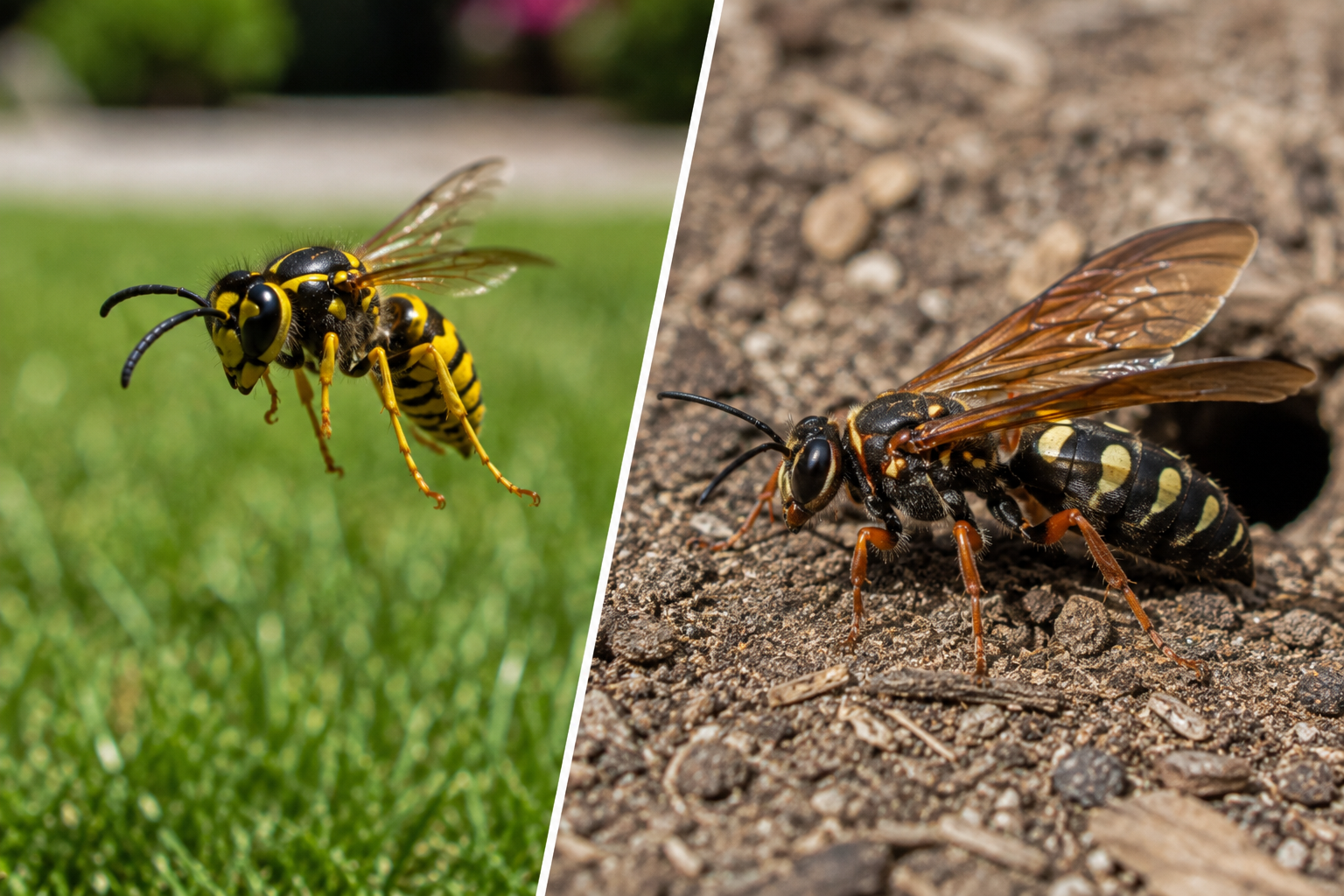
A cicada killer looks like a yellow jacket that hit the gym. Both wasps have black and yellow markings and both dig nests in the ground, so it's an easy mistake to make. But once you know what to check, telling them apart takes about five seconds.
Side-by-Side Comparison
Yellow Jacket
- Size
- About half an inch long
- Look
- Crisp black and yellow bands, clear wings, smooth compact body
- Colony
- Social; lives in a nest with dozens to thousands of workers
Cicada Killer
- Size
- 1.5 to 2 inches long, one of the largest wasps in Florida
- Look
- Reddish-brown head and thorax, black body with yellow bands, amber-tinted wings
- Colony
- Solitary; each female digs and provisions her own separate burrow
The Nest Giveaway
- Yellow Jacket
- Papery football-shaped nest, often hidden underground or in a wall void
- Cicada Killer
- Open, U-shaped burrow with a mound of loose soil piled around the entrance
Behavior tells the real story. Yellow jackets defend their colony as a team and will chase and sting anyone who gets too close to the nest. Cicada killers are the opposite — the large males you see dive-bombing people have no stinger at all, and females only sting if they're grabbed or stepped on.
Getting to Know the Neighbors
Both of these wasps already have their own detailed guides on our blog. Our eastern cicada killer guide covers their burrowing habits and life cycle in more depth, and our yellow jacket guide walks through nest removal and sting prevention around the home.
Comparison at a Glance
| Feature | Yellow Jacket | Cicada Killer |
|---|---|---|
| Size | About 0.5 inch | 1.5 to 2 inches |
| Body Color | Bright black and yellow bands | Reddish-brown head, black body with yellow bands |
| Wings | Clear | Amber tinted |
| Lives In | A colony with a queen and workers | A single burrow, one female per nest |
| Sting Behavior | Will chase and sting to defend the nest | Rarely stings; males cannot sting at all |
Signs You Might Have One Nesting Nearby
A loose mound of soil with a burrow opening in a bare, sunny patch of lawn
Wasps hovering low over the same patch of grass for days in a row
Steady wasp traffic in and out of a gap in siding, a wall void, or an attic vent
What to Do If You Find a Nest
Keep Your Distance
Watch from a few feet away and avoid mowing, digging, or spraying near the entrance.
Identify Before You Act
Use size, color, and nest style to figure out which wasp you're dealing with before deciding what to do.
Call for Removal
Yellow jacket colonies in particular are best left to a professional who can remove the nest effectively.
Keeping Wasps From Setting Up Camp
- Fill in bare, sandy patches of lawn that attract burrowing wasps
- Seal gaps around siding, soffits, and vents where colonies can start
- Keep trash cans covered and food sources cleared away from patios
- Walk the yard periodically to catch new burrows or nests early
- Never plug a burrow or spray a nest yourself if you're unsure which wasp it is
Not Sure Which Wasp You're Dealing With?
InsectIQ has an entomologist on staff who can help you tell these two wasps apart and recommend the right next step for your yard. Get a professional identification and removal plan.
Contact Us for a Quote