
Wolf Spiders in Florida: Scary But Mostly Harmless
Found a large, fast-moving spider in your Tampa Bay home? It's probably a wolf spider — not a brown recluse. Here's how to tell the difference for sure.
Wolf Spiders: Florida's Most Misidentified Backyard Spider
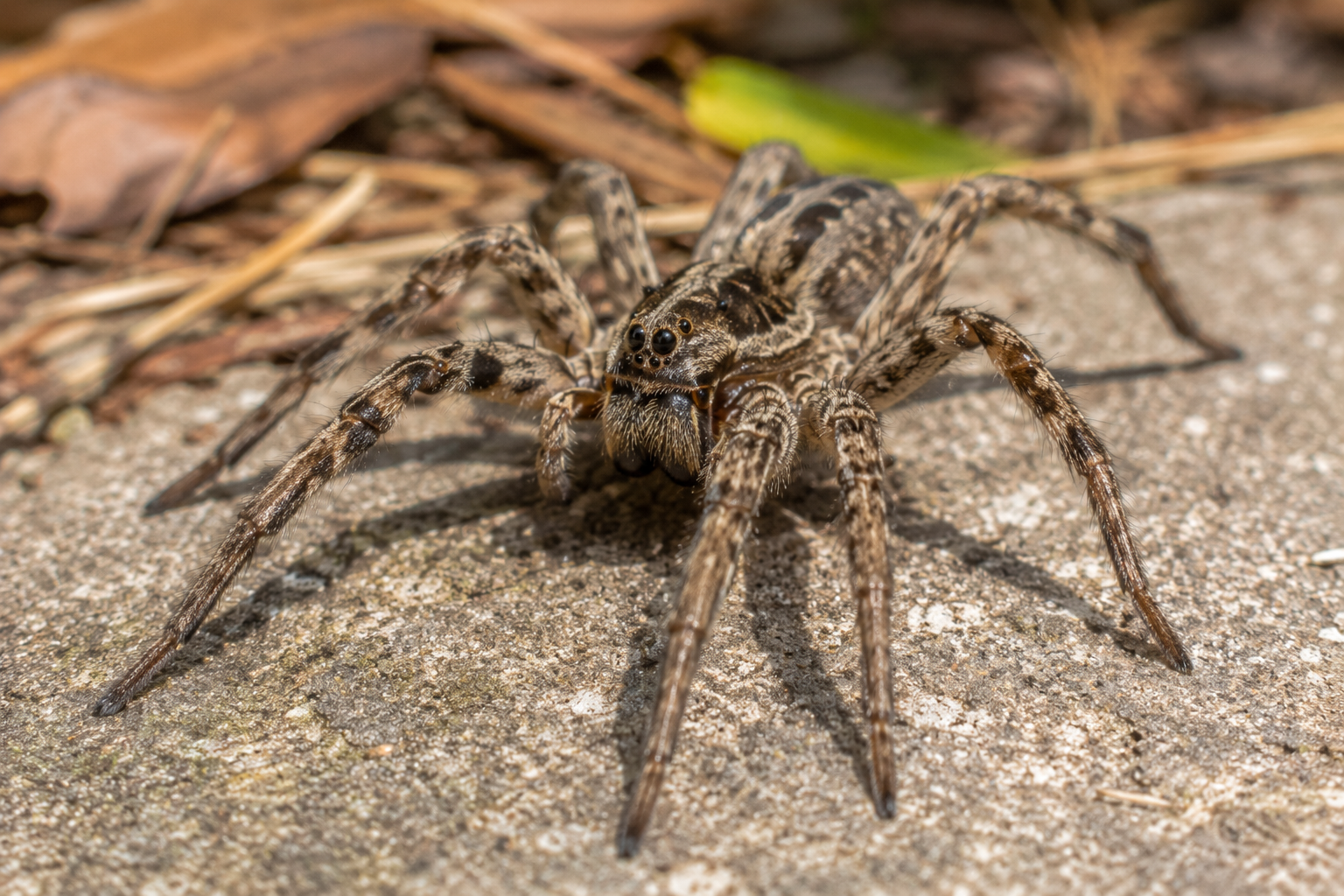
You spot a large, fast-moving, hairy spider on your garage floor or darting across the living room at night. Your first thought might be brown recluse — or worse. But in Tampa Bay, the spider you're almost certainly looking at is a wolf spider, and the story of what it actually is could not be more different from what most people assume.
Here's what wolf spiders are, which species you're most likely to find around your home, and what to do — and not do — when you encounter one.
What Is a Wolf Spider?
Wolf spiders belong to the family Lycosidae — a large group of ground-dwelling hunters found on every continent except Antarctica. They get their name not from how they look, but from how they hunt. Unlike other spider species that catch their prey in webs, wolf spiders hunt down their prey much like wolves do. They rely on excellent eyesight, speed, and camouflage rather than a sticky web, which is why you're far more likely to spot one running across a floor than sitting in a corner.
Florida is home to a wide variety of spider species, and the wolf spider stands out due to its large size, impressive leg span, and unique hunting behavior. Florida hosts several types of wolf spiders, including the well-known Carolina wolf spider (Hogna carolinensis), the Rabid wolf spider (Rabidosa rabida), the Dotted wolf spider (Rabidosa punctulata), and the endemic Oyola wolf spider (Hogna oyolae). Florida's warm, humid climate gives them abundant prey year-round, which is why sightings are so consistent compared to cooler states.
The glowing eyes trick: Wolf spiders have excellent eyesight that detects people before they're seen, allowing them to flee when approached. Many are nocturnal, using a special eye structure to improve night vision. If you shine a flashlight at ground level at night, you may see their green eyes shine from 10 to 30 feet away, depending on the spider's size. This is one of the most reliable ways to confirm a wolf spider sighting in a dark garage or yard.
Florida Wolf Spider Species You May Encounter
Several wolf spider species call Tampa Bay home. These are the ones most likely to show up around residential properties.
- Scientific Name
- Hogna carolinensis
- Size
- One of the largest wolf spider species in North America — body length up to 1.5 inches, leg span up to 4 inches
- Appearance
- Dark brown to gray with a mottled pattern; large, robust build
- Where You'll Find It
- Burrows in sandy soil, under rocks and logs, along fence lines and building foundations — a frequent cause of "huge spider" reports across Florida
- Scientific Name
- Rabidosa rabida
- Size
- Medium to large — body up to 3/4 inch with a long, lean build
- Appearance
- Light brown with two distinct dark stripes running down the back — very recognizable striped pattern
- Where You'll Find It
- Grassy lawns, garden beds, and wooded edges; commonly spotted running across driveways and patios at night — known for its bold striping and fast movement
- Scientific Name
- Tigrosa annexa
- Size
- Medium — body up to 3/4 inch
- Appearance
- Brown with subtle darker banding; similar build to the rabid wolf spider
- Where You'll Find It
- Frequently mistaken for brown recluse spiders because of its body shape and markings — found in leaf litter, mulch beds, and ground-level hiding spots around homes
Are Wolf Spiders Dangerous?
Wolf Spider vs. Spiders People Confuse It With
The wolf spider's size and coloring cause it to get mistaken for several more dangerous species. Here's how they actually compare.
| Spider | Builds a Web? | Dangerous Bite? | Key Difference |
|---|---|---|---|
| Wolf Spider | No — ground hunter | No — mild, rarely bites | Large, hairy, fast-moving; carries egg sac or babies on back |
| Brown Recluse | Yes — irregular web in dark spaces | Yes — causes tissue damage | Much smaller; violin-shaped marking on back; 6 eyes not 8 |
| Huntsman Spider | No — ground and wall hunter | No — mild, very rarely bites | Legs angle forward crab-like; flatter body; even larger leg span |
| Brown Widow | Yes — tangled web near ground | Yes — neurotoxic venom | Hourglass marking on underside; messy irregular web; much smaller |
The One Thing That Makes Wolf Spiders Truly Unique
Unlike almost every other spider species, wolf spiders carry their egg sac attached to their body rather than leaving it in a web. When the eggs hatch, female spiders keep their spiderlings on their back until they are grown. This means a large female wolf spider you find indoors may be carrying dozens of tiny spiderlings on her abdomen. If she is startled or crushed, the spiderlings scatter — which is one very good reason not to step on one inside the house. Catching and releasing her outdoors is a much better outcome for everyone.
Signs Wolf Spiders Are Active Around Your Home
What to Do When You Find a Wolf Spider Inside
If the spider is a female carrying spiderlings, crushing her scatters dozens of babies across your floor. Use a container to trap and release her outside instead.
Place a cup or container over the spider, slide a piece of paper underneath, and release it outside away from the house. Wolf spiders are harmless and beneficial — they don't need to be killed.
A single wolf spider inside is usually just an accidental visitor. Repeated sightings mean insects are drawing them in — and that the insect problem may be worth addressing.
How to Reduce Wolf Spider Activity Around Your Home
- ✓ Seal gaps under doors, around windows, and along the garage threshold. Wolf spiders may slip through a gap while hunting, follow insects toward a light source, or move inside through a garage, door threshold, or torn screen. These entry points are the same ones that let insects in — sealing them reduces both.
- ✓ Reduce exterior lighting or switch to yellow or amber bulbs. Insects swarm toward white lights, and wolf spiders follow the insects. Less insect activity near doors means fewer spiders hunting near your entry points.
- ✓ Remove leaf litter, wood piles, and debris from around the foundation. These are prime wolf spider habitat — the closer they sit to the house, the shorter the trip inside.
- ✓ Keep the garage tidy and off the floor. Clutter on garage floors gives wolf spiders excellent daytime hiding spots close to your living space.
- ✓ Address the insect population drawing them in. Wolf spiders are predators following prey. If they're showing up regularly, there's likely an insect activity level around your home that's worth evaluating.
- ✓ Call a professional if sightings are frequent or if you're unsure of the species. Wolf spiders are harmless, but brown widows and — in rare cases — brown recluse spiders also turn up in Tampa Bay homes. If you're finding large spiders regularly and aren't certain what you're looking at, a professional identification is worth it.
Finding Spiders Regularly and Not Sure What They Are?
InsectIQ has an entomologist on staff who can identify exactly which spider species is active in your home and whether it poses a real risk. Don't guess — contact us today to get a quote.
Contact Us for a Quote