
Fall Armyworms in Florida Lawns
Fall armyworms can chew through a Tampa Bay lawn in days. Learn how to spot them and stop the damage before it spreads.
Fall Armyworms Are Chewing Through Tampa Bay Lawns Right Now
If your lawn suddenly has a brown, thin patch that showed up almost overnight, fall armyworms could be the reason. These caterpillars move across a yard in groups, and a healthy-looking lawn can turn ragged in just a few days.
Late summer and early fall are prime time for them here in Tampa Bay, especially after heavy rain. The good news is that most lawns bounce back once the caterpillars are dealt with, but the sooner you catch them, the less damage they do.
What Is a Fall Armyworm?
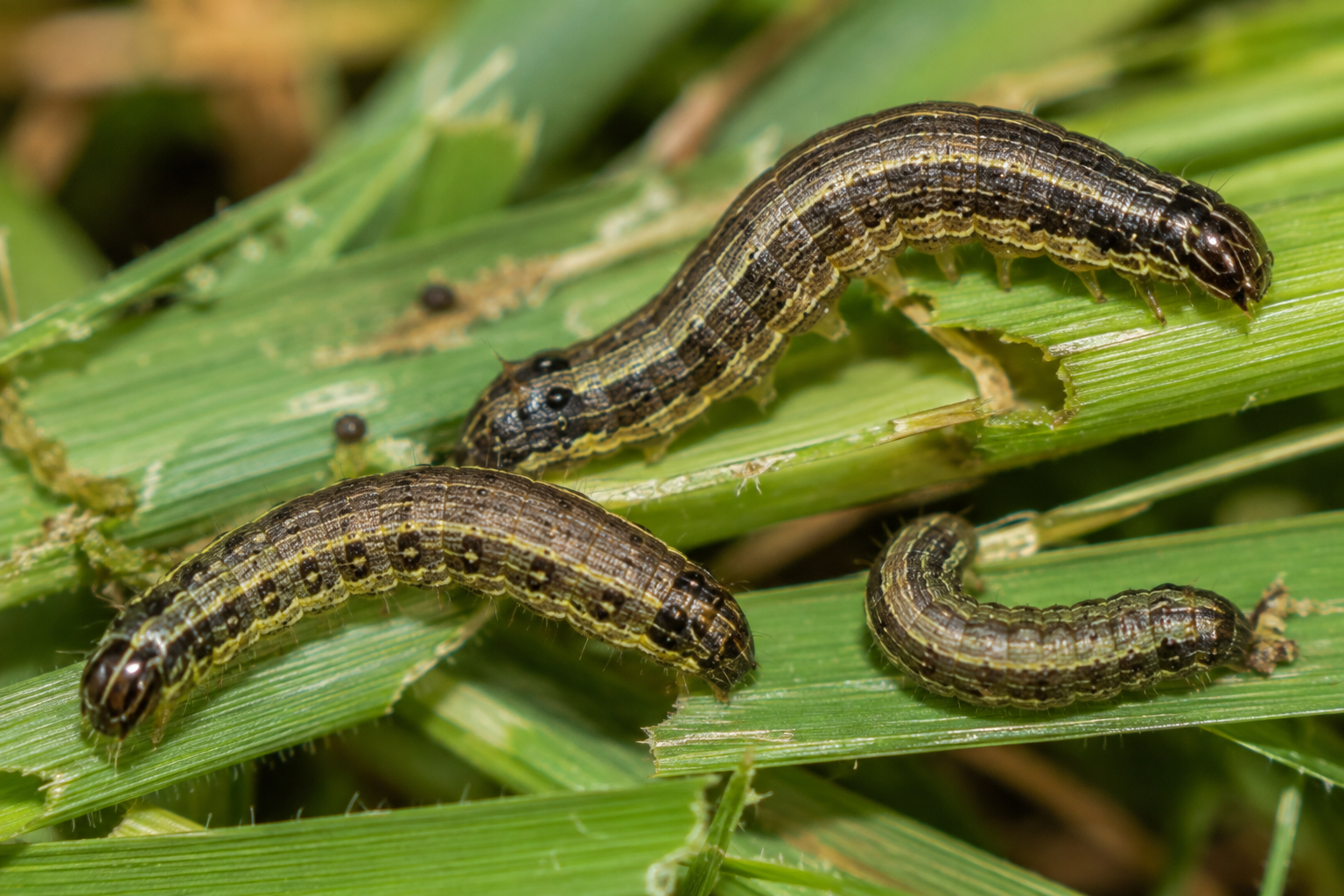
Despite the name, fall armyworms aren't worms at all. They're the caterpillar stage of a moth, and in Florida they can actually show up in spring as well as fall. They get their nickname from the way they move through a lawn together in large numbers, like a small army, eating grass as they go.
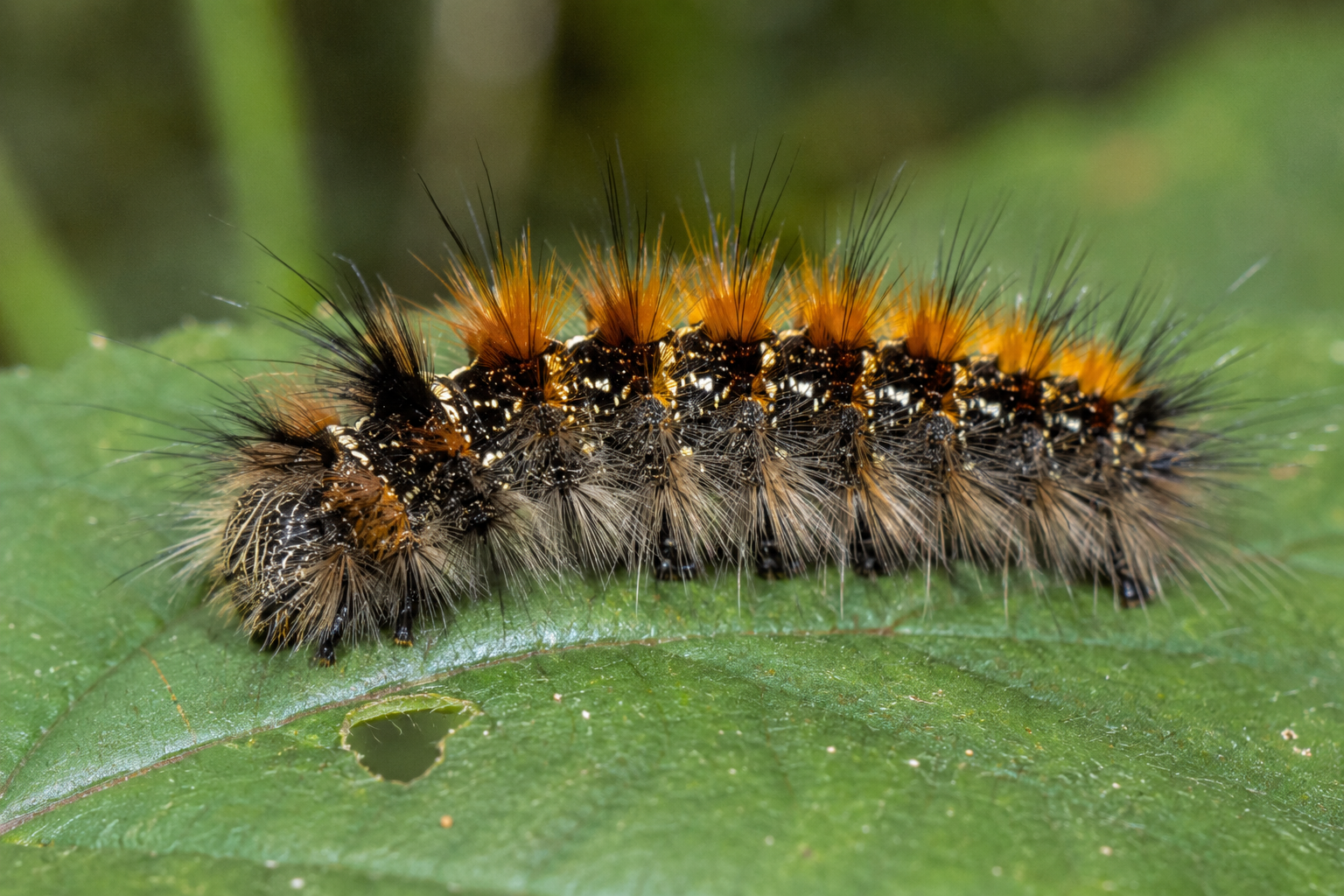
A full-grown caterpillar can reach about an inch and a half long and comes in shades of green or brown. Look closely and you'll usually spot light stripes running down the body, dark spots on each segment, and a pale, upside-down "Y" marking on the head. They tend to hide low in the grass during the hottest part of the day and feed most actively in the early morning and evening.
How They Damage a Lawn
Fall armyworms chew on grass blades, leaving them ragged or thin. Because they feed in groups, the damage often spreads in one direction across the yard rather than showing up in scattered spots. Most lawns survive an armyworm outbreak and grow back once the caterpillars move on or are treated, but a heavy infestation can leave bare patches for weeks if it's ignored.
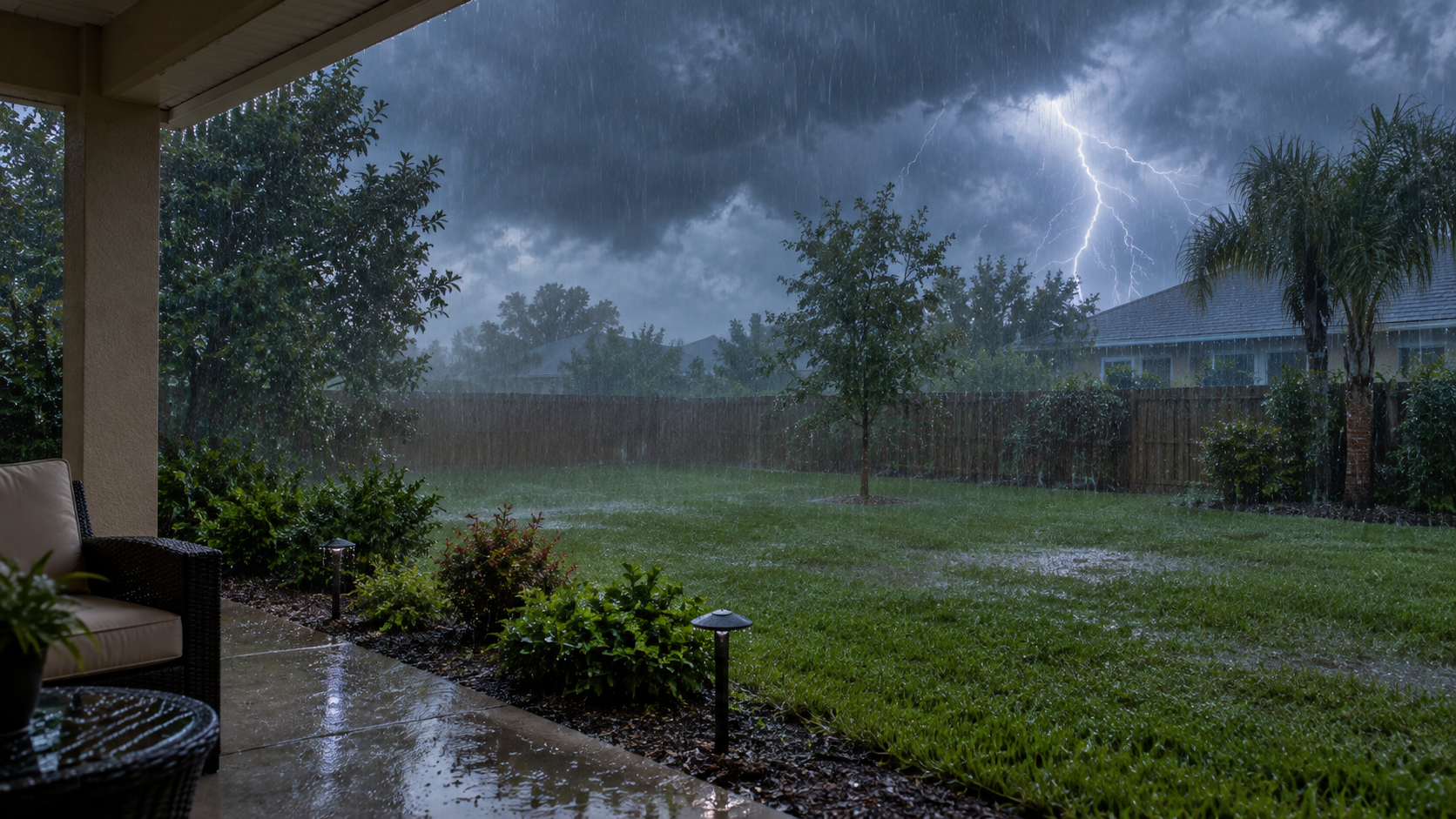
Why they show up after storms: Adult moths tend to lay large batches of eggs following heavy rain, which is part of why Tampa Bay sees armyworm surges during the wettest stretches of the year. If you've read our post on yard drainage problems that attract pests, this is another reason a well-drained lawn matters after a storm.
Fall Armyworms vs. Other Lawn Caterpillars
Fall armyworms aren't the only caterpillars that damage Florida turf. Tropical sod webworms cause similar-looking damage, and it helps to know which one you're actually dealing with. We cover sod webworm identification in detail in our sod webworm guide, and if your lawn's damage looks more like scattered yellow patches than chewed grass, it may be worth checking our chinch bugs guide instead.
Fall Armyworm
- Look
- Green to brown, striped, with a pale "Y" mark on the head
- Damage Pattern
- Spreads across the lawn in one direction, grass looks chewed and ragged
Tropical Sod Webworm
- Look
- Smaller, gray-green with dark spots on each segment
- Damage Pattern
- Notched blades, often first noticed as a spot that looks mowed too short
Chinch Bug
- Look
- Not a caterpillar at all — a small true bug with black and white markings
- Damage Pattern
- Yellow patches that spread slowly and often show up in sunny, dry areas
Telling Them Apart at a Glance
| Pest | What You'll See | How Fast Damage Spreads |
|---|---|---|
| Fall Armyworm | Striped caterpillar, up to 1.5 inches, feeds in groups | Fast — days, not weeks |
| Tropical Sod Webworm | Smaller gray-green caterpillar, hides in thatch | Fast — noticeable within a week |
| Chinch Bug | Tiny black and white insect, not a caterpillar | Slower, spreads over several weeks |
Signs Fall Armyworms Are in Your Lawn
A brown or thin patch that appears suddenly and spreads across the yard
Birds like grackles or robins gathering and feeding heavily on the lawn
Caterpillars visible in the grass early in the morning or at dusk
What to Do If You Spot Them
Confirm the Pest
Get down close to the grass in the damaged area and look for the striped caterpillars, especially in early morning or evening.
Act While They're Small
Young caterpillars are much easier to control than full-grown ones, so treating early makes a big difference.
Support the Lawn's Recovery
Keep up with regular watering and mowing after treatment so the grass can fill back in.
Keeping Fall Armyworms From Taking Over
- Check your lawn closely after any heavy rain or tropical storm
- Avoid over-fertilizing, since lush new growth attracts egg-laying moths
- Mow and water on a consistent schedule to keep grass strong and quick to recover
- Watch for increased bird activity as an early warning sign
- Have a lawn care professional treat early if your yard has a history of armyworm damage
Don't Let Fall Armyworms Wreck Your Lawn
InsectIQ has an entomologist on staff who can confirm whether fall armyworms, sod webworms, or something else is behind your lawn damage and recommend the right treatment. Get your yard checked before the damage spreads any further.
Contact Us for a Quote