
Bug of the Week: Sod Webworm
Sod webworms are tiny caterpillars chewing up St. Augustine and bermuda lawns across Tampa Bay. Learn the signs, how to test your lawn, and when to call a pro.
Bug of the Week: Sod Webworm — The Tiny Caterpillar Chewing Up Tampa Bay Lawns
Your grass looks fine in the morning. By the afternoon, there are brown spots that weren't there before. No tunnels, no visible bugs — just patches of lawn that look like something ate them. That's exactly what's happening. Sod webworms are tiny caterpillars that hide in your grass during the day and feed at night, and they can do serious damage in a very short amount of time.
Here's what you need to know about one of the most common summer lawn pests in the Tampa Bay area.
What Is a Sod Webworm?
Sod webworms are the caterpillar stage of a small moth. The adult moths are tan or grayish and only about half an inch long. You've probably seen them before — they're the little moths that zigzag across your lawn in the evening when you walk through the grass. They're not the problem though. It's the eggs they drop that cause all the trouble.
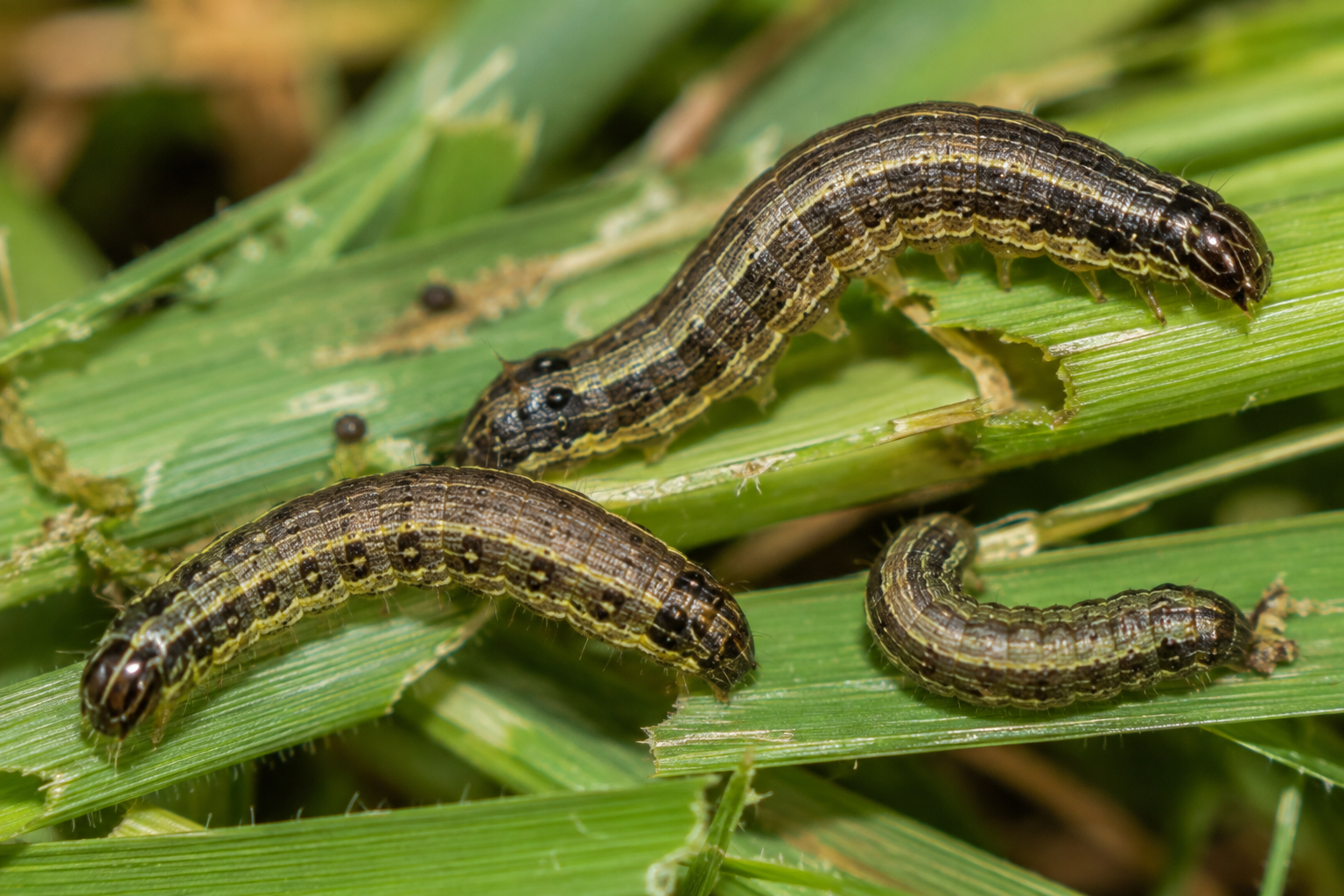
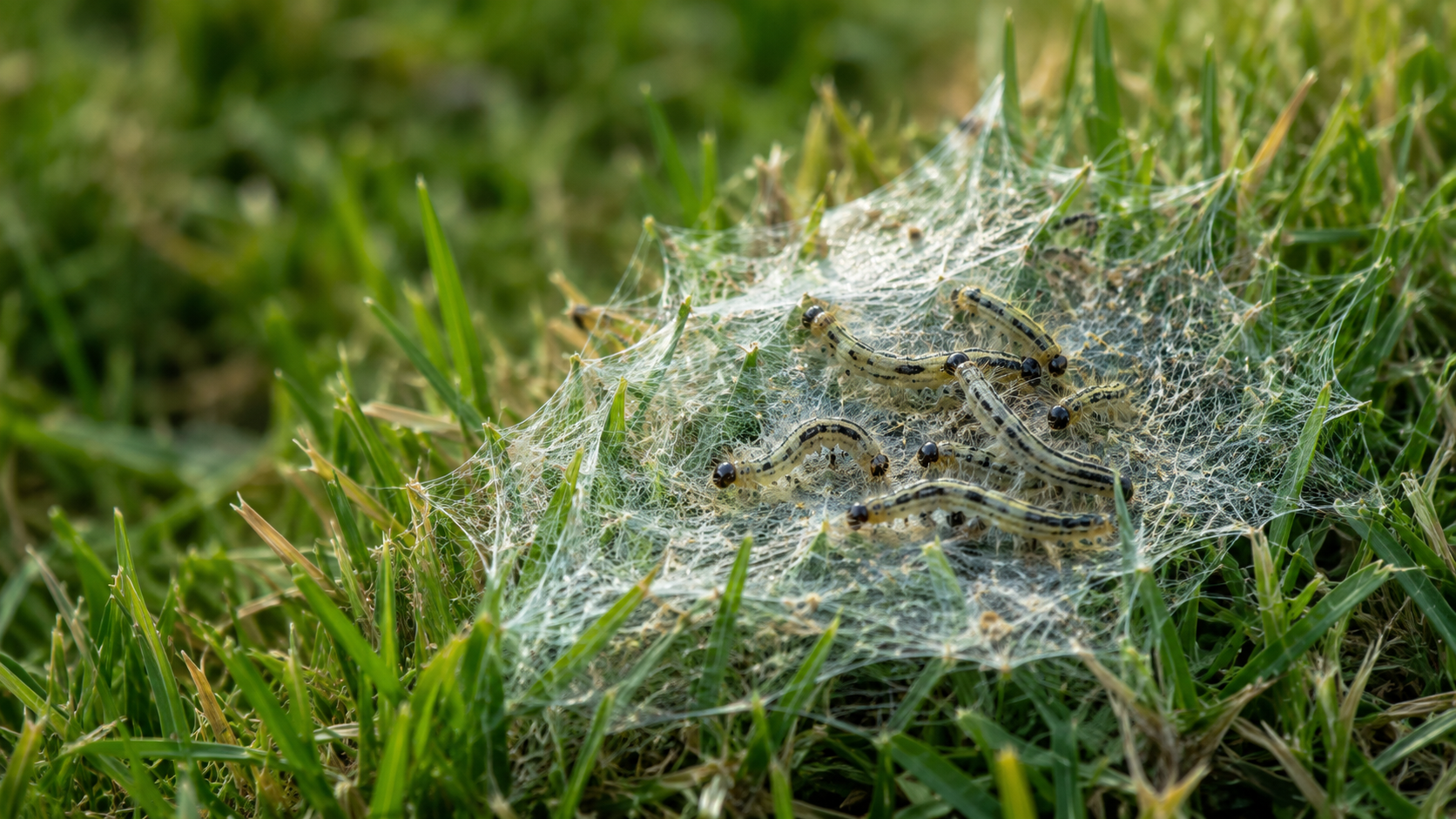
After the eggs hatch, tiny caterpillars called larvae drop down into the thatch layer — that layer of dead grass and organic material just above the soil. They build small silk-lined tubes to hide in during the day and crawl out at night to feed on your grass blades.
Fun fact: When you walk through a lawn with a sod webworm infestation, the adult moths will fly up in front of you in a zigzag pattern. If you're seeing a lot of small moths every time you mow or walk your yard, webworms are probably already laying eggs.
The Main Sod Webworm Species Found in Florida
Several species of sod webworm live in Florida, and more than one can show up in the same lawn at the same time. The most common ones that damage Tampa Bay area lawns are listed below.
- Appearance
- Greenish caterpillar with a pale head and small dark spots along its body
- What It Eats
- Grass blades — clips them off at the surface, leaving bare patches
- Most Damaging To
- St. Augustinegrass and bermudagrass
- Why It's a Problem Here
- Florida's warm, humid summers allow multiple generations per year — damage can stack up fast
- Appearance
- Tan to grayish-green caterpillar, slightly smaller than the tropical species
- What It Eats
- Grass blades and stems near the soil surface
- Most Damaging To
- Bermudagrass and zoysiagrass
- Why It's a Problem Here
- Less common than the tropical species but still found in the Tampa Bay area, especially in well-maintained lawns
- Appearance
- Similar to the tropical species but tends to stay deeper in the thatch
- What It Eats
- Roots and stems at or just below the soil surface
- Most Damaging To
- St. Augustinegrass and bahiagrass
- Why It's a Problem Here
- Harder to detect and treat because it feeds lower in the grass canopy
How Sod Webworms Damage Your Lawn
Sod webworms are leaf feeders. The caterpillars crawl up grass blades at night and chew them off near the base, leaving behind short, ragged-looking stubs. As more caterpillars hatch and feed, those small chewed areas expand into larger irregular brown patches.
Because they feed at night and hide during the day, the damage shows up fast and without much warning. A lawn that looks healthy at sunrise can have visible spots by sunset — especially during a heavy infestation in the heat of summer.
Which Tampa Bay Grasses Are Most at Risk
Most grasses grown in the Tampa Bay area can be damaged by sod webworms, but some are hit much harder than others.
| Grass Type | Notes |
|---|---|
| St. Augustinegrass | The most common lawn grass in Tampa Bay and the tropical sod webworm's top target |
| Bermudagrass | Heavily targeted — spreads fast but can still show serious thinning under heavy pressure |
| Bahiagrass | More resilient but not immune — burrowing webworm species can cause damage |
| Zoysiagrass | Dense growth offers some protection, but bluegrass webworm can still damage it |
| Centipedegrass | Less commonly targeted, though not completely resistant during large outbreaks |
Signs You Have Sod Webworms
When to Treat — and Why Timing Matters
The best time to treat sod webworms is in the late afternoon or early evening — right before they come out to feed. Most insecticides work by contact, so the caterpillars need to crawl through treated grass for it to work. Treating in the morning means the product may have already broken down or dried before the webworms are even active.
Because Florida's summer heat allows three or more generations of sod webworms per year, a lawn that's treated once can be re-infested within weeks if adult moths are still present and laying eggs nearby.
How to Reduce Sod Webworm Damage
- ✓ Don't overwater. Moist, thick thatch is exactly what sod webworms are looking for. Water your lawn deeply but less often — this encourages deeper root growth and dries out the thatch layer where webworms hide.
- ✓ Keep your thatch layer thin. A thick thatch layer gives caterpillars a perfect hiding spot and makes it harder for treatments to reach them. If your thatch is more than half an inch thick, dethatching can help reduce the habitat webworms need.
- ✓ Mow at the right height. Cutting St. Augustinegrass or bermudagrass too short weakens the grass and makes damage from feeding much worse. Keep your mowing height within the recommended range for your grass type.
- ✓ Watch for moths in the evening. If you notice small tan moths zigzagging across your lawn at dusk, there's a good chance eggs are already being laid. Catching the infestation early — before a large population of caterpillars hatches — makes treatment much easier.
- ✓ Don't over-fertilize with nitrogen. Lush, fast-growing grass from heavy nitrogen fertilization is more attractive to sod webworms and softer for them to chew. Follow a balanced fertilization schedule appropriate for Florida lawns.
- ✓ Get a professional ID before treating. Brown patches can come from fungus, drought, insects, or several other causes — and the treatment for each one is completely different. Treating for webworms when you actually have a fungal issue wastes money and time.
Seeing Brown Patches That Won't Go Away?
InsectIQ has an educated staff who can figure out exactly what's going on in your lawn — whether it's sod webworms, fungus, drought stress, or something else entirely. We offer free estimates so you know what you're actually dealing with before any treatment begins.
Schedule a Free Lawn Estimate