
Bug of the Week: The Mole Cricket!
Learn about our Bug of the Week, the Mole Cricket!
Mole Crickets: The Underground Pest Destroying Florida Lawns
You water your lawn. You fertilize it. You do everything right — and it still turns brown in patches. If that sounds familiar, mole crickets might be the reason. They live underground, tunnel through your soil, and chew through grass roots before most homeowners even realize they're there.
Here's everything you need to know about one of Florida's most destructive lawn pests.
What Is a Mole Cricket?
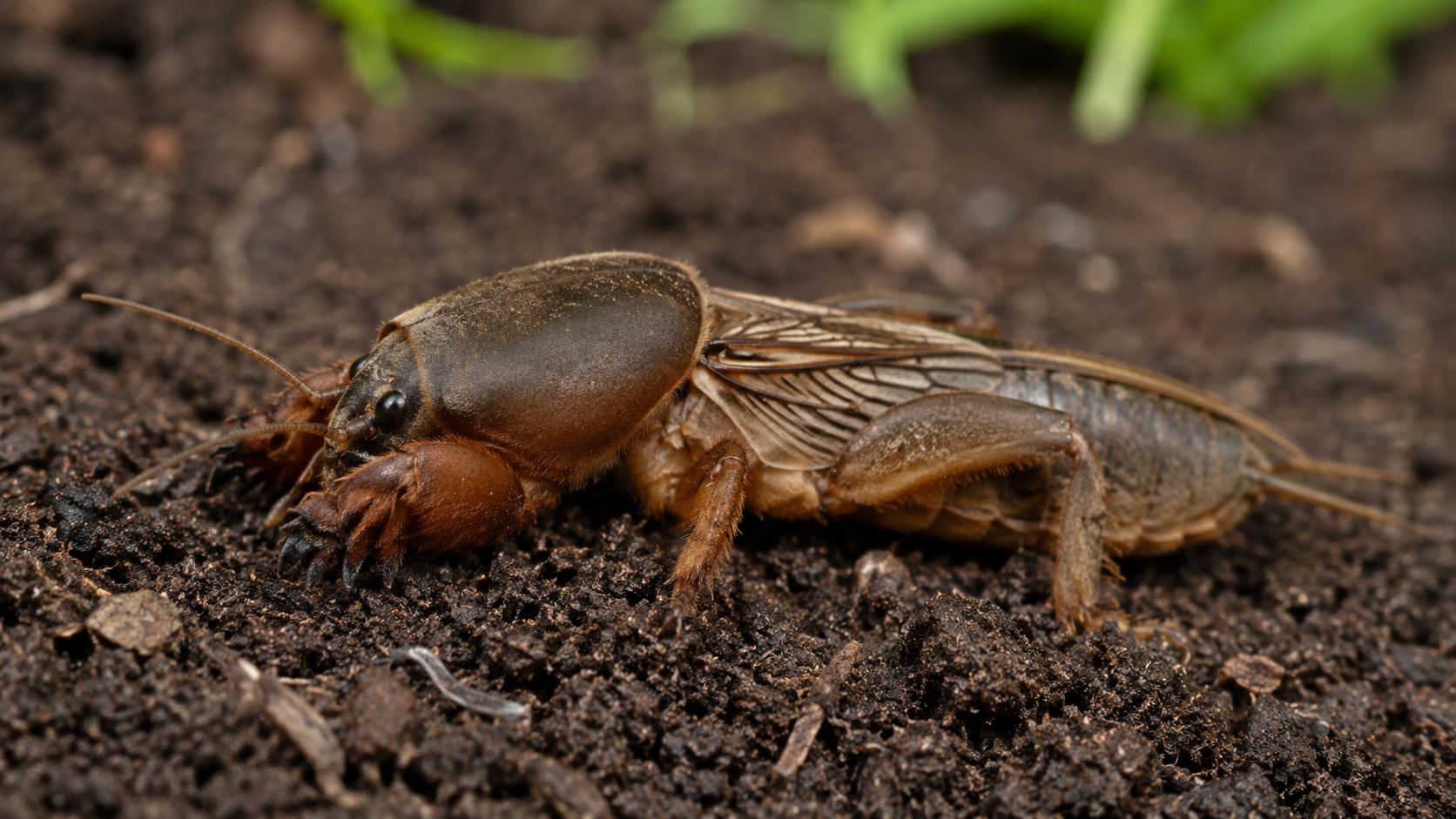
Mole crickets look like something out of a science fiction movie. They have the chunky velvety body of a cricket, but their front legs are wide, flat, and built like shovels — perfect for tunneling through soil. They're related to regular crickets and grasshoppers but behave completely differently. While a normal cricket hops around above ground, a mole cricket spends almost its entire life underground.
They are not native to Florida. All three pest species found here were introduced from South America and arrived in the early 1900s through shipping ports. With no natural predators to keep them in check, they spread quickly across the state and became one of the most damaging lawn pests in the Southeast.
Fun fact: Mole crickets can fly. Adult mole crickets have wings and will take flight on warm nights — especially during spring mating season. If you've ever seen a large, brown, prehistoric-looking bug flying toward your porch light, there's a good chance it was a mole cricket.
The 3 Mole Cricket Species Found in Florida
Not all mole crickets cause the same kind of damage. Florida has three pest species, and knowing which one you have helps determine the right treatment.
- Appearance
- Brownish-tan body, slightly smaller than the southern species
- What It Eats
- Grass roots and plant material — the most destructive of the three to Florida lawns
- Most Damaging To
- Bahiagrass and bermudagrass
- Where It's Found
- Throughout Florida — the most common pest species in the state
- Appearance
- Larger and darker than the tawny, with a more rounded head
- What It Eats
- Primarily other insects and earthworms — less damaging to grass directly, but its tunneling still disrupts roots
- Most Damaging To
- Any grass type through tunneling alone
- Where It's Found
- Throughout Florida, often found alongside tawny mole crickets
- Appearance
- Shorter wings that don't extend past the abdomen — the only species that cannot fly
- What It Eats
- Grass roots and organic material
- Most Damaging To
- St. Augustine and bermudagrass
- Where It's Found
- Mostly in coastal areas of South and Central Florida
How Mole Crickets Damage Your Lawn
Mole crickets cause damage in two ways — and both happen underground, which is why the damage often looks like something else entirely.
Tunneling: As they move through the top 1 to 2 inches of soil, mole crickets push the ground up and loosen the soil around grass roots. This breaks the contact between roots and soil, causing the grass to dry out and die even when it's being watered. You'll often see spongy, raised tracks across the lawn — similar to mole tunnels.
Feeding: Tawny and short-winged mole crickets also chew directly on grass roots and stems. The combination of tunneling and feeding means the grass has no way to recover on its own.
Which Florida Grasses Are Most at Risk
| Grass Type | Risk Level | Notes |
|---|---|---|
| Bahiagrass | High | Most commonly damaged — tawny mole crickets strongly prefer it |
| Bermudagrass | High | Heavily targeted by both tawny and short-winged species |
| St. Augustinegrass | Moderate | More tolerant but still vulnerable, especially near golf courses |
| Centipedegrass | Moderate | Can be damaged but less frequently targeted |
| Zoysiagrass | Low | Rarely injured — one of the most resistant options |
Signs You Have Mole Crickets
How to Test Your Lawn for Mole Crickets
Before treating, it's worth confirming mole crickets are actually the problem. The soap flush test is the easiest way to check — and you can do it yourself in minutes.
Add 2 tablespoons of dish soap to 1 gallon of water. Lemon-scented dish soap works especially well.
Pour the mixture over a 1 to 2 square foot area where you suspect damage — best done in the early morning or evening.
If mole crickets are present, they will come to the surface within a few minutes. Finding 2 or more means it's time to treat.
When to Treat — and Why Timing Matters
Mole cricket treatment works best when it's timed right. The best window is late May through August, when newly hatched nymphs are small and feeding close to the surface. Young nymphs are much easier to reach and kill than fully grown adults deeper in the soil.
By the time fall arrives, nymphs have grown into adults and moved deeper into the ground — making treatment significantly harder and less effective.
How to Reduce Mole Cricket Damage
- ✓ Turn off outdoor lights at night during spring. Adult mole crickets fly toward light during mating season — reducing light reduces how many land near your lawn.
- ✓ Water deeply but less often. Mole crickets prefer moist, shallow soil. Watering deeply once or twice a week encourages deeper root growth and makes the top layer of soil less attractive to them.
- ✓ Keep thatch under control. A thick thatch layer gives mole crickets extra cover and makes it harder for treatments to reach the soil. Regular dethatching keeps the lawn healthier and more treatable.
- ✓ Treat early in the season. Don't wait until you see major damage. Treating in late spring when nymphs are small gives you the best chance of stopping the infestation before it spreads.
- ✓ Get a lawn inspection if you're unsure. Because mole cricket damage looks so much like drought stress or disease, getting a professional ID before treating saves you time and money.
Think Mole Crickets Are in Your Lawn?
InsectIQ has entomologists on staff who can identify exactly what's going on in your lawn and recommend the right treatment — not just a guess. We offer free evaluations so you know what you're dealing with before any treatment begins.
Schedule a Free Lawn Evaluation