Termites vs Carpenter Ants: Key Differences
Learn how to identify termite activity vs carpenter ants and why correct identification protects your Florida home from damage.
Identifying Termite vs Carpenter Ant Activity
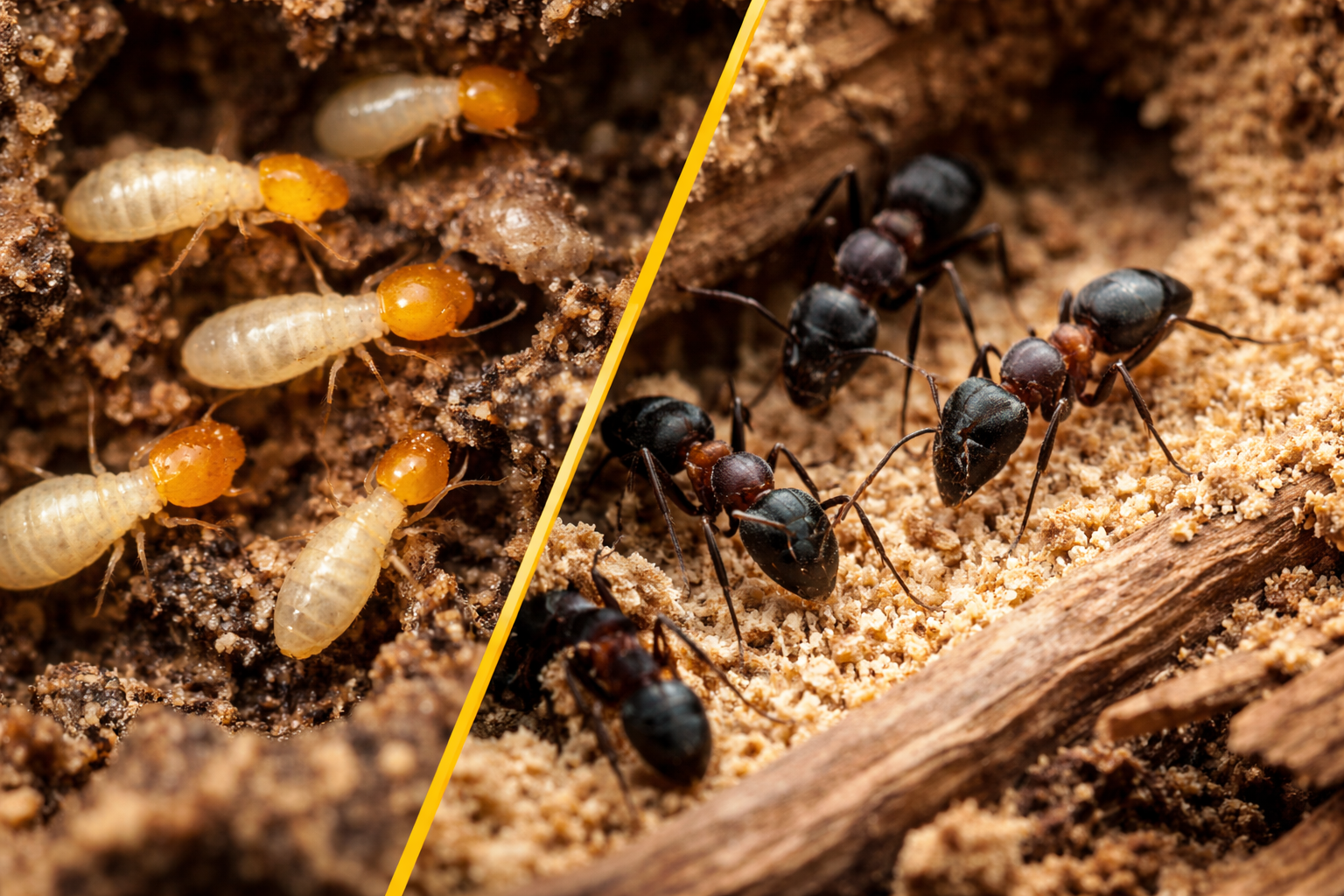
Finding damaged wood, small piles of debris, or winged insects inside your home can be alarming. In Florida, two of the most common wood-destroying insects are termites and carpenter ants.
At first glance, they can look similar. However, they behave very differently and require completely different treatment methods. Misidentifying the problem can delay proper control and allow structural damage to continue.
Unique Identifiers of Termite Activity
Termites consume wood as their primary food source. In Florida, subterranean termites are especially common.
Mud Tubes
Subterranean termites build pencil-sized mud tubes on exterior walls, foundations, or inside crawl spaces to protect them from dry air.
Hollow-Sounding Wood
Termites eat wood from the inside out. If you tap on wood and it sounds hollow or papery, termites may be present.
Discarded Wings
After swarming, termites shed their wings. You may find small piles of uniform, translucent wings near windows or doors.
Frass (Droppings)
Drywood termites leave behind small, pellet-shaped droppings that resemble tiny grains of sand or pepper.
Unique Identifiers of Carpenter Ants
Carpenter ants do not eat wood. Instead, they excavate it to create nesting galleries. Here is how they differ:
Clean, Smooth Tunnels
Carpenter ants carve smooth tunnels inside wood. Unlike termites, they do not pack mud inside their galleries.
Sawdust-Like Debris
They push wood shavings out of their nests. This material, called frass, looks like sawdust and may contain insect parts.
Visible Activity
You are more likely to see them moving in and out of wall voids, especially at night. They are larger than most household ants.
Rustling Sounds
In quiet conditions, you may hear faint rustling noises inside walls as carpenter ants move inside the wood.
Why Correct Identification Is Critical
Knowing whether you have termites or carpenter ants is essential because:
- Treatment Methods Differ: Termites require soil treatments or baiting; ants require nest elimination and moisture correction.
- Structural Risk Varies: Termites actively consume wood causing severe damage; ants weaken wood but do not eat it.
- Costly Delays: Using the wrong treatment wastes time and money while the colony grows.
When in doubt, a professional inspection is the most effective way to confirm which wood-destroying insect is present.
Contact Insect IQ for Professional Identification
If you suspect termite activity or carpenter ants in your Florida home, do not guess. Proper identification is the key to protecting your structure.
Schedule Your Inspection