
Biting Midges in Florida: What Are No-See-Ums?
Getting bitten but can't see what's biting you? It's probably a no-see-um. Learn what biting midges are and how to stop them in Tampa Bay.
Biting Midges: The Bug You Can't See That's Eating You Alive
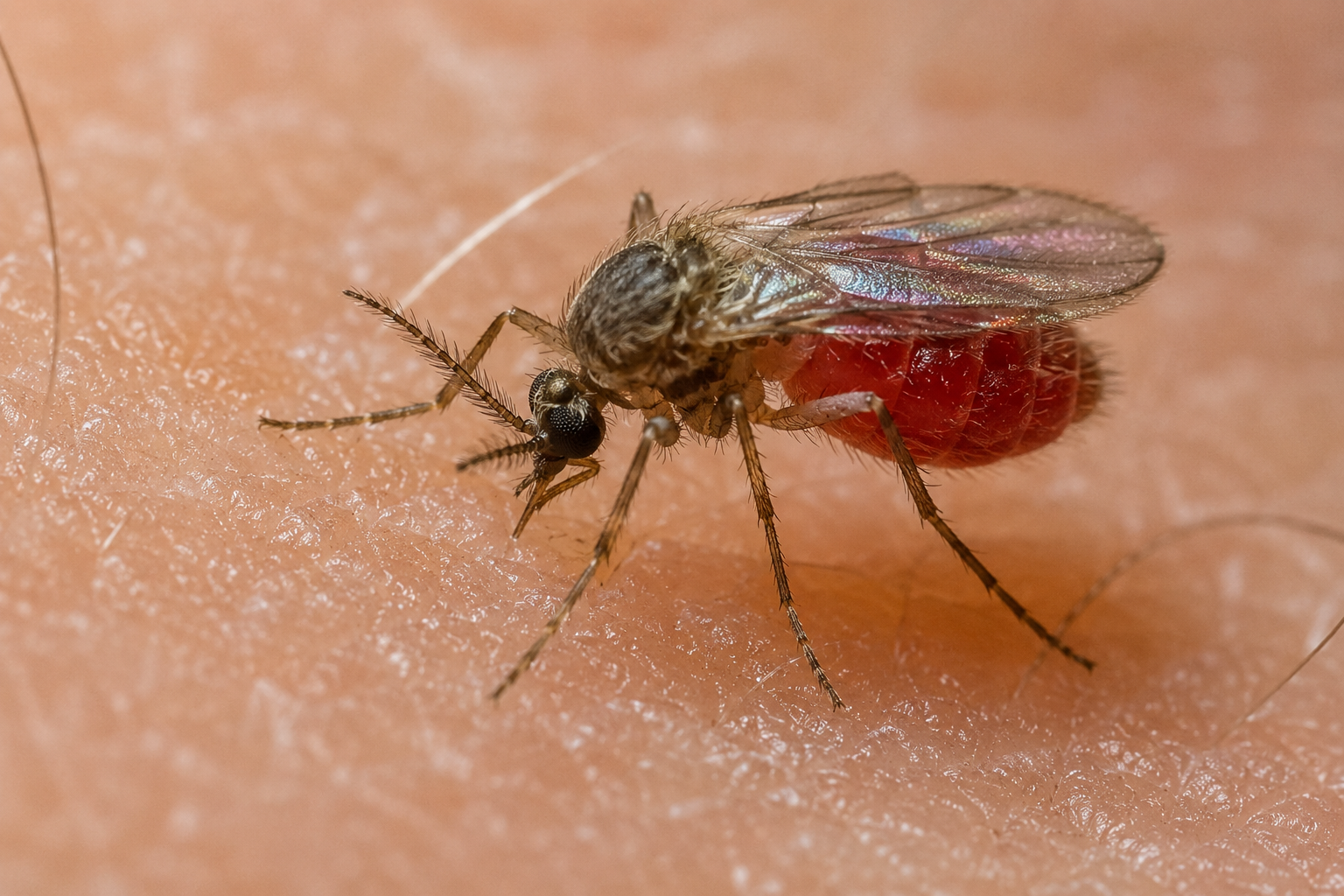
You're sitting outside at dusk. No mosquitoes in sight. But suddenly your ankles, arms, and neck are covered in itchy red bites that seem to appear out of nowhere. If that sounds familiar, you've been introduced to the biting midge — better known in Florida as the no-see-um.
They're smaller than a pinhead, they can fly right through standard window screens, and their bites are disproportionately miserable for something you can barely even see. Here's what they are, why Tampa Bay has so many of them, and what actually helps.
What Is a Biting Midge?
Biting midges belong to a family of tiny flies called Ceratopogonidae. The species that bites people most often in Florida belong to the genus Culicoides — and around 50 species of Culicoides are found in Florida alone . They go by several nicknames depending on where you are: no-see-ums, sand flies, sand gnats, and punkies are all names for the same group of insects.
Like mosquitoes, only the female biting midge bites. She needs a blood meal to develop her eggs. Males feed on plant nectar and never bother people at all. The female's bite is what makes no-see-ums so frustrating — they are significantly smaller than mosquitoes, which allows them to easily pass through standard window screens , meaning your screens offer almost no protection against them.
Why Tampa Bay is especially bad for no-see-ums: Biting midges thrive in warm, humid coastal environments with brackish water, mangroves, and muddy shorelines nearby. Tampa Bay checks every single one of those boxes. The closer your property is to water — a canal, pond, bay, or even a retention pond — the worse your no-see-um pressure will be.
The Biting Midge Life Cycle
Understanding how no-see-ums develop explains why they're so hard to control and why they seem to explode in numbers after rain.
- Where They're Laid
- In moist soil, mud, wet sand, mangrove areas, and the edges of ponds and ditches
- How Many
- A single female can lay up to 450 eggs per batch
- How Fast They Hatch
- Eggs typically hatch within two to ten days, faster in warm weather
- What They Look Like
- Tiny, worm-like, creamy white — visible only under magnification
- Where They Live
- In the top layer of moist soil, mud, and wet organic matter near water
- What They Eat
- Microscopic organisms in the soil including bacteria, nematodes, and other tiny insects
- How Long They Live
- Adults live only a few weeks, but new generations emerge continuously throughout the season
- How Far They Fly
- Most no-see-ums stay within a few hundred yards of their breeding site
- What Stops Them
- Wind is one of the most effective deterrents — no-see-ums are too small to fly well in a breeze
What Makes a No-See-Um Bite So Miserable
A no-see-um doesn't just poke through your skin the way a mosquito does. It actually cuts into the skin with tiny scissor-like mouthparts and feeds on the blood that pools in the wound. This is what causes the intense burning and itching that starts almost immediately after being bitten — and why the reaction tends to be worse than a mosquito bite even though the insect is a fraction of the size.
No-See-Um vs. Other Small Biting Insects
Because biting midges are so small, the bites often get blamed on other insects. Here's how no-see-ums actually compare to the other tiny biters found in Tampa Bay.
| Insect | Visible to the Eye? | Bite Feel | Most Active When |
|---|---|---|---|
| Biting Midge (No-See-Um) | Barely — nearly invisible | Immediate sharp sting, intense itch | Dawn and dusk, calm evenings |
| Mosquito | Yes, clearly visible | Mild prick, itch develops after | Dusk through night |
| Fungus Gnat | Yes, small but visible | Does not bite people | Daytime, near houseplants |
| Thrips | Barely visible | Mild, fleeting sting | Daytime, near plants and flowers |
Signs You're Dealing With Biting Midges
What to Do When You Get Bitten
Scratching breaks the skin and dramatically worsens the reaction. Wash the area gently with soap and water as soon as possible instead.
An over-the-counter hydrocortisone cream or antihistamine can reduce itching and swelling. A cold compress on the bites also helps in the first hour.
If bites swell significantly, show signs of infection, or cause a reaction beyond normal itching, see a healthcare provider — especially for children or anyone with known sensitivities.
How to Reduce No-See-Um Bites Around Your Home
- ✓ Use an EPA-registered repellent with DEET or picaridin. The same repellents that work on mosquitoes work on biting midges — apply any time you're outside during dawn or dusk.
- ✓ Replace standard window screens with fine mesh "no-see-um screens." Standard screen mesh is too large to keep biting midges out. Fine mesh screens with a smaller opening size block them effectively.
- ✓ Run a fan on your porch or outdoor seating area. No-see-ums are too small and light to fly well in moving air. A fan is one of the simplest and most effective deterrents for outdoor spaces.
- ✓ Eliminate standing water and moist soil close to the house. Biting midges breed in wet, muddy areas — the same drainage fixes that reduce mosquito pressure also reduce no-see-um breeding grounds. Our guide on yard drainage problems that invite pests covers the most impactful changes.
- ✓ Avoid being outside during peak activity windows. If no-see-ums are a serious problem in your yard, staying indoors in the 30 minutes before and after sunrise and sunset dramatically reduces bites.
- ✓ Ask about a barrier treatment for your yard. Professional barrier spray treatments applied around the perimeter and to resting areas can significantly reduce adult biting midge populations — similar to mosquito control treatments that target the same types of shaded, humid resting spots.
Can't Enjoy Your Yard Because of No-See-Ums?
InsectIQ has an entomologist on staff who can assess your property, identify what's biting you, and recommend the right treatment plan for your yard and the conditions driving the problem. Contact us today to get a quote.
Contact Us for a Quote