
Florida Lizard Droppings vs Rat Droppings: How to Tell
Found small dark droppings in your home? In Florida it could be a lizard — or a rat. Here's the one feature that tells you exactly which one it is.

Florida Lizards in and Around Your Home — And How to Tell Their Droppings From Rodent Droppings
You found small dark droppings near a window, on the porch, or somewhere in the garage. Your first thought was rats. But before you panic, there's a good chance what you're looking at came from a lizard — and in Florida, that's a very important distinction to make correctly.
Here's a guide to the most common lizards Tampa Bay homeowners encounter, what their droppings actually look like, and the key signs that tell you whether you're dealing with a harmless lizard or a rodent problem that actually needs attention.
Common Lizards Tampa Bay Homeowners Encounter
Florida is home to over 50 lizard species, and several of them are completely comfortable living alongside people. These are the ones you're most likely to find in and around your home in the Tampa Bay area.
- Appearance
- Light brown body with yellowish spots, males have an orange-red dewlap (throat fan) they extend to communicate
- Size
- 5 to 9 inches long including tail
- Where You'll See It
- Fences, walls, shrubs, and the sides of buildings — by far the most common lizard in Tampa Bay yards
- Native?
- No — originally from Cuba and the Bahamas, now found virtually everywhere in Florida
- Appearance
- Bright green body that can shift to brown; males have a pink dewlap; slender build with a narrow pointed head
- Size
- 5 to 8 inches long including tail
- Where You'll See It
- Trees, shrubs, and rooftops; less common in urban areas than the brown anole
- Native?
- Yes — the green anole is Florida's only native anole species
- Appearance
- Pale, almost translucent pinkish-white body with large dark eyes and bumpy skin; very small
- Size
- 4 to 5 inches long including tail
- Where You'll See It
- Around porch lights and windows at night, hunting insects attracted to the light — the gecko most commonly found inside homes
- Native?
- No — introduced from the Mediterranean region, now widespread across Florida
- Appearance
- Similar to the Mediterranean house gecko but darker, with more distinct spotting on the back
- Size
- 4 to 5 inches long including tail
- Where You'll See It
- Exterior walls, door frames, and inside garages — active at night
- Native?
- No — originally from sub-Saharan Africa, now common in central and south Florida
- Appearance
- Dark brown or black body with five yellow stripes running from head to tail; juveniles have a bright blue tail
- Size
- 5 to 8 inches long including tail
- Where You'll See It
- Under logs, leaf litter, and around the base of structures; moves fast and is often mistaken for a snake
- Native?
- Yes — native to Florida and found throughout the state
- Appearance
- Large, bright green lizard with white or yellow shoulder stripes and a distinctive pink-white dewlap; the largest anole in Florida
- Size
- Up to 20 inches long — much bigger than other anoles
- Where You'll See It
- High in trees and on large shrubs; rarely on the ground; bites if handled
- Native?
- No — originally from Cuba, now established in South Florida and Tampa Bay
Lizard Droppings vs. Rodent Droppings: The One Difference That Matters
This is the question that brings most Florida homeowners to this page, and the answer is actually pretty simple once you know what to look for. There is one feature that separates lizard droppings from rodent droppings every single time — and it comes down to basic biology.
Lizards, like all reptiles, have a single body opening called the cloaca. It handles both solid waste and liquid waste at the same time, in one combined dropping. The result is a dark pellet with a white chalky cap on one end. That white part is uric acid — the solid form of reptile urine. Rodents have completely separate systems for solid and liquid waste, so their droppings are uniform in color all the way through — no white cap, ever.
The one rule: White tip = lizard. No white tip = investigate further. This single feature is the fastest and most reliable way to tell the two apart, and it holds true for every lizard and gecko species found in Florida.
What Each Type of Dropping Actually Looks Like
- Shape
- Elongated pellet, smooth and cylindrical; not segmented
- Color
- Dark brown, black, or greenish body with a distinct white or chalky tip at one end
- Size
- Very small — roughly the size of a Tic Tac for most species; larger for knight anoles and skinks
- White Tip?
- Always present — this is the defining feature of all lizard and gecko droppings
- Where Found
- Windowsills, porches, near light fixtures, on walls, inside garages, and on flat outdoor surfaces
- Health Risk
- Can carry Salmonella — avoid touching with bare hands and clean with disinfectant
- Shape
- Elongated, spindle-shaped with tapered or pointed ends; larger and more substantial than lizard droppings
- Color
- Dark brown to black all the way through — uniform color with no white cap
- Size
- About half an inch long — noticeably larger than gecko or anole droppings
- White Tip?
- Never — the complete absence of a white tip is what distinguishes rodent droppings from lizard droppings
- Where Found
- Attics, along walls and baseboards, near food sources, inside cabinets, and in garages
- Health Risk
- Significant — rat droppings can carry leptospirosis, hantavirus, and salmonella; require careful cleanup
Full Dropping Comparison: Lizard, Rat, Mouse, and Cockroach
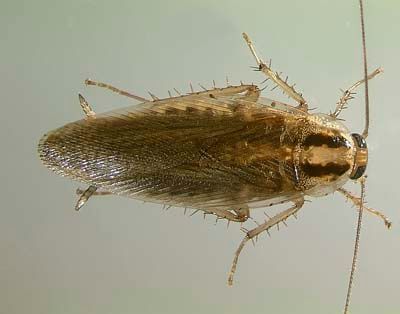
Cockroach droppings also get confused with lizard and rodent droppings, especially in kitchens and bathrooms. Here's how all four compare side by side.
| Source | Size | Shape | White Tip? | Most Common Location |
|---|---|---|---|---|
| Gecko / Small Lizard | About 1/4 inch | Smooth pellet, tapered | Yes, always | Windowsills, walls, near lights |
| Large Lizard (Knight Anole, Skink) | Up to 3/4 inch | Larger pellet, may be curved | Yes, always | Outdoor surfaces, patios, tree bases |
| Roof Rat | About 1/2 inch | Spindle-shaped, pointed ends | No | Attics, along walls, near food |
| House Mouse | About 1/4 inch | Rice-grain shaped, pointed ends | No | Pantries, cabinets, under sinks |
| German Cockroach | About 1/16 inch | Tiny dark specks or smears, blunt ends | No | Kitchen counters, inside cabinets, near appliances |
When the Droppings Are NOT From a Lizard
Signs It's a Rodent — Not a Lizard
What to Do When You Find Droppings
Before doing anything else, check for the white chalky cap. If it's there on all the droppings, you're almost certainly dealing with lizards and not a rodent problem.
Both lizard and rodent droppings can carry bacteria including Salmonella. Never sweep or vacuum dry droppings — dampen them first, wear gloves, and disinfect the area after removal.
If you can't confirm what you're looking at, or if you found droppings without white tips in a hidden area of your home, don't guess. A professional inspection takes the uncertainty out of it completely.
How to Reduce Lizards and Rodents Around Your Home
- ✓ Seal gaps around doors, windows, vents, and utility lines. Both lizards and rodents use the same entry points — sealing them keeps both out.
- ✓ Reduce insects around exterior lights at night. House geckos and anoles follow the insects that cluster around porch lights. Switching to yellow or amber bulbs attracts fewer insects and fewer lizards.
- ✓ Keep vegetation trimmed back from the house. Dense shrubs and overhanging branches give both lizards and roof rats a sheltered path to your roofline and walls.
- ✓ Store food in sealed containers and clean up spills immediately. Rodents are drawn to food — lizards generally aren't. Consistent kitchen hygiene removes one of the biggest reasons rats or mice move in.
- ✓ Inspect your attic and roofline at least once a year. Catching a rodent problem early — before a colony is established — dramatically reduces the damage and the cost of treatment.
- ✓ Schedule a professional inspection if you find droppings inside the home. Whether it turns out to be lizards or rodents, knowing for certain gives you the right next step.
Found Droppings and Not Sure What You're Dealing With?
InsectIQ has an entomologist on staff and a trained wildlife team who can identify exactly what left those droppings, whether it's a harmless lizard or a rodent problem that needs immediate attention. Contact us today to get a quote.
Contact Us for a Quote