
Solitary Wasps: Are Digger Wasps Dangerous?
See holes in your yard with a wasp flying in and out? It's likely a digger wasp — and it's actually helping you. Learn what it is and what to do.
Solitary Wasps: The Digger Wasp in Your Yard
You step outside and notice small holes in the ground — and maybe you see a wasp flying in and out of them. Before you panic, here's the good news: this is almost certainly a solitary wasp, also called a digger wasp, and it is one of the most helpful insects that can live in your yard.
Unlike the social wasps that build paper nests and defend them aggressively, solitary wasps live alone. They do not have a colony to protect, which makes them far less likely to sting. In fact, most people can walk right past a digger wasp nest without any problem at all.
What Is a Solitary Wasp?
When most people think of wasps, they picture a big papery nest hanging from a porch, full of insects ready to swarm anyone who gets too close. But solitary wasps are completely different. As the name says, they live alone — each female digs her own burrow, lays her own eggs, and takes care of things herself.
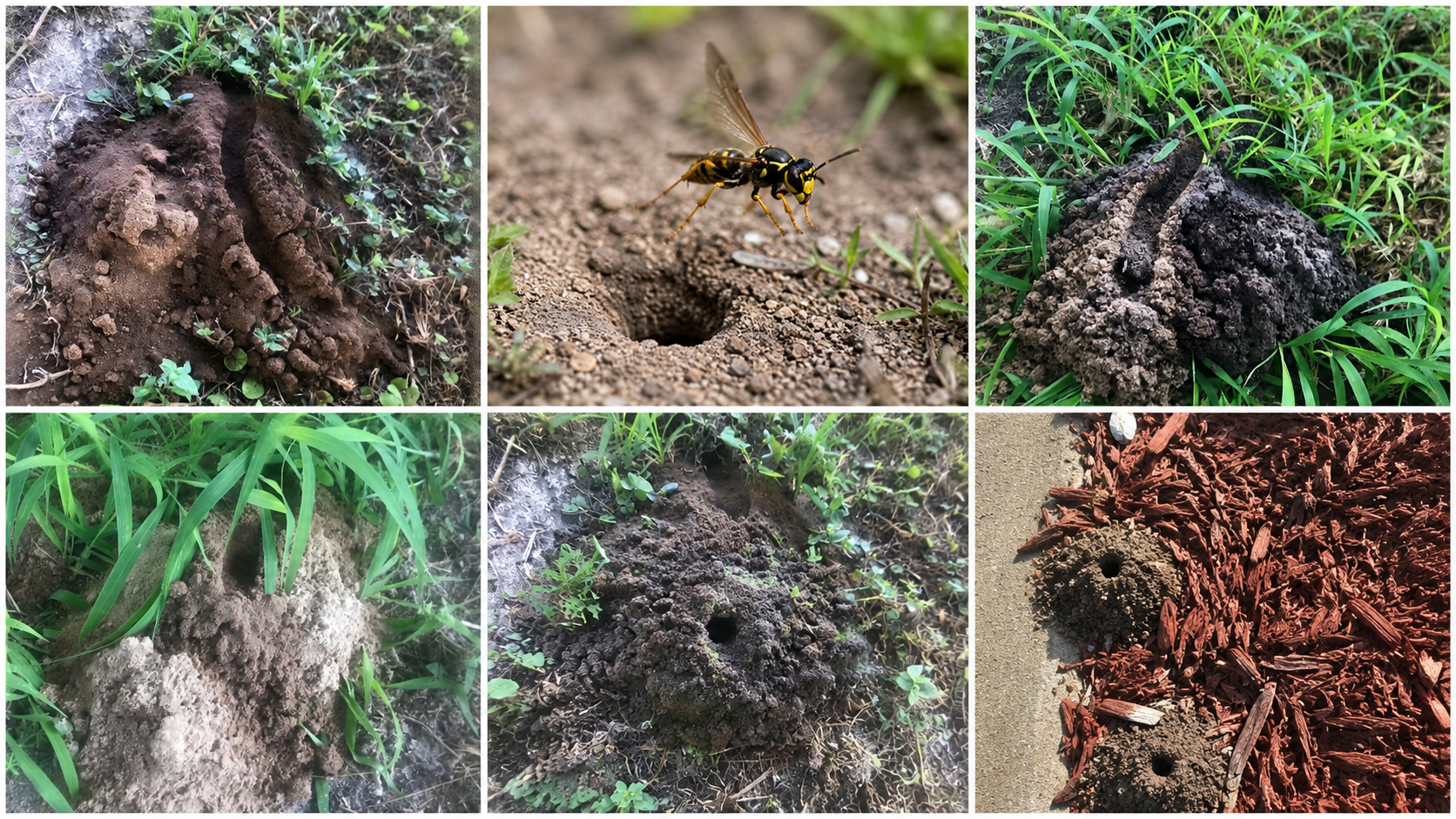
Digger wasps are the most commonly noticed type of solitary wasp because they nest in the ground, which is where people spot the small holes they leave behind. These tunnels are usually about the width of a pencil and go several inches straight down into the soil. One female may dig several tunnels in the same area, which can make it look like a large infestation — but it's really just one or a few wasps doing their thing.
Fun fact: The digger wasp is an expert hunter. It can sting and paralyze an insect — like a grasshopper or caterpillar — much larger than itself, carry it back to the nest, and seal it inside as a living food supply for her young. The prey doesn't die right away — it just stays frozen, fresh, until the larva is ready to eat it.
Common Solitary Wasp Species Found in Florida
Florida is home to a wide variety of solitary wasps. While they all share the same general lifestyle, each species has its own look, prey preference, and nesting habits.
- Appearance
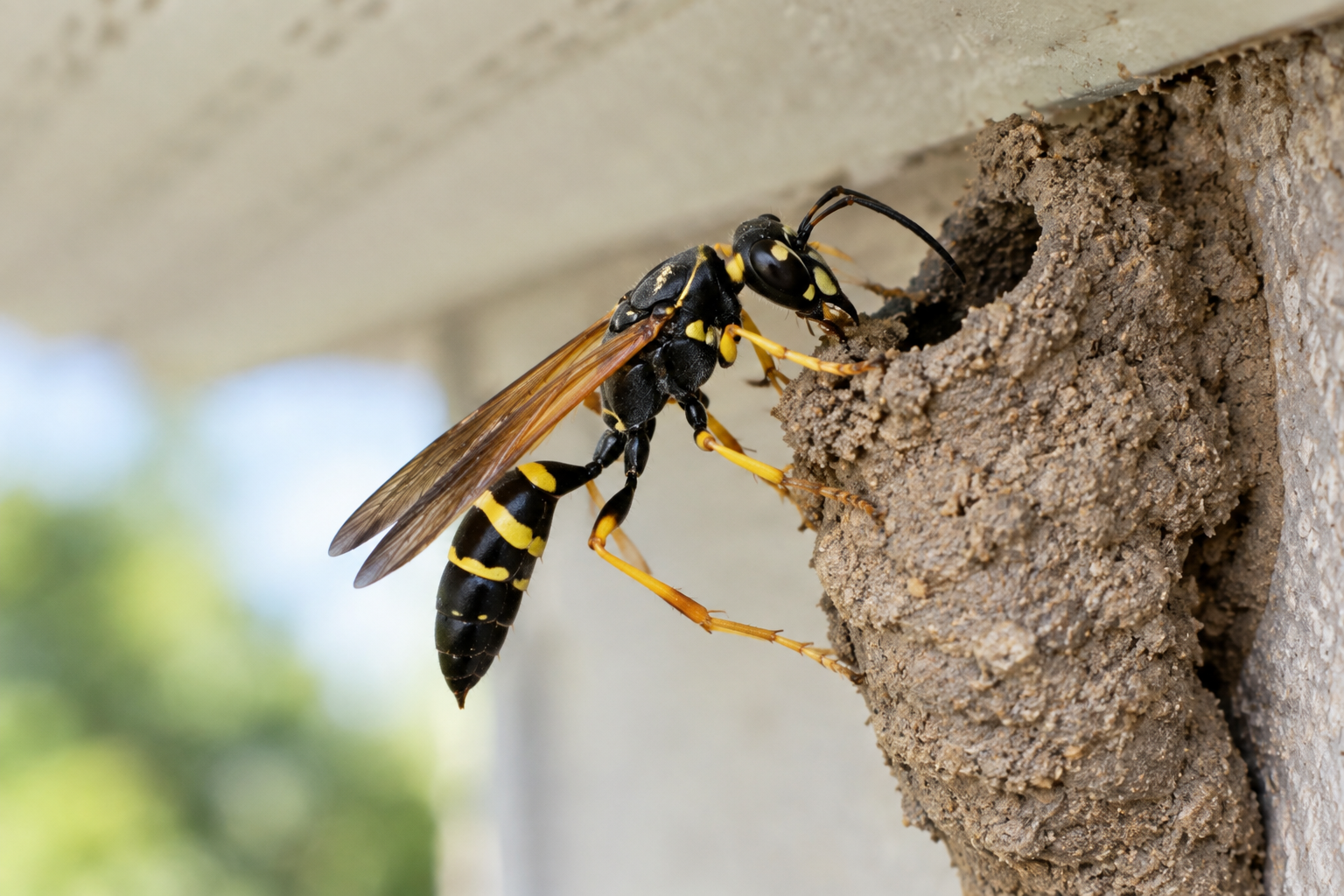
- One of the largest digger wasps — up to 1½ inches long with yellow-and-black markings. Often mistaken for a giant hornet.
- What It Hunts
- Cicadas — it paralyzes them and carries them underground as food for larvae
- Where It Nests
- Sandy or bare soil near sidewalks, lawns, gardens, and golf courses
- Threat to Humans
- Very low — males may hover and act territorial but can't sting; females rarely sting unless handled
- Appearance
- About 1 inch long with a bright orange-red abdomen, black head, and golden fuzzy body
- What It Hunts
- Katydids, crickets, and grasshoppers — a natural controller of lawn and garden pests
- Where It Nests
- Open, bare ground and sparsely vegetated soil — often near garden beds
- Threat to Humans
- Very low — docile and unlikely to sting even when approached closely
- Appearance
- Sleek and shiny with a deep metallic blue or blue-black color — one of the most visually striking wasps in Florida
- What It Hunts
- Primarily crickets, which it paralyzes and buries as food for developing larvae
- Where It Nests
- Sandy soil near wooded areas, garden edges, and open lawns
- Threat to Humans
- Very low — non-aggressive and rarely encountered up close
How Solitary Wasps Raise Their Young
The life cycle of a solitary wasp is fascinating — and it's the reason these insects are so valuable as natural pest controllers. Every step of the process is done entirely by the female, with no help from a colony.
The female digs a tunnel in dry, sandy, or bare soil. Each tunnel leads to one or more small chambers where the eggs will be laid. Digging can take several hours.
She hunts for a specific type of insect depending on her species — a cicada, grasshopper, caterpillar, or cricket. She stings it to paralyze it (not kill it) and drags or carries it back to the nest.
She lays one egg on or near the paralyzed prey and seals the chamber. The prey stays alive but can't move — it will serve as a fresh meal for the larva when it hatches.
The egg hatches into a larva, which feeds on the paralyzed insect. This takes several weeks. The larva grows through several stages before it's ready to transform.
When the larva is fully grown, it forms a cocoon and overwinters underground. In Florida, this pupal stage often lasts through fall and winter.
A new adult wasp emerges the following spring or summer, mates, and the cycle begins again. Most adults only live a few weeks above ground.
Why Solitary Wasps Are Beneficial to Your Yard
Solitary wasps are genuinely good for your yard and garden. Because their larvae need specific insects to survive, adult females hunt and remove large numbers of pest insects from your property. Here are some of the ways they help.
Pest control in action: A single cicada killer wasp colony can remove dozens of cicadas from your yard in a single season. Cicadas damage tree roots and can destroy ornamental plants — so having a digger wasp nearby is actually protecting your landscaping.
Are Digger Wasps Dangerous to People or Pets?
This is the question most people have, and the honest answer is: almost never. Solitary wasps are not aggressive. They do not defend their nests the way yellow jackets or hornets do, because there is no colony to protect. A female digger wasp has a stinger, but she uses it to paralyze prey — not people.
| Situation | Risk Level | What to Know |
|---|---|---|
| Walking near the nest | Very Low | Wasps will fly around but almost never sting unprovoked |
| Mowing or digging near burrows | Low | Disturbing the nest may cause brief defensive hovering — move away slowly and calmly |
| Children or pets running through the area | Low | Worth noting the nest location; direct contact with the wasp while she's hunting could cause a sting |
| Picking up or swatting a wasp | Moderate | Handling or cornering a female can trigger a sting — leave her alone and she'll leave you alone |
| Severe bee/wasp allergy (anaphylaxis) | High for that individual | If you have a known allergy, consult a professional before deciding whether to remove the nest |
Signs of Solitary Wasp Activity in Your Yard
How to Tell Solitary Wasps Apart from Social Wasps
Not every wasp you see in your yard is a harmless digger wasp. Knowing the difference between solitary and social wasps helps you decide when to leave them alone and when to call a professional.
- Where They Nest
- In the ground — look for small holes in bare or sandy soil
- Colony Size
- No colony — each female works alone
- Aggression Level
- Very low — will not swarm or defend the nest in groups
- What to Do
- Leave them alone — they are beneficial and will be gone after nesting season
- Where They Nest
- In paper or papery nests above ground, in wall voids, or underground in large chambers
- Colony Size
- Dozens to thousands of workers protecting a queen
- Aggression Level
- High — will swarm and sting repeatedly if the nest is disturbed
- What to Do
- Do not approach or disturb — call a pest professional for removal
When to Leave Digger Wasps Alone — and When to Act
In most situations, the best thing you can do with a digger wasp nest is leave it alone. The nesting season lasts only a few weeks, and the wasps will be gone on their own. But there are some situations where taking action makes sense.
- ✓ Leave it alone if the nest is away from heavy foot traffic. A burrow in a flower bed, far corner of the yard, or open lawn area poses almost no risk. Enjoy the free pest control and let them finish their work.
- ✓ Mark the area if you have young children or pets. You don't need to remove the nest — just put a small marker near it so kids and pets know to avoid that spot during nesting season.
- ✓ Cover bare soil to discourage future nesting. Digger wasps prefer bare, dry ground. Planting groundcover, adding mulch, or growing grass in bare patches makes the area less attractive for nesting the following year.
- ✓ Water the nesting area lightly. Digger wasps strongly dislike moist soil. Lightly watering the area during nesting season won't harm the wasps that are already there, but it will discourage others from setting up nearby.
- ✓ Call a professional if the nest is in a high-traffic area or someone has an allergy. If the burrow is right next to a doorway, play area, or anywhere that makes avoidance impossible — or if a household member is allergic to stings — a pest professional can evaluate and address the situation.
Not Sure What's Digging in Your Yard?
InsectIQ has entomologists on staff who can identify exactly what's in your yard — solitary wasp, social wasp, or something else entirely. We offer free evaluations so you know what you're dealing with before any decision is made.
Contact Us Today!