
Bug of the Week: Eastern Cicada Killer
Eastern cicada killer wasps are huge and look terrifying, but are they actually dangerous? Learn how to spot them and when InsectIQ can help.
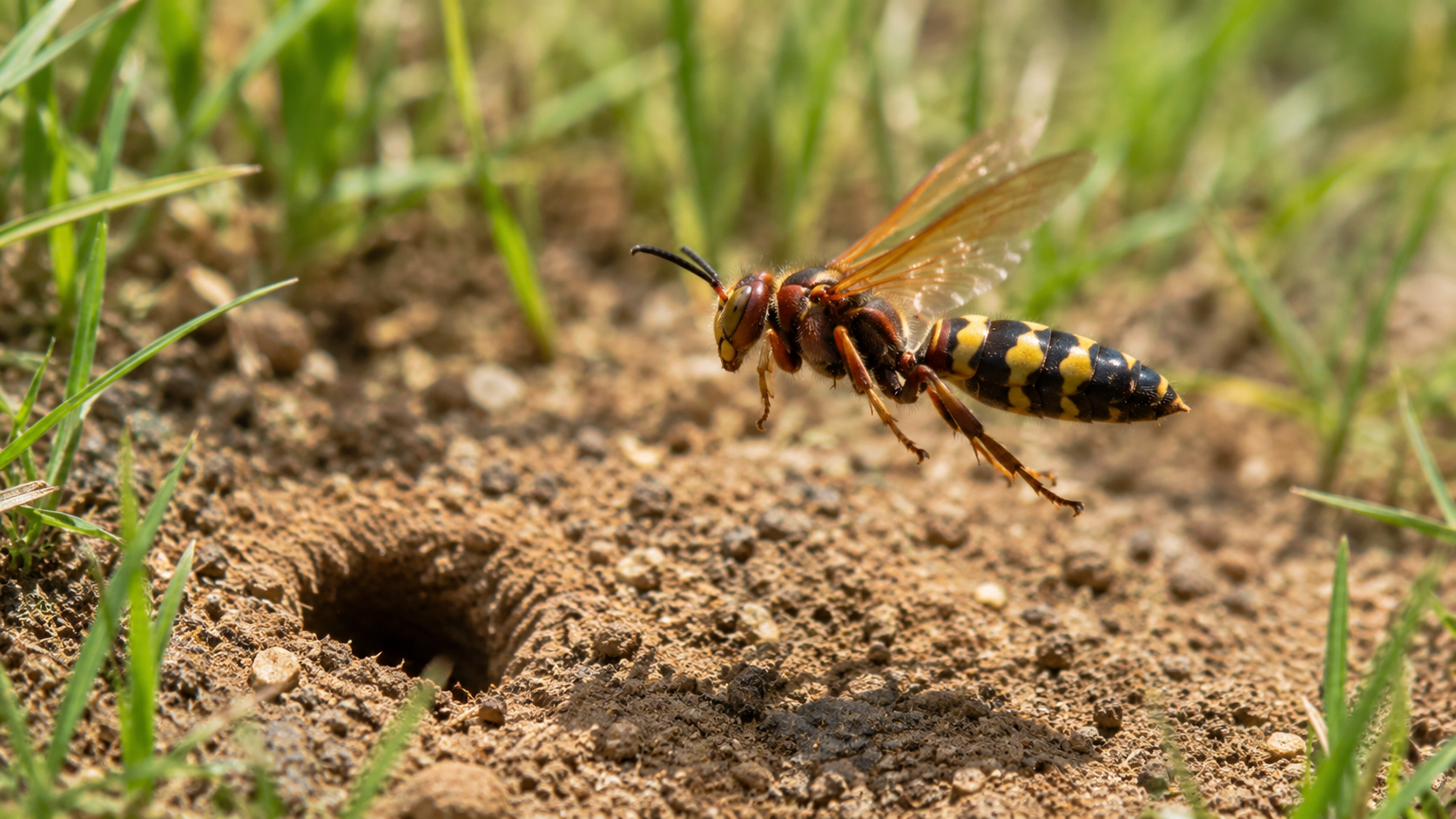
Eastern Cicada Killers: The Giant Wasp That Looks Scary But Isn't
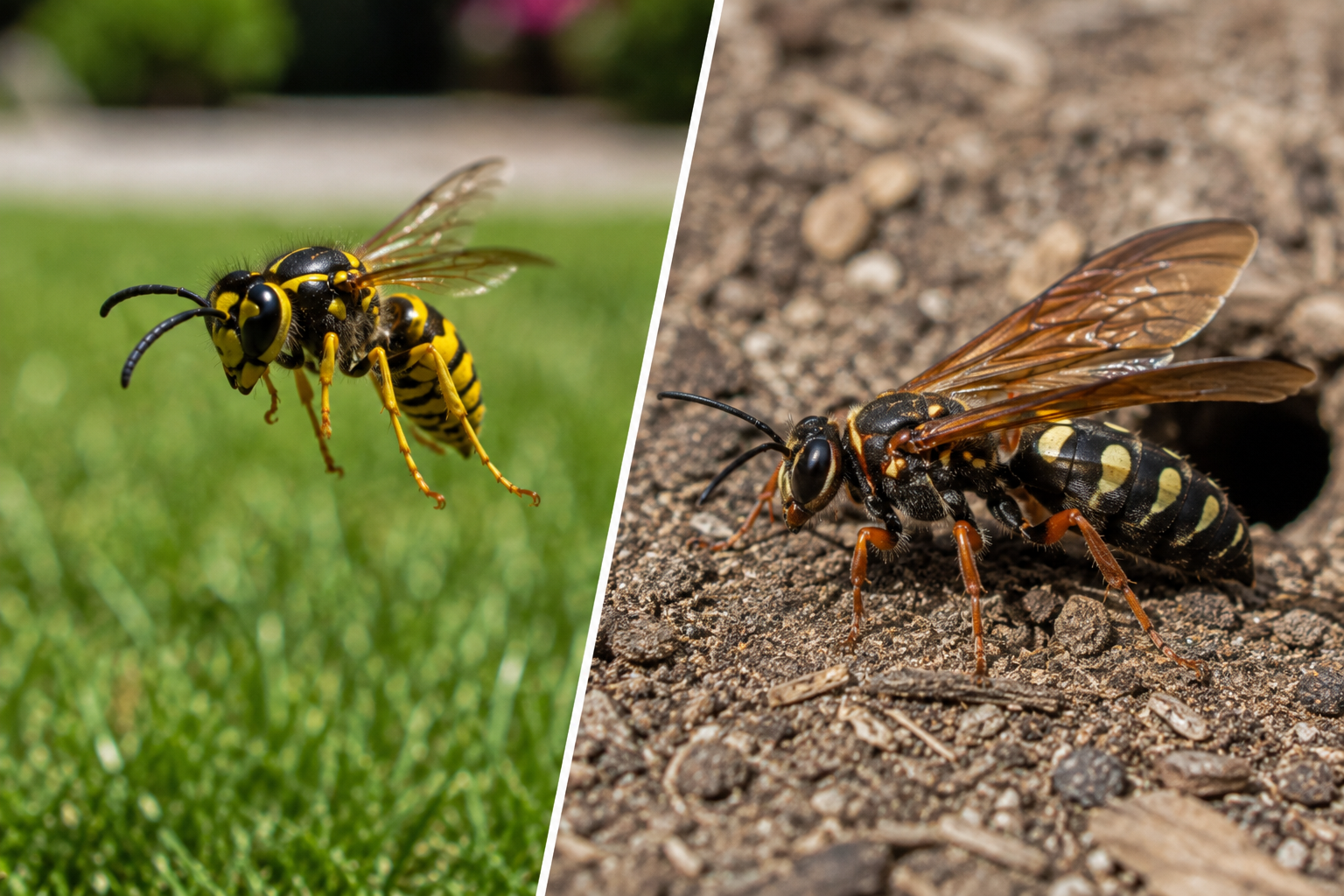
It's almost two inches long. It flies low and fast across your lawn. And it looks like it could really hurt you. If you've seen one of these giant wasps in your yard this summer, you've probably met an eastern cicada killer.
Here's what they really are, what they're doing in your yard, and whether you actually need to worry.
What Is an Eastern Cicada Killer?
An eastern cicada killer is a giant digger wasp. It gets its name because of what it hunts: cicadas, those loud, buzzing bugs you hear singing in trees all summer. The mother wasp catches cicadas and brings them back to her underground nest to feed her young.
Cicada killers are "solitary" wasps. That means each female digs and takes care of her own burrow alone. They don't live in a big group with a queen the way yellow jackets and honeybees do, and they don't have a nest full of workers to protect. This one fact is the biggest reason they're much less aggressive than people expect.
The eastern cicada killer is actually the largest example of a much bigger group of ground-nesting insects. If you want the full picture of how these solo hunters live and whether they're something to worry about, check out our guide on solitary wasps.
Fun fact: Cicada killers are often mistaken for "murder hornets," a nickname for the Asian giant hornet. The two bugs are not related, and the Asian giant hornet does not live in Florida. If you saw a giant flying insect in your yard this summer, it was almost certainly a harmless cicada killer.
Meet the Cicada Killer: Female, Male, and the Burrow
Male and female cicada killers act very differently, and knowing the difference is the key to understanding why these wasps look scarier than they really are.
- What She Does
- Digs the burrow and hunts cicadas to feed her young
- Can She Sting?
- Yes, but she rarely stings people unless she is grabbed or stepped on
- Where You'll See Her
- Flying low over the lawn, often carrying a cicada that's heavier than she is
- What He Does
- Guards the area near the burrows and chases off other insects, including other males
- Can He Sting?
- No. Male cicada killers have no stinger at all and cannot sting a person under any circumstance
- Where You'll See Him
- Hovering or "dive-bombing" near nest sites, which looks aggressive but is harmless
- What It Looks Like
- A small pile of loose dirt with a U-shaped hole about the size of a quarter
- What's Inside
- A tunnel with several side rooms, each holding eggs and paralyzed cicadas for food
- Where You'll Find It
- Sunny spots with sandy, well-drained soil and thin or bare patches of grass
How a Cicada Killer Hunts
A female cicada killer flies into trees and shrubs looking for cicadas. When she finds one, she stings it. The sting doesn't kill the cicada — it makes it unable to move. Then she carries or drags the cicada, which often weighs more than she does, all the way back to her burrow.
Once she's underground, she lays a single egg on the cicada and seals it inside a small chamber. When the egg hatches, the young wasp larva eats the cicada for food as it grows. By fall, the larva is fully grown. It spends the winter underground and comes out as an adult wasp the following summer.
Are Cicada Killers Dangerous to People?
Signs You Have Cicada Killers in Your Yard
Should You Get Rid of Cicada Killers?
In most cases, cicada killers don't need to be removed. They don't damage your lawn the way grubs or mole crickets do, and they actually help out by keeping cicada populations in check. A few burrows in a quiet corner of the yard usually aren't worth worrying about.
That said, every yard is different. If burrows show up near a front door, a play area, a pool, or anywhere people walk barefoot often, it's worth having a professional take a look — especially if there are a lot of nests grouped together.
What to Do If You Find a Cicada Killer Nest
Cicada killers look intimidating, but they are not hunting people. Walking near a burrow on accident is not dangerous.
Steer clear of active burrows when mowing or playing outside, especially if several nests are grouped close together.
If nests are widespread or sitting right next to a high-traffic area, a professional can take care of them.
Found Cicada Killer Burrows in Your Lawn?
InsectIQ has entomologists on staff who can confirm exactly what's in your yard and let you know if treatment is really needed. We offer free evaluations so you know what you're dealing with before anything happens.
Contact Us Today!