
Bug of the Week: Fire Ants
Fire ants are the most aggressive ant in Florida — and one wrong step can mean multiple stings at once. Learn how to spot, avoid, and eliminate them.
Fire Ants: Florida's Most Painful Backyard Pest
Step on a fire ant mound and you'll know it immediately. The burning, stinging sensation that gives them their name is unlike any other ant bite in Florida — and it doesn't come from just one ant. When a fire ant colony is disturbed, hundreds of workers swarm and sting at the exact same moment.
Here's what fire ants actually are, why they're so much more dangerous than other ants in your yard, and what you can do about them.
What Is a Fire Ant?
The fire ant most Floridians encounter is the red imported fire ant, which arrived in the United States from South America in the 1930s and has spread across the entire southeastern U.S. since then. Florida's warm, wet climate is almost perfect for them — which is why fire ants are found in nearly every county in the state year-round.
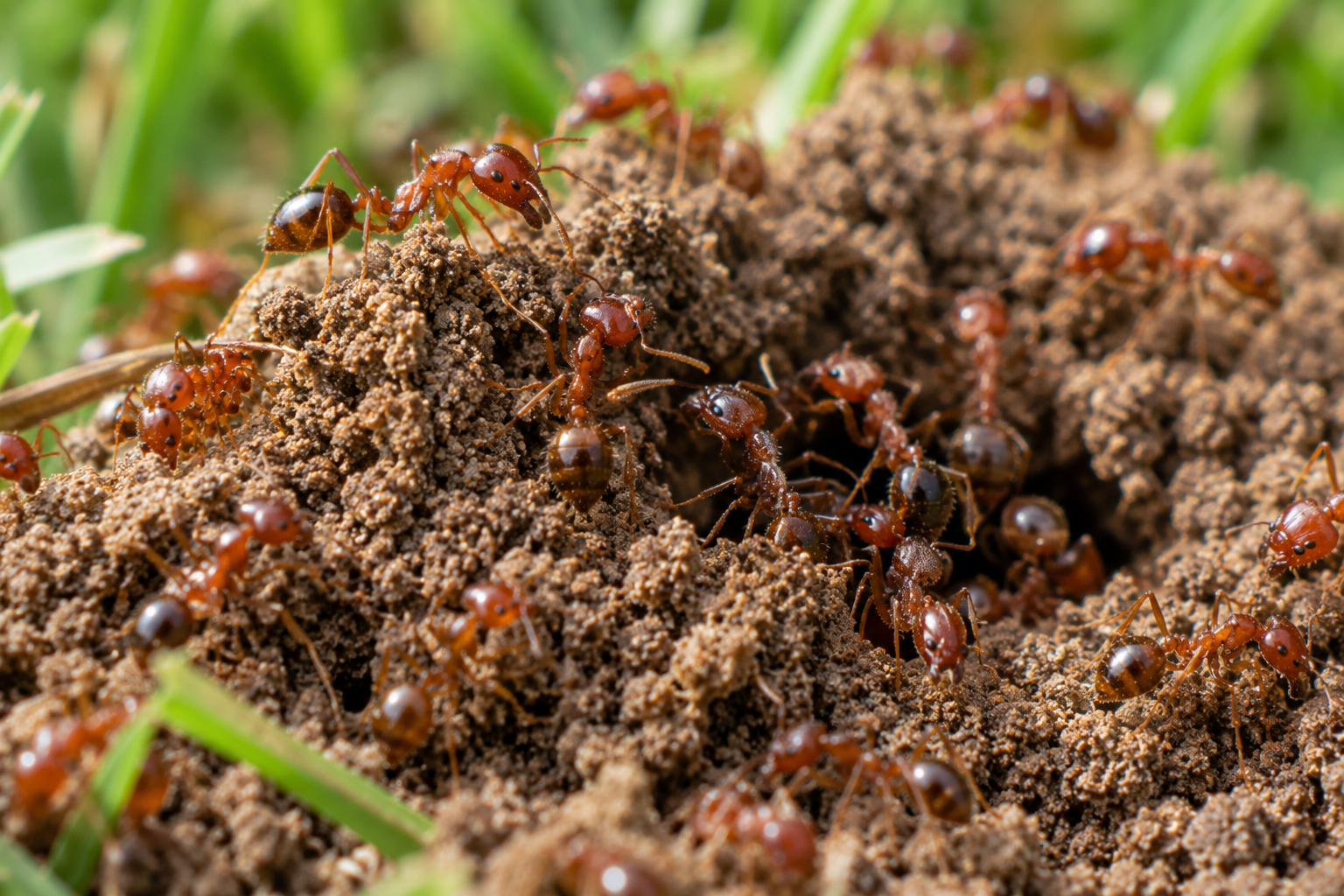
Unlike most ants, fire ants are both aggressive and venomous. When their mound is disturbed, they don't just bite — they grab onto skin with their jaws and sting repeatedly, injecting venom that causes an intense burning sensation and leaves raised white pustules on the skin within hours. A large mound can hold hundreds of thousands of workers, all of which respond at once.
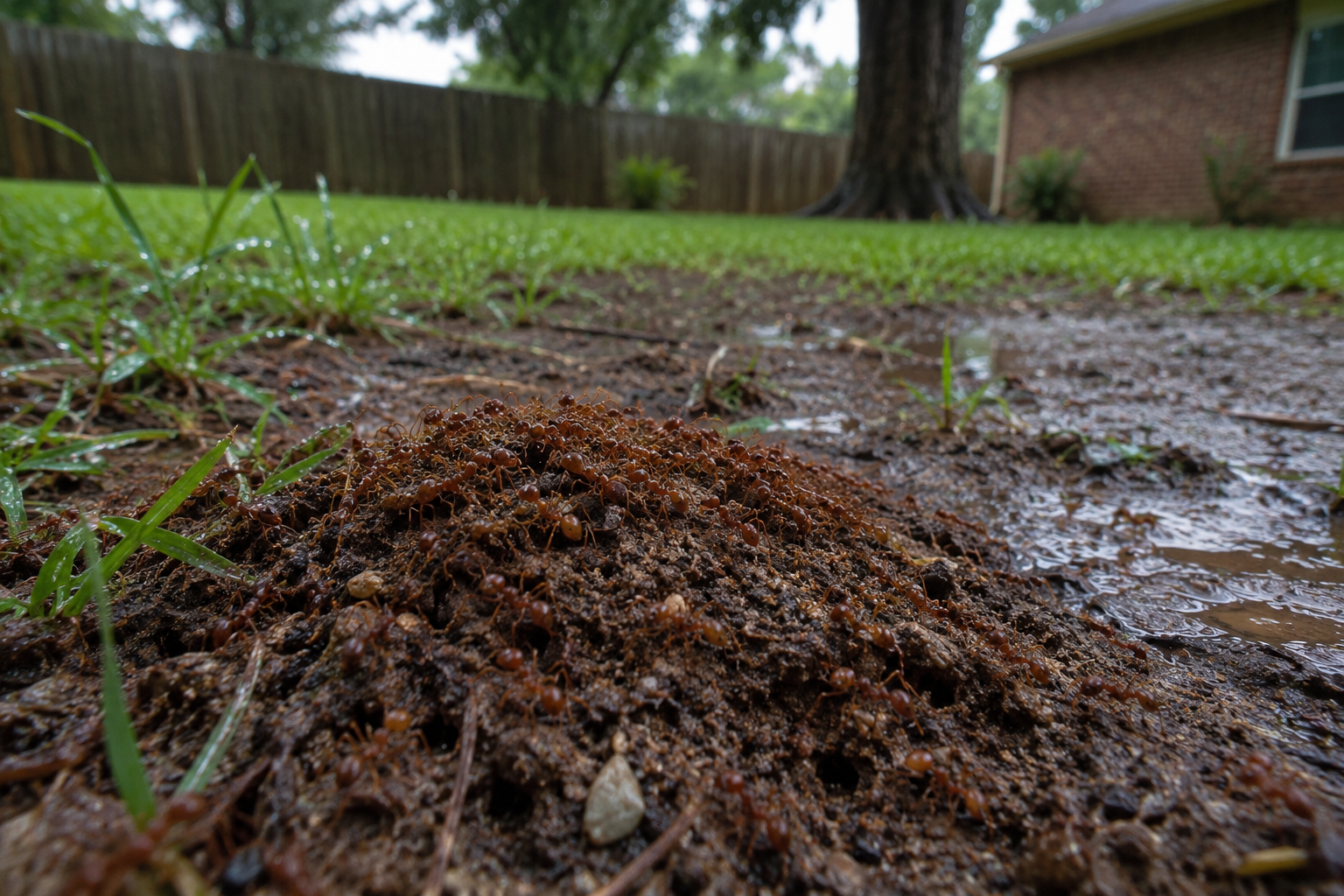
Not all red ants are fire ants: Several other Florida ant species are reddish-brown and get mistaken for fire ants. One of the most common mix-ups is with big-headed ants, which look similar but are not aggressive and don't sting. The easiest way to tell them apart is the mound — fire ant mounds are dome-shaped with no visible entry hole on top, while big-headed ant mounds are flatter with loose soil and visible openings.
Inside a Fire Ant Colony
Fire ant colonies are large, fast-growing, and built to survive almost anything — including flooding, which actually helps them spread.
- What They Do
- Forage for food, build and repair the mound, and defend the colony aggressively when threatened
- How Many
- A mature colony can hold 100,000 to 500,000 workers
- Key Behavior
- Swarm instantly when the mound is stepped on or disturbed, climbing upward before stinging all at once
- What She Does
- Lays eggs constantly — up to 1,500 per day in an active colony
- How Many Queens
- Some colonies have a single queen; others have hundreds, which allows the colony to grow much larger and spread faster
- Why It Matters
- Killing workers without reaching the queen means the colony simply rebuilds
- What It Looks Like
- A dome-shaped mound of loose soil, usually 6 to 18 inches tall with no visible hole on top
- What's Underneath
- A deep tunnel system that can extend several feet down into the ground
- Where You'll Find It
- Open, sunny areas — lawns, pastures, parks, and alongside driveways and sidewalks
How Dangerous Are Fire Ants?
Why Fire Ants Get Worse After It Rains
Fire ants have a remarkable survival trick: when floodwaters fill their underground tunnels, the entire colony links together to form a living raft that floats on the water's surface. The raft can stay afloat for days, drifting until it reaches dry ground — which could be your porch, a garden bed, or anywhere else along the water's path.
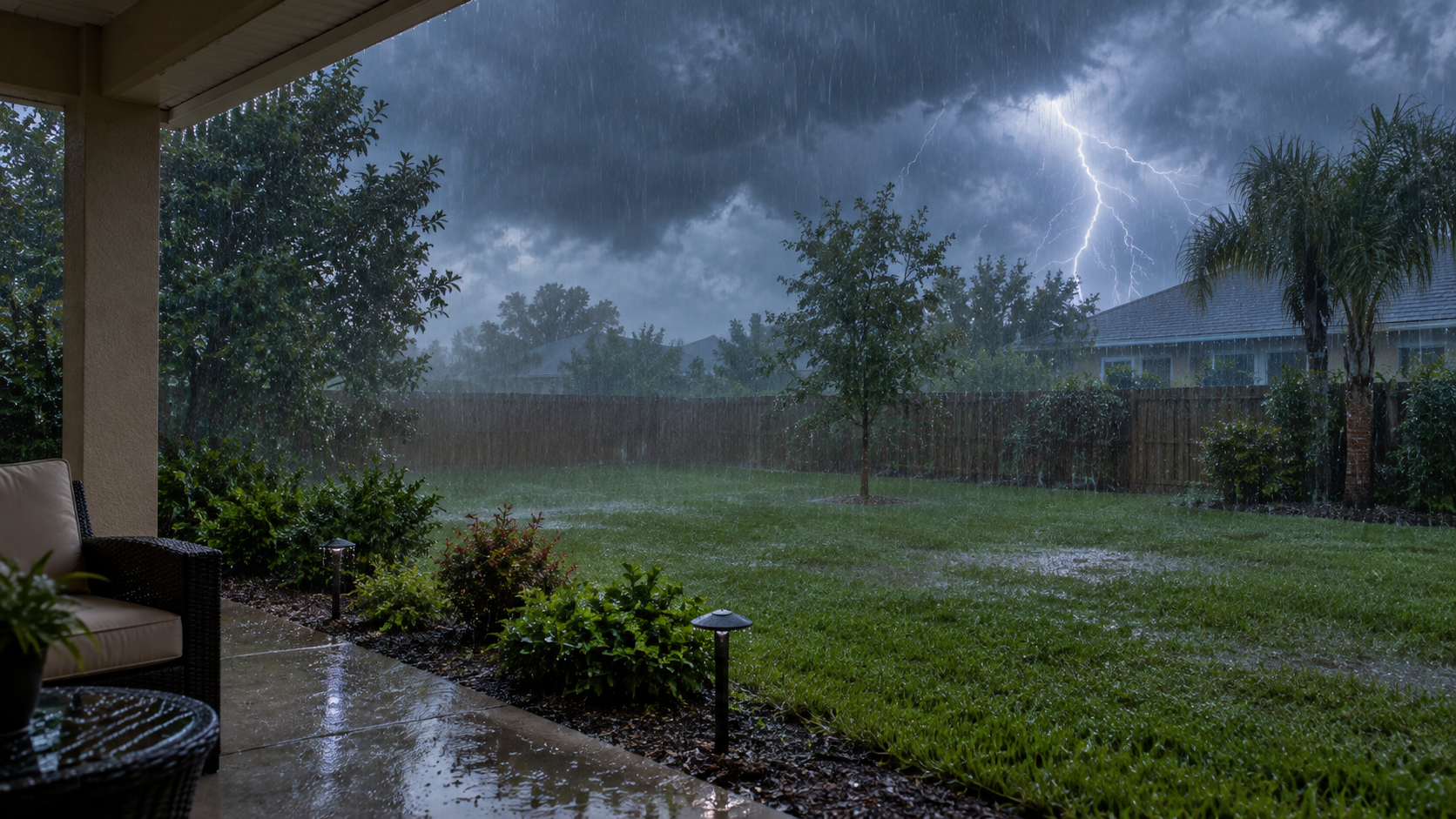
This is one of the main reasons fire ant mounds seem to appear in new spots after heavy rain. They haven't hatched from nowhere — they've floated in. If you're seeing new mounds after storms, our guide on why ants invade your home after it rains explains exactly what drives this behavior and what to do about it.
Fire Ant vs. Other Florida Ants: Quick Comparison
| Ant | Stings People? | Dome-Shaped Mound? | Aggressive? |
|---|---|---|---|
| Red Imported Fire Ant | Yes, aggressively | Yes | Yes — swarms instantly |
| Big-Headed Ant | Rarely, minor bite only | No — flat, open mound | No |
| Ghost Ant | No | No mound visible | No |
| Florida Carpenter Ant | Can bite, no sting | No — nests in wood | Only when disturbed |
| Tropical Fire Ant | Yes, similar to RIFA | Yes, smaller mound | Yes |
Signs You Have Fire Ants in Your Yard
What to Do If You Find a Fire Ant Mound
Mark the mound location and make sure kids and pets stay clear until it's treated. A disturbed mound can swarm within seconds.
Surface sprays kill foraging workers but don't reach the queen. The colony survives, moves a few feet over, and rebuilds — sometimes larger than before.
Bait-based professional treatments are carried back to the queen by workers, which eliminates the colony from the inside out — the only reliable long-term fix.
How to Reduce Fire Ant Activity in Your Yard
- ✓ Check the yard for new mounds after every storm. Flood events move fire ant colonies into new areas, and catching a fresh mound early is easier than treating a fully established one.
- ✓ Teach kids and pets to stay away from dome-shaped mounds. Young children especially may not recognize a mound in time to avoid it.
- ✓ Fix yard drainage problems that cause flooding. Standing water and flood conditions help fire ant rafts move into new areas of your yard after rain. Our yard drainage guide covers the fixes that matter most.
- ✓ Keep grass mowed and open areas maintained. Fire ants prefer open, sunny ground — a thick, well-maintained lawn gives them fewer ideal spots to build.
- ✓ Schedule a yard-wide treatment for multiple mounds. If you have more than one or two mounds, a broadcast bait treatment across the whole yard is far more effective than treating each mound one at a time.
Fire Ant Mounds Taking Over Your Yard?
InsectIQ has an entomologist on staff who can assess your property, confirm what you're dealing with, and apply the right treatment to eliminate the colony — not just the mound on the surface. Contact us today to get a quote.
Contact Us for a Quote