
Pantry Pests: Moths — Indian Meal Moth & Angoumois Grain Moth
Find moths in your pantry? Learn how to identify the Indian Meal Moth and Angoumois Grain Moth, spot the signs of an infestation, and protect your food.
Pantry Pests: Moths
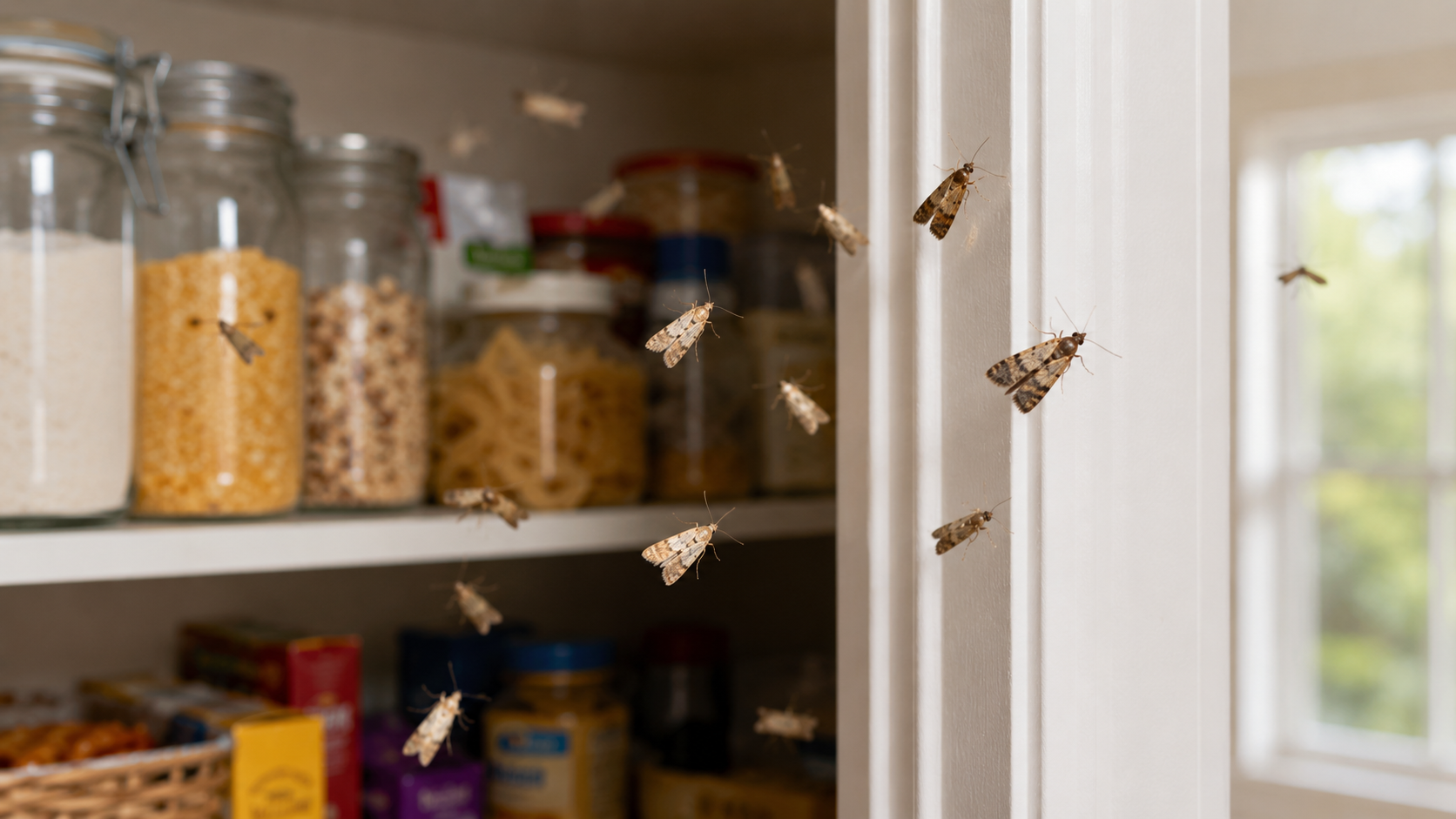
You open your cabinet, grab a bag of rice or a box of cereal — and something flutters out. Sound familiar? Pantry moths are one of the most common household pests, and they are really good at hiding until the problem is already big. Two of the most common types are the Indianmeal moth and the Angoumois grain moth.
These moths don't bite or sting, but they ruin food, lay eggs in your pantry, and can be tricky to get rid of. Here's everything you need to know about them — and how to stop them.
What Are Pantry Moths?
Pantry moths are small moths that live in and around stored food. They are called "pantry pests" because they love to set up home in your kitchen cabinets and pantry shelves — anywhere dry food is kept.
The adult moths don't actually eat your food. The real troublemakers are their larvae, which are tiny caterpillar-like worms. The larvae hatch from eggs and immediately start eating. They chew through thin plastic bags and cardboard boxes, so your best bet is sealing it in glass or hard plastic.
Fun fact: Most of the time, pantry moths don't fly in through an open window. You bring them home from the grocery store! Their eggs are so tiny you can't see them, and they're already hiding in packaged food before it ever reaches your pantry.
Meet the Two Moths
Both of these moths are common pantry pests, but they look a little different and have some different habits. Here's how to tell them apart.
- What It Looks Like
- Its wings are two-toned — the back half is reddish-brown or copper-colored and the front half is pale gray or tan. This pattern makes it easy to identify.
- What It Eats
- Almost anything dry: flour, cornmeal, oats, cereal, dried fruit, nuts, chocolate, birdseed, and even dry pet food
- Most Common In
- Homes, grocery stores, and food warehouses across the United States — it is the #1 most common pantry moth in North America
- What the Larvae Do
- Spin silky webbing inside food packages — that sticky, web-like film you sometimes find in old flour or cereal is a sure sign of Indianmeal moth larvae
- What It Looks Like
- Smaller and more plain-looking — mostly tan or straw-colored all over with a small pointed tip on the back edge of each wing (like a little finger sticking out)
- What It Eats
- Mostly whole grains and seeds — especially corn, wheat, rice, and barley. It prefers whole kernels over flour or processed foods.
- Most Common In
- Farm storage areas, grain bins, and homes with bulk grains or dried corn. Common in the southeastern United States, including Florida.
- What the Larvae Do
- Burrow inside individual grain kernels and eat from the inside out — you often can't tell a kernel is infested just by looking at it
How These Moths Grow: The Life Cycle
Both moths go through the same four stages of life. Understanding the life cycle helps explain why pantry moth problems can get so out of hand so quickly.
A female moth lays hundreds of tiny eggs directly on or near food. The eggs are so small they look like specks of dust. They hatch in just a few days.
This is the eating stage. The larvae are tiny, cream-colored worms that eat constantly. This is the only stage that actually damages food. They can last weeks to months before moving to the next stage.
When the larva is done eating, it spins a cocoon and rests inside it. During this stage, the moth changes into its adult form. The larva often crawls away from the food to find a crack or corner to form its cocoon.
The adult moth hatches from the cocoon. Adult moths don't eat — their only job is to mate and lay eggs. They live for just 1 to 2 weeks. Then the cycle starts all over again.
Why problems grow fast: A single female Indianmeal moth can lay up to 400 eggs at a time. If conditions are warm (like a Florida kitchen), the whole cycle from egg to adult can take as little as 4 to 6 weeks. That means one moth can turn into hundreds very quickly if nothing is done.
What Foods Are at Risk?
Pantry moths can get into a surprising number of everyday foods. They are especially drawn to dry goods — the kind of food most people keep in their pantry for a long time.
| Food Type | Risk Level | Notes |
|---|---|---|
| Flour, cornmeal, oats | High | Indianmeal moth larvae thrive in fine grain products — webbing is easy to spot here |
| Whole grains, rice, corn kernels | High | Prime targets for the Angoumois grain moth, which burrows inside individual kernels |
| Cereal, granola, crackers | High | Thin cardboard boxes are no match for larvae — always check opened boxes |
| Nuts, dried fruit, chocolate | Moderate | Indianmeal moths will eat these, especially if stored in open or loosely sealed bags |
| Dry pet food and birdseed | Moderate | Often overlooked — large bags of pet food left open are a common starting point for infestations |
| Spices and dried herbs | Low | Less common, but it does happen — especially with older spices stored for a long time |
Signs You Have Pantry Moths
What to Do If You Find Pantry Moths
Getting rid of pantry moths takes a few steps. It's not enough to just throw out the bag you found them in — the eggs and larvae are almost certainly in other places too.
- ✓ Throw out all open or suspect food. Any dry food that isn't in a hard, airtight container should be checked carefully and thrown out if you see any signs of moths, webbing, or larvae. When in doubt, throw it out.
- ✓ Empty and wipe down your entire pantry. Take everything off the shelves. Wipe down the walls, floor, and ceiling of the cabinet with a damp cloth and then with white vinegar. Pay special attention to corners, cracks, and shelf lining where cocoons like to hide.
- ✓ Check every single food package. Moths can spread to containers you wouldn't expect. Check all your dry goods — even sealed bags — and look for any signs of webbing or tiny holes chewed through packaging.
- ✓ Store food in airtight containers. After cleaning, put all dry food into glass jars or hard plastic containers with tight-fitting lids. This stops any remaining eggs from hatching into your food supply.
- ✓ Use pheromone traps. Sticky traps made for pantry moths use scent to attract and catch adult male moths. They won't solve the whole problem on their own, but they help monitor how bad the infestation is and catch remaining adults.
- ✓ Call a professional if the problem keeps coming back. If you clean everything out and moths keep appearing weeks later, the infestation may be larger than it looks — or it may be coming from a food source you haven't found yet. A pest professional can help track it down.
How to Keep Pantry Moths Out
- ✓ Store all dry food in sealed, hard containers. As soon as you get home from the store, transfer flour, rice, oats, cereal, and similar items into airtight glass or plastic containers. Cardboard boxes and thin plastic bags are not enough.
- ✓ Check packages at the store before buying. Look for small holes, tears, or signs of damage on bags and boxes before putting them in your cart. Damaged packaging is how moths often get in during shipping or storage.
- ✓ Use older food first. Moths are more likely to infest food that has been sitting for a long time. Try to use older dry goods before opening newer ones, and don't keep things in your pantry for years without checking them.
- ✓ Keep your pantry cool and dry. Pantry moths do best in warm, humid places — which makes Florida kitchens perfect for them. Using a fan or air conditioning to keep the pantry area cooler can slow them down.
- ✓ Don't forget pet food and birdseed. Large bags left sitting open are one of the most common places pantry moths start. Store these in sealed bins just like you would your own food.
Think You Have Pantry Moths?
InsectIQ has entomologists on staff who can identify exactly what's going on in your home and help you get rid of it for good. Contact us today to address your pest issues.
Contact Us