
Squirrels in Florida: Signs, Damage & Attic Removal Tips
Think squirrels in your attic? Learn the warning signs, damage they cause, when they're most active in Florida, and how to keep them out of your home.
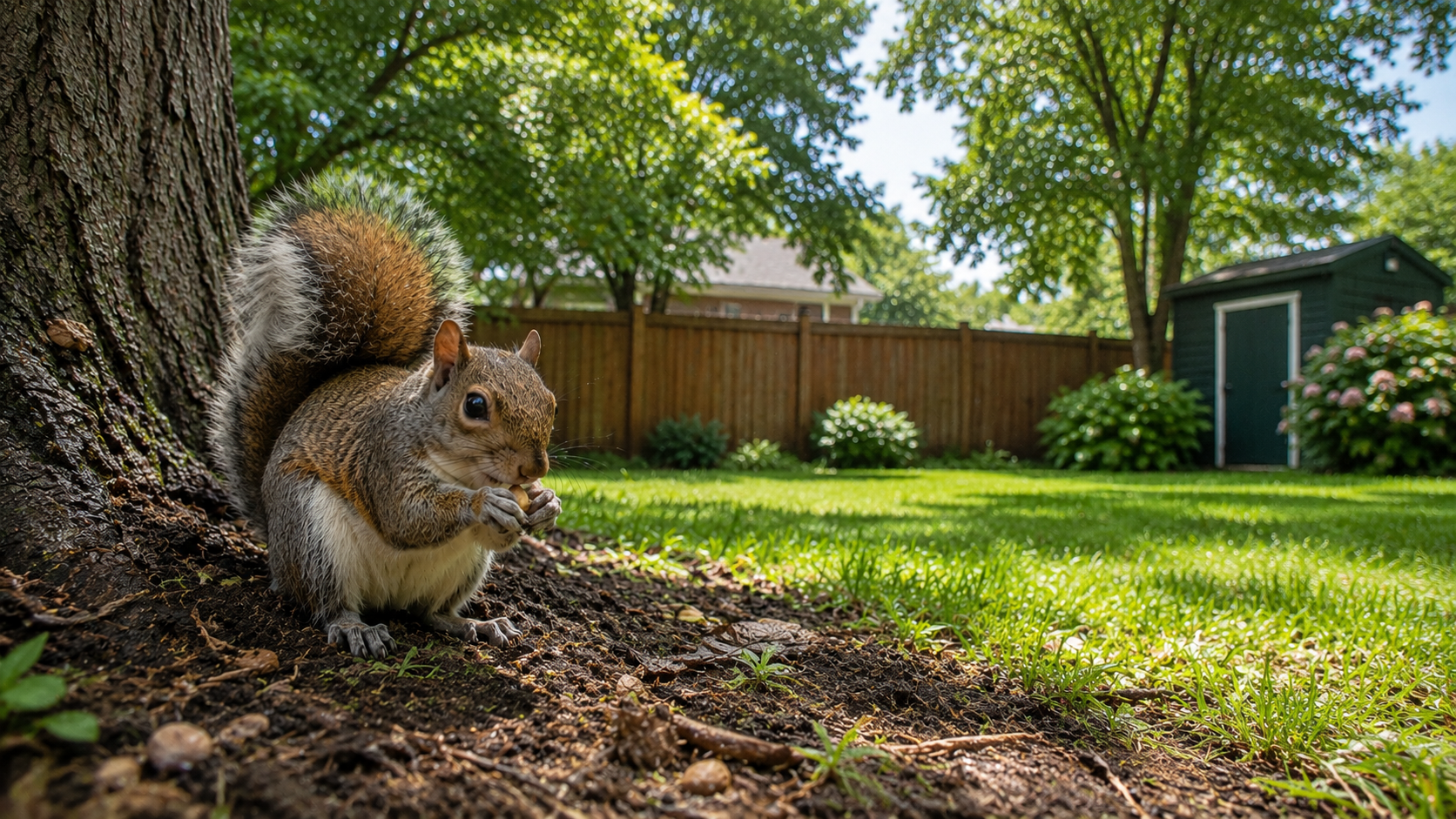
Squirrels in Florida: Cute Outside, Costly Inside
Squirrels are one of the most familiar animals in Florida neighborhoods. Most of the time they stay where they belong — in the trees. But when a squirrel finds a way into your attic, what seemed like a harmless backyard visitor quickly becomes one of the most damaging wildlife problems a homeowner can face.
Here's what kinds of squirrels live in Tampa Bay, why they target your home, and what to do if one gets inside.
What Squirrels Live in the Tampa Bay Area?
Three squirrel species are found in and around Tampa Bay, and all three are capable of getting into your home. Each one behaves a little differently, which affects when and how they show up as a problem.
- Appearance
- Grayish-brown fur with a white belly and a large, bushy tail
- Size
- About 18 inches long including the tail, up to 1.5 lbs
- Active When
- Daytime — most active in early morning and late afternoon
- Attic Risk
- The most common attic invader in Florida; highly comfortable around people and homes
- Appearance
- Larger than the gray squirrel, with variable coloring from orange-brown to nearly black
- Size
- Up to 27 inches long — Florida's largest squirrel species
- Active When
- Daytime, but less commonly seen than gray squirrels in residential areas
- Attic Risk
- Less likely to enter homes than gray squirrels but capable of significant damage when they do
- Appearance
- Small, with large dark eyes, a flat tail, and a skin flap between the front and back legs used for gliding
- Size
- About 8 to 10 inches long — Florida's smallest squirrel
- Active When
- Nocturnal — active only at night, which is why many homeowners don't realize they have them
- Attic Risk
- Often enter in groups and can be very difficult to detect until the colony is large
Why Squirrels Target Your Attic
Squirrels don't wander into attics by accident. They're looking for a safe, dry, sheltered spot to build a nest and raise their young. An attic checks every box — it's warm, protected from rain and predators, and usually full of soft materials perfect for nesting. Florida squirrels breed twice a year, in late winter and again in late summer, which is when females become most aggressive about finding a nesting site. Those two windows — February through March and August through September — are when most attic invasions happen.
Squirrels are also excellent climbers and can squeeze through an opening as small as 1.5 inches wide. Tree branches hanging over the roofline, power lines running close to the house, and any small gap around a soffit, vent, or roofline give them everything they need to get inside.
One squirrel almost always means more: Squirrels don't typically enter attics alone. If a female has found your attic as a nesting site, she'll give birth to a litter of two to five young — all of which will eventually need their own space. Flying squirrels in particular tend to move in as a group. Hearing sounds in the attic on and off over several months usually means the population has already grown.
The Damage Squirrels Do Inside Your Home
Squirrel vs. Rat in the Attic: How to Tell the Difference
Squirrels and rats both end up in attics and cause similar damage, but they behave differently — and that matters for how they're removed.
| Feature | Squirrel | Roof Rat |
|---|---|---|
| Active Time | Daytime (gray/fox) or nighttime (flying squirrel) | Primarily at night |
| Sounds in Attic | Scurrying, rolling sounds — often described as something being dropped | Lighter scratching and gnawing, usually quieter |
| Entry Points | Roofline gaps, soffits, vents — often chews to enlarge openings | Pipes, wires, and tight gaps along the roofline |
| Droppings | Larger, rounded at both ends | Smaller, tapered at one or both ends |
| Nest Material | Leaves, insulation, and shredded soft material in a visible pile | Scattered debris, less structured than a squirrel nest |
Signs Squirrels Have Gotten Into Your Home
What to Do If You Think Squirrels Are in Your Attic
Sealing a squirrel inside the attic traps it — which causes more damage as it panics, and creates a much larger problem if young are present.
Whether sounds happen during the day or at night helps identify the species and informs the right removal approach before a technician arrives.
Squirrel removal in Florida is regulated by state wildlife guidelines. A licensed professional removes them effectively and legally, then seals the entry points.
How to Keep Squirrels Out of Your Home
- ✓ Trim tree branches at least six to ten feet away from the roofline. Overhanging branches are the most common highway squirrels use to reach your roof.
- ✓ Inspect soffits, fascia, and attic vents every few months. Small gaps and damaged screens are all a squirrel needs to get inside, and catching them early is far cheaper than a removal and repair job.
- ✓ Replace damaged vent screens with metal mesh. Squirrels can chew through plastic and aluminum — hardware cloth or 16-gauge wire mesh is the only material that holds up long term.
- ✓ Remove bird feeders or relocate them away from the house. Bird feeders are one of the biggest reasons squirrels spend time near your roofline in the first place.
- ✓ Watch for increased activity during nesting season. The two peak windows — late winter and late summer — are when females are most actively scouting for a nesting site. That's the best time to do a roof inspection.
- ✓ Call a professional at the first sign of attic activity. Squirrel problems don't get smaller on their own. The sooner a technician can assess and seal the entry points, the less damage your attic takes.
Hearing Something in Your Attic?
InsectIQ's wildlife team can identify exactly what's gotten in, remove it in compliance with Florida wildlife guidelines, and seal the entry points so it doesn't happen again. Contact us today to get a quote.
Contact Us for a Quote