
Sewer Pests: Signs of a Plumbing Breach in Florida
Rats, roaches & drain flies inside? It may be a broken sewer line. Learn the signs of a plumbing breach and what pests it brings into Florida homes.
Signs of a Plumbing Breach: Pests That Come From the Sewer
If you're seeing certain pests pop up inside your Florida home — especially in bathrooms, kitchens, or near floor drains — the problem might not be coming from outside. It might be coming from below. A cracked or broken sewer line is one of the most overlooked entry points for some of the most serious household pests.
Rats, American cockroaches, and several types of flies all thrive in sewer systems. When a pipe breaks, shifts, or develops a gap — something that happens frequently in Florida's aging infrastructure and shifting soil — it creates a direct highway from the sewer into your living space. Here's how to recognize it and what to do.
Why Florida Homes Are Especially Vulnerable to Sewer Pest Intrusion
Florida's combination of sandy, shifting soil, high humidity, and aging pipe infrastructure makes plumbing breaches more common here than in most other states. Clay and cast iron pipes installed in older Tampa Bay homes are especially prone to cracking, tree root intrusion, and joint separation over time.
When a sewer line cracks or offsets even slightly, it doesn't just leak waste — it opens a pathway. Sewer pests don't need a large opening. A rat can squeeze through a hole the size of a quarter. An American cockroach needs less than half an inch. Sewer flies need almost nothing at all.
Sewer Pests at a Glance
Five main pests use damaged sewer lines to enter Florida homes. Each one is a clue, and seeing more than one at a time is a strong signal that a plumbing breach is involved.
Sewer Rats in Florida: Norway Rats and Roof Rats
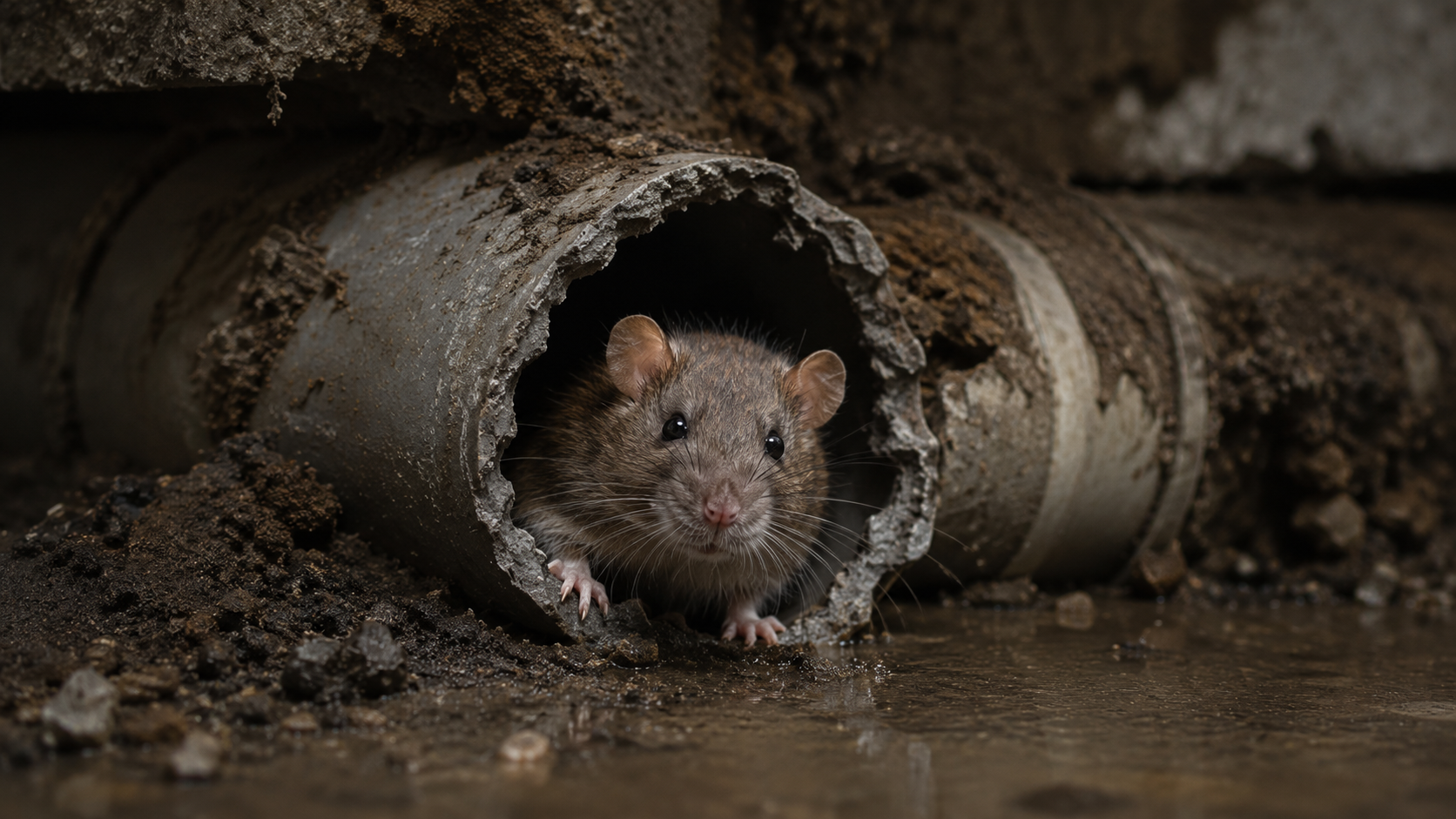
When people think of sewer rats, they're usually thinking of the Norway rat — but in Florida, both the Norway rat and the roof rat use sewer systems as travel corridors. Florida's warm climate allows rat populations to breed year-round, which means sewer-connected infestations can grow quickly once they start.
Rats are strong swimmers, exceptional climbers, and capable of navigating through pipes toward any crack, gap, or loose joint that leads to warmer air — which is exactly what a breached sewer line smells and feels like to a rat from inside the pipe.
- Appearance
- Heavy-bodied, blunt snout, small ears, brown or gray fur, tail shorter than body length — adults can reach 16 inches including the tail
- Sewer Behavior
- The true "sewer rat" — Norway rats are burrowers and prefer living in underground tunnels, drains, and sewer systems. They swim well and can travel long distances through sewer pipes.
- Entry Points
- Toilet base gaps, floor drain openings, broken cleanout caps, and any cracked pipe within a few feet of the home's foundation
- Where Found in the Home
- Basements, crawl spaces, under slabs, and behind walls near the floor — they stay low
- Signs of Presence
- Large droppings (¾ inch, capsule-shaped), greasy rub marks along baseboards, gnaw marks on wood and pipes, and burrowing activity near the foundation
- Appearance
- Slender body, large ears, pointed snout, dark brown or black fur, tail longer than body length — adults reach 14–16 inches including the tail
- Sewer Behavior
- Florida's most common rat species overall. While they prefer to nest high up, roof rats absolutely use sewer systems and drains as travel routes — especially in older urban and suburban neighborhoods.
- Entry Points
- Pipe chases in walls, utility line penetrations, broken vent stacks, and cracked sewer lines near the home. Once inside a wall cavity, they move up as well as down.
- Where Found in the Home
- Attics, wall voids, ceilings, and upper cabinets — but they enter from below via drains and breached pipes
- Signs of Presence
- Smaller droppings than Norway rats (½ inch, spindle-shaped), gnawing on wires and insulation, scratching sounds in walls and ceilings at night, and dark smear marks around entry holes
Florida fact: Roof rats are so common in Tampa Bay that many pest professionals consider them the default rat here. They are estimated to be present in a significant percentage of older residential neighborhoods in Hillsborough, Pinellas, and Sarasota counties. The sewer system connects these populations directly to homes with any plumbing gap.
American Cockroaches: Florida's Most Common Sewer Roach
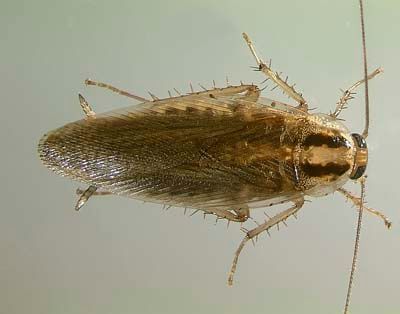
Florida's largest common cockroach — the American cockroach — is commonly a sewer and drain insect. Despite the name "American cockroach," it is not native to North America. It thrives in Florida's heat and moisture and is one of the most abundant insects in the state's sewer systems.
Most Florida homeowners know them by another name: palmetto bugs. That's the same insect. Whether you call it a palmetto bug or an American cockroach, if it's appearing inside your home regularly, it is almost always coming up from a drain or through a gap in a sewer line — not from your pantry or countertops.
- Size
- 1½ to 2 inches long — the largest common cockroach in Florida homes. Adults have fully developed wings and can fly short distances, though they usually run instead.
- Color
- Reddish-brown body with a distinctive pale yellow figure-8 pattern on the back of the head (pronotum) — this marking is the easiest way to identify the species
- Lifespan
- Up to 2 years, with a female producing up to 150 offspring per year
- Primary Source
- Sewer systems, septic tanks, storm drains, and municipal drain lines — they live, feed, and breed in the organic waste inside pipes
- Entry Points
- Floor drains, shower drains, sink drains, toilet bases, gaps around pipe penetrations through floors and walls, and cracked or offset sewer pipes beneath the slab
- Florida Context
- Florida's slab-on-grade construction and aging clay pipe infrastructure creates many opportunities for cockroaches to travel from the sewer into the home through the floor itself
- Disease Transmission
- American cockroaches carry bacteria including salmonella, E. coli, and staphylococcus on their bodies from sewer contact. They contaminate food surfaces, utensils, and countertops they walk across.
- Allergens
- Cockroach droppings, shed skins, and body parts are a significant trigger for asthma and allergies — especially in children. This is a serious public health issue in Florida's urban areas.
- What "1 Roach" Actually Means
- Seeing one American cockroach inside — especially during the day — almost always means there are many more hiding nearby. They are nocturnal; daytime sightings mean the population has grown enough to push individuals into the open.
Sewer Flies in Florida: Phorid Flies, Moth Flies, and Drosophila
If you're seeing tiny flies around your drains, bathroom, or kitchen — and they keep coming back no matter how much you clean — there is a very good chance they are breeding inside a damaged pipe or drain line. Three species are most commonly connected to plumbing breaches in Florida homes.
- What It Looks Like
- Tiny — about 1/16 to 1/8 inch long. Dull brown or black with a distinctive humped thorax (the back section looks arched). They run in short, erratic bursts rather than flying smoothly — this jerky movement is a key identification clue.
- Where They Breed
- The organic film that builds up inside cracked sewer pipes, broken drain lines, and the moist organic matter that pools around a plumbing breach under the slab or inside a wall
- The Plumbing Connection
- Phorid flies are one of the strongest indicators of a hidden plumbing breach. They can breed inside cracked pipes beneath concrete slabs — completely invisible to the homeowner — and emerge through tiny gaps in grout, flooring, or around drain bases. If other fly traps and treatments keep failing, phorid flies almost always point to a sub-slab leak.
- Health Concern
- Associated with bacterial contamination; can transmit pathogens to food and surfaces they land on
- What It Looks Like
- About 1/16 inch long with fuzzy, leaf-shaped wings that give them a moth-like appearance (hence the name). Light gray or tan. They tend to rest with their wings flat and angled, like a tiny tent. They are poor fliers and move in short, weak hops.
- Where They Breed
- The gelatinous organic film — called a biofilm — that coats the inside of drain pipes, sewer lines, and any moist organic buildup connected to a plumbing gap or slow drain
- The Plumbing Connection
- Moth flies are the most visible sign of a drain or sewer problem. Large numbers around a shower drain, floor drain, or bathroom sink almost always mean there is a thick biofilm buildup — either from a slow drain, a cracked pipe, or standing water from a plumbing breach. They are extremely common in Florida bathrooms.
- Health Concern
- Primarily a nuisance pest but can trigger respiratory irritation if populations are large and confined to a small space
- What It Looks Like
- About 1/8 inch long, tan or yellowish-brown body, and distinctive bright red eyes (visible up close). These are the small flies most people call "fruit flies" — but their connection to plumbing is often missed.
- Where They Breed
- While they do breed in overripe fruit and garbage, Drosophila also breed prolifically in the organic waste and fermented material inside cracked sewer lines, floor drain traps, and slow-draining pipes — especially in Florida's heat, which speeds up organic decomposition.
- The Plumbing Connection
- Most homeowners assume Drosophila are a kitchen cleanliness issue. But when cleaning the kitchen, removing fruit, and treating drains doesn't stop the flies — or when they keep appearing in a bathroom with no food source — a broken sewer line or dry drain trap is almost always the real breeding site.
- Health Concern
- Can spread bacteria and yeast from breeding sites to food preparation surfaces
The key difference between a cleaning problem and a plumbing problem: If your fly infestation goes away after cleaning drains and removing food sources — it was a maintenance issue. If the flies keep returning within a week or two despite thorough cleaning — especially in bathrooms or laundry rooms with no obvious food source — you almost certainly have a hidden breeding site inside a damaged pipe.
Sewer Pests Side by Side: Quick Identification Guide
| Pest | Size | Where You'll See Them | Plumbing Breach Signal |
|---|---|---|---|
| Norway Rat | Up to 16 in. (w/ tail) | Floor level, near drains, under slabs, crawl spaces | Strong |
| Roof Rat | 14–16 in. (w/ tail) | Walls, attic, upper areas — but enters from below via pipes | Strong |
| American Cockroach | 1½–2 in. | Bathrooms, kitchens, drains, near floor level at night | Strong |
| Phorid Fly | 1/16–1/8 in. | Bathrooms, drains, floor grout lines — runs rather than flies | Very Strong |
| Moth Fly | ~1/16 in. | Shower drains, floor drains, bathroom walls, near sinks | Moderate–Strong |
| Drosophila (Fruit Fly) | ~1/8 in. | Kitchen drains, bathrooms, laundry areas — red eyes visible up close | Moderate |
Signs of a Plumbing Breach in Your Florida Home
Pests are often the first sign a homeowner notices — but they are rarely the only one. If you're seeing sewer pests inside, look for these additional warning signs that point to a broken or damaged line.
What to Do If You Suspect a Plumbing Breach
Sewer pest infestations are one of the few pest problems where treating the pests first is the wrong move. Without finding and fixing the entry point, pest treatment is temporary at best. Here is the right order of action.
Before calling a plumber, have the pests properly identified. Knowing which species you're dealing with — and confirming they are sewer-origin pests — helps target both the pest investigation and the plumbing investigation that follows.
A sewer camera inspection (also called a video pipe inspection) sends a camera through your drain lines to find cracks, offsets, root intrusions, and gaps. This is the only reliable way to confirm a sub-slab or underground plumbing breach. Many Florida plumbers offer this service.
Once the breach is located, it needs to be repaired — through pipe relining, spot repair, or full replacement depending on the damage. Pest treatment started before this step will keep failing because pests will continue to enter.
With the entry point sealed, a pest professional can treat for the existing infestation — cockroaches, rats, and fly breeding sites — knowing that new pests will no longer be entering from below. Treatment at this stage is far more effective and longer lasting.
Even after pipe repair, organic biofilm inside drains can continue to support moth fly and Drosophila breeding for weeks. A thorough drain cleaning — using enzymatic cleaners or professional drain treatment — removes the remaining breeding material.
Schedule a follow-up inspection 3 to 4 weeks after treatment. If pests return, a secondary entry point or missed breeding site may still exist. Ongoing monitoring is especially important for cockroaches and phorid flies, which can maintain populations in hard-to-reach areas.
How to Reduce Your Risk of Sewer Pest Intrusion
- ✓ Keep floor drain traps filled with water. Floor drains in garages, laundry rooms, and utility areas use a water trap to block sewer gases and pests. If these drains are rarely used, the water evaporates and leaves an open path. Pour a cup of water (with a small amount of vegetable oil to slow evaporation) into unused floor drains every few months.
- ✓ Have sewer lines inspected in older homes. If your Tampa Bay home was built before 1980, there is a meaningful chance the original clay or cast iron drain lines have developed cracks or offsets. A one-time camera inspection can tell you whether your pipes are intact — and give you peace of mind.
- ✓ Seal all pipe penetrations through the floor and walls. Any place where a pipe enters the home through the slab or a wall should be sealed with an appropriate pipe sealant or foam. Even a small gap around a pipe is large enough for cockroaches and flies.
- ✓ Address slow drains immediately. A slow drain is a warning sign — not just of a clog, but of a possible pipe problem. Slow drains also allow organic biofilm to build up faster, creating breeding conditions for moth flies and Drosophila. Don't wait to address them.
- ✓ Keep exterior rat entry points sealed. Even with intact plumbing, rats can use pipes as a highway once they're already in the area. Keep the exterior of your home sealed — especially around utility line penetrations, roof vents, and any gaps where pipes exit the structure.
- ✓ Don't ignore one cockroach. In Florida, a single American cockroach seen inside — especially during daylight hours — should prompt a drain inspection, not just a can of spray. It almost always means a larger population is nearby and a plumbing gap is present.
Seeing Sewer Pests Inside Your Home?
InsectIQ's entomologists can identify exactly which pests you're dealing with, determine whether a plumbing breach is the source, and coordinate with your plumber so that pest treatment actually sticks.
Contact Us Today!