
The New Noises At Night Might Be Bats | What To Look Out For
The New Noises At Night Might Be Bats | What To Look Out For
Bats in your home are a risk to you and your family. Bats carry diseases and can destroy homes. Batty for bats? Here's what to look out for:
What To Look Out For
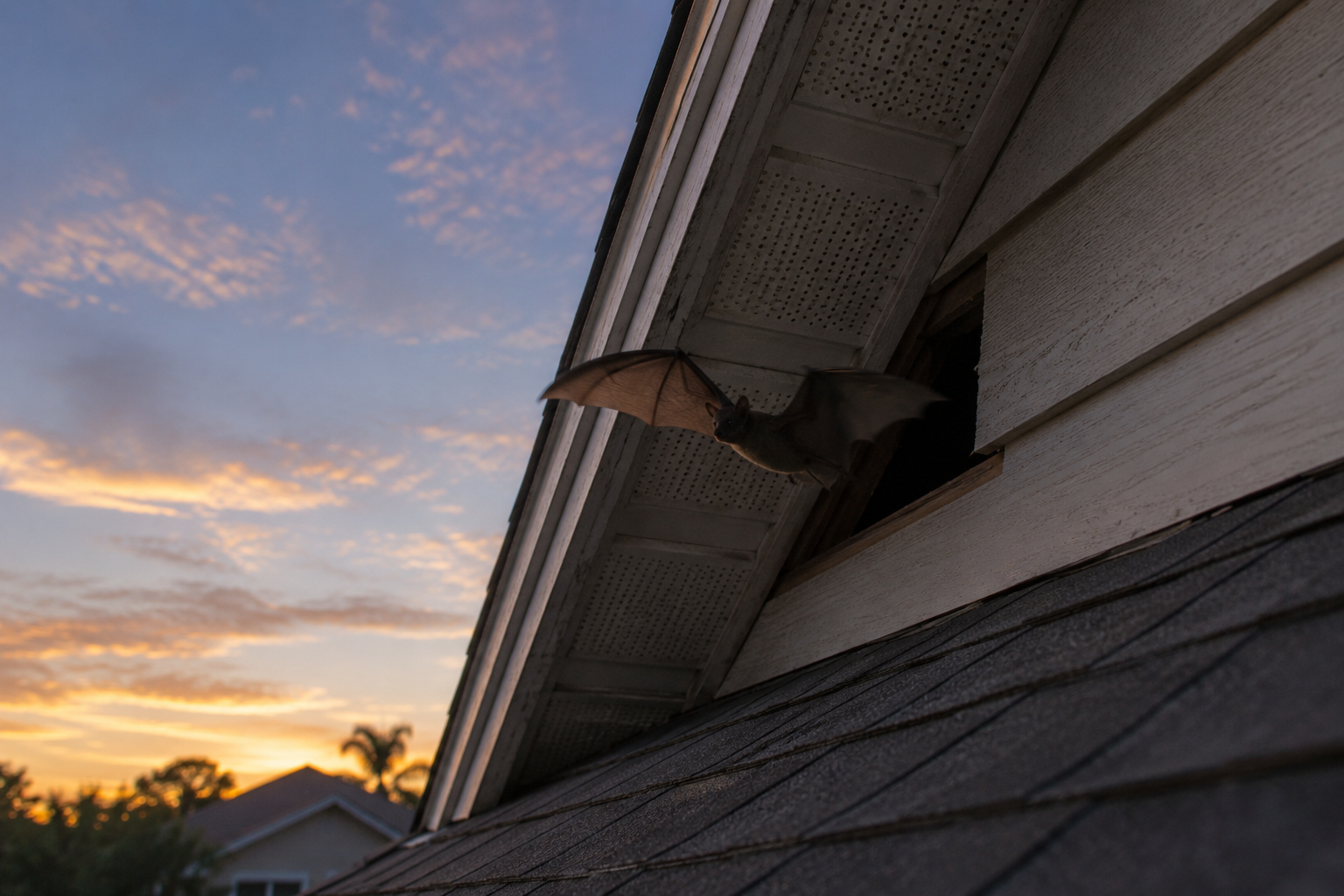
Bats are nocturnal creatures, which means they're most active at night. They will typically make their way into your home during the evening hours when it's dark outside and they're less likely to be seen by humans or other animals. They use echolocation to find their way around in the dark and can fly up to 50 miles per hour while hunting for insects — which makes them dangerous if they get too close!
Scratching noises at night might be bats in your soffits. If this is the case, you will likely hear scratching sounds along with squeaking noises when they land on surfaces like walls and ceilings inside your home.

Risks Of Bat Poop
Bat guano, or bat feces, is an accumulation of droppings that bats produce. It can sometimes be found in large quantities around the entrance to a bat's home or roosting area (your attic). The guano is composed of partially digested food and urine.
Bat poop can be hazardous to your health if you come into contact with it. It can contain Histoplasmosis spores that can cause histoplasmosis in humans. This fungus grows in bat droppings and accumulates in your attic or soffits where bats may live.
If you disturb the walls or floor of a nest, you could breathe its spores into your lungs. Bats also carry rabies and other diseases that can infect humans through their saliva and urine when they bite or scratch someone during an attack.
What To Do If You Suspect Bats In Your House
Never, try to remove bats by yourself. We do recommend other DIY pest control measures, but when it comes to bats, you should do-it-yourself. First, the DIY pest project may be illegal. There are specific guidelines you have to follow when removing bats. Improper removal could lead to fines. Second, bats are can carry all kinds of nasty diseases. Bats can carry rabies, histoplasmosis, bat bugs, and bat ticks.
If you suspect rat or rodent activity, call a wildlife specialist for identification and next steps. Insect IQ has wildlife experts on staff to give you a free evaluation and help you determine what action (if any) you need to take to control your pest problem.
For more information call 855-930-2847 (bugs).
Or visit wildlife-services for more information about wildlife services.