
Silverfish in Florida: Identification & Control
Discover how to identify silverfish in Florida homes, why they invade, and how professional pest control can eliminate them effectively.
Silverfish in Florida: Identification, Habits, and Control
Silverfish in Your Home: A Common Florida Pest Problem
Florida homeowners are no strangers to pests, but few are as unsettling as silverfish. These small, fast-moving insects often appear unexpectedly in bathrooms, kitchens, closets, or storage areas. While they may not bite or spread disease, their presence can quickly become frustrating.
Silverfish feed on household materials like paper, glue, fabrics, and food crumbs, which means they can damage books, documents, clothing, and pantry items. Because Florida’s warm and humid climate creates the perfect environment for these pests, silverfish infestations can develop quickly if conditions are right. Understanding how to identify silverfish and why they invade homes is the first step toward preventing a larger problem.
Identifying Silverfish in Florida Homes
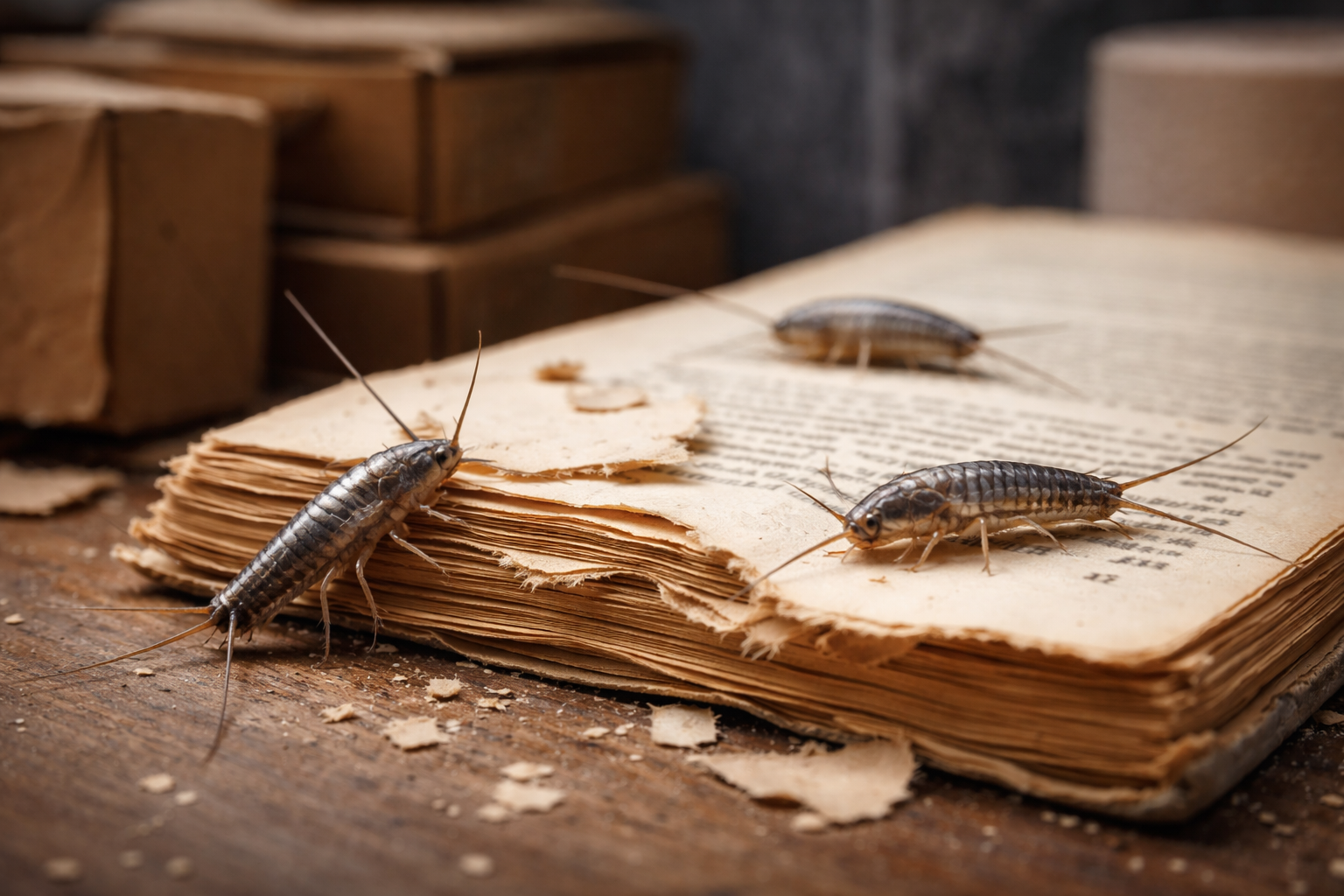
Correctly identifying silverfish is important because they are often confused with other small insects. Silverfish have several distinct features that make them easy to recognize once you know what to look for.
Common characteristics of silverfish include:
- A small, elongated body that tapers toward the back
- Silvery-gray scales that give them a metallic appearance
- Three long bristle-like tails extending from the rear
- Two long antennae at the front of the body
- A quick, wiggling movement that resembles the motion of a fish
Most silverfish grow to about ½ to ¾ inch long and are typically seen at night because they avoid light. Homeowners often notice them when turning on a bathroom or kitchen light after dark. Another common sign of silverfish activity is small irregular holes in paper, cardboard, or fabrics, along with yellowish stains or tiny pepper-like droppings.
Silverfish Habits and How They Enter the Home
Silverfish thrive in humid environments, which makes many Florida homes ideal for them. They prefer areas with moisture and darkness, often hiding in places where homeowners rarely look.
Common Hiding Spots
Silverfish are usually found in areas that provide darkness and humidity, such as:
- Bathrooms and laundry rooms
- Kitchen cabinets and pantries
- Attics and crawl spaces
- Closets and storage boxes
- Behind baseboards or inside wall voids
How They Get Inside
Silverfish typically enter homes through small cracks, gaps around doors or windows, and utility penetrations. They may also hitchhike inside with cardboard boxes, books, or stored items brought into the house.
Once inside, they feed on materials containing starch or cellulose. Their ability to survive on very little food means infestations can persist unnoticed for long periods.
How Silverfish Are Treated in Florida Homes
Effective silverfish control requires more than just spraying a visible insect. Because these pests hide in cracks, wall voids, and other concealed areas, professional pest control treatments are often the most reliable solution.
A typical treatment plan may include:
- Inspection of moisture-prone areas where silverfish are likely to hide
- Targeted treatments in cracks, crevices, and entry points
- Residual applications around baseboards and access points
- Exterior perimeter treatments to reduce pest pressure entering the home
In addition to treatment, reducing humidity and sealing entry points can help prevent future infestations. Professional services focus on eliminating current activity while preventing new silverfish from entering the home.
Contact Us for Professional Silverfish Pest Control
If you are seeing silverfish in your home, it may be a sign that conditions are allowing them to thrive. The sooner the issue is addressed, the easier it is to control.
At Insect IQ, we provide professional pest control services designed to target pests like silverfish at the source. Our treatments focus on both eliminating active infestations and preventing future pest problems.
If you suspect silverfish or other pests in your home, contact us today to schedule an inspection and protect your home from unwanted insects.
Schedule Your Inspection