
Pantry Pests in Florida: Identification & Control
Learn how to identify pantry pests in Florida, how they get into food, and how to eliminate infestations quickly and effectively.
Pantry Pests in Florida: Identification, Prevention, and Control
Pantry Pests in Your Home: A Frustrating Florida Problem
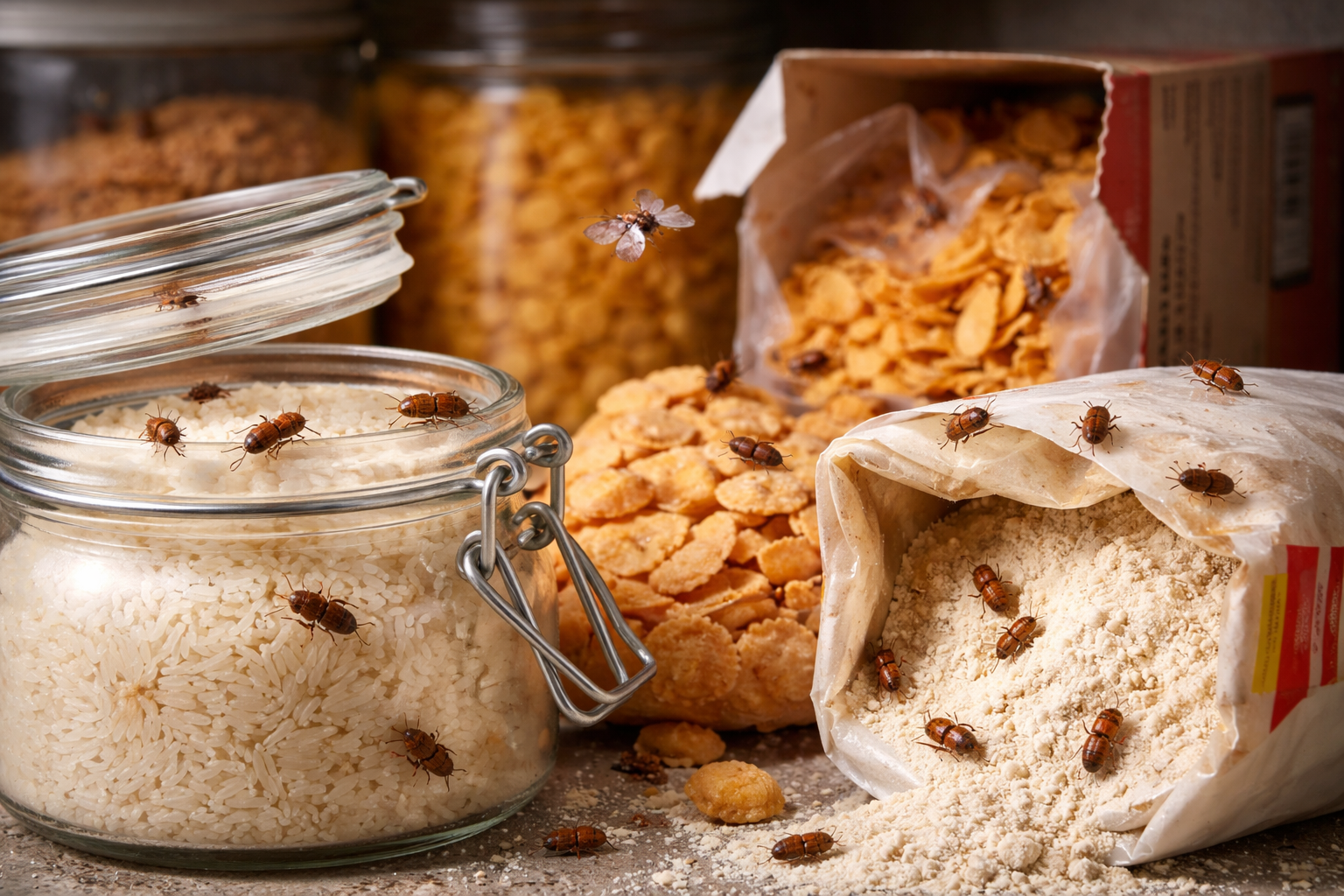
Opening your pantry and finding bugs in your food can be one of the most frustrating experiences for any homeowner. Pantry pests often go unnoticed until they’ve already infested dry goods like rice, flour, cereal, and pasta. In Florida, the warm and humid climate creates ideal conditions for these pests to thrive, making infestations more common than many people realize.
What makes pantry pests especially frustrating is that they are often brought into your home unknowingly, hidden inside packaged foods. Once inside, they can spread quickly, contaminating multiple items and leading to wasted food and ongoing irritation.
Understanding how to identify pantry pests and how they operate is the first step toward eliminating them and preventing future infestations.
Identifying Pantry Pests in Florida Homes
Pantry pests are not just one type of insect. Several different species can infest stored food products, and each has slightly different characteristics. Because these pests are small and often hide inside food products, infestations can grow before they are easily noticeable.
Most Common Florida Pantry Pests
- Indian meal moths: Small flying insects often seen around kitchens and pantries, especially in the evening.
- Weevils: Tiny beetles commonly found inside grains like rice, flour, and pasta.
- Flour beetles: Small reddish-brown beetles that infest processed foods and dry goods.
Signs of Pest Activity
Look out for these common indicators of an infestation:
- Small bugs inside food packaging
- Webbing or clumping in dry goods
- Tiny holes in packaging
- Crawling insects in cabinets or on shelves
- Flying moths near pantry areas
Pantry Pest Habits and How They Enter Your Home
How Do They Get Inside?
One of the biggest misconceptions about pantry pests is that they come from outside like most insects. In reality, pantry pests are often brought into the home from the store.
Eggs or larvae can already be present inside:
- Boxes of cereal
- Bags of rice, flour, or grains
- Pasta and dry goods
- Pet food and bird seed
Once inside your home, pantry pests emerge, reproduce, and begin spreading to other stored items. Florida’s humidity plays a major role in accelerating their life cycle. Warm temperatures allow these pests to reproduce quickly, turning a small issue into a widespread infestation in a short period of time.
Pantry pests tend to stay close to food sources, hiding in pantry shelves and cabinets, cracks and crevices, food containers and packaging, and nearby wall voids. Because they can infest multiple items and spread easily, simply removing one contaminated product is often not enough.
How Pantry Pests Are Treated in Florida Homes
Getting rid of pantry pests requires more than just throwing away infested food. While removing contaminated items is an important first step, it does not always eliminate the entire problem. Because pantry pests can be persistent, professional treatment is often the most reliable way to fully resolve the issue.
Effective Pest Control Steps
Professional pest control treatments focus on eliminating pests at all life stages, including invisible eggs and larvae:
- Thorough inspection of all pantry items and surrounding areas
- Removal of infested products to stop the immediate source
- Detailed cleaning of shelves and storage areas
- Targeted treatments in cracks, crevices, and hidden spaces
- Monitoring and prevention methods to stop reinfestation
Homeowner Prevention Tips
In addition to treatment, homeowners can help prevent future issues by:
- Storing food in airtight hard plastic or glass containers
- Regularly cleaning and vacuuming pantry areas
- Avoiding long-term storage of open dry goods
- Monitoring for early signs of activity before restocking
Contact Us for Pantry Pest Control in Florida
If you are finding bugs in your food or seeing small insects in your pantry, it’s important to act quickly before the problem spreads. Pantry pests can contaminate multiple items and become difficult to control without the right approach.
At Insect IQ, Inc., we provide professional pest control services designed to eliminate pantry pests and prevent them from coming back. Our treatments target the source of the infestation while helping protect your home and food storage areas.
If you’re dealing with pantry pests or other household insects, contact us today to schedule an inspection and take control of your home.
Schedule Your Inspection