
How to Identify Bees in Walls or Soffits
Learn the signs bees have nested in walls or soffits and why fast removal is critical. Contact Insect IQ for expert service.
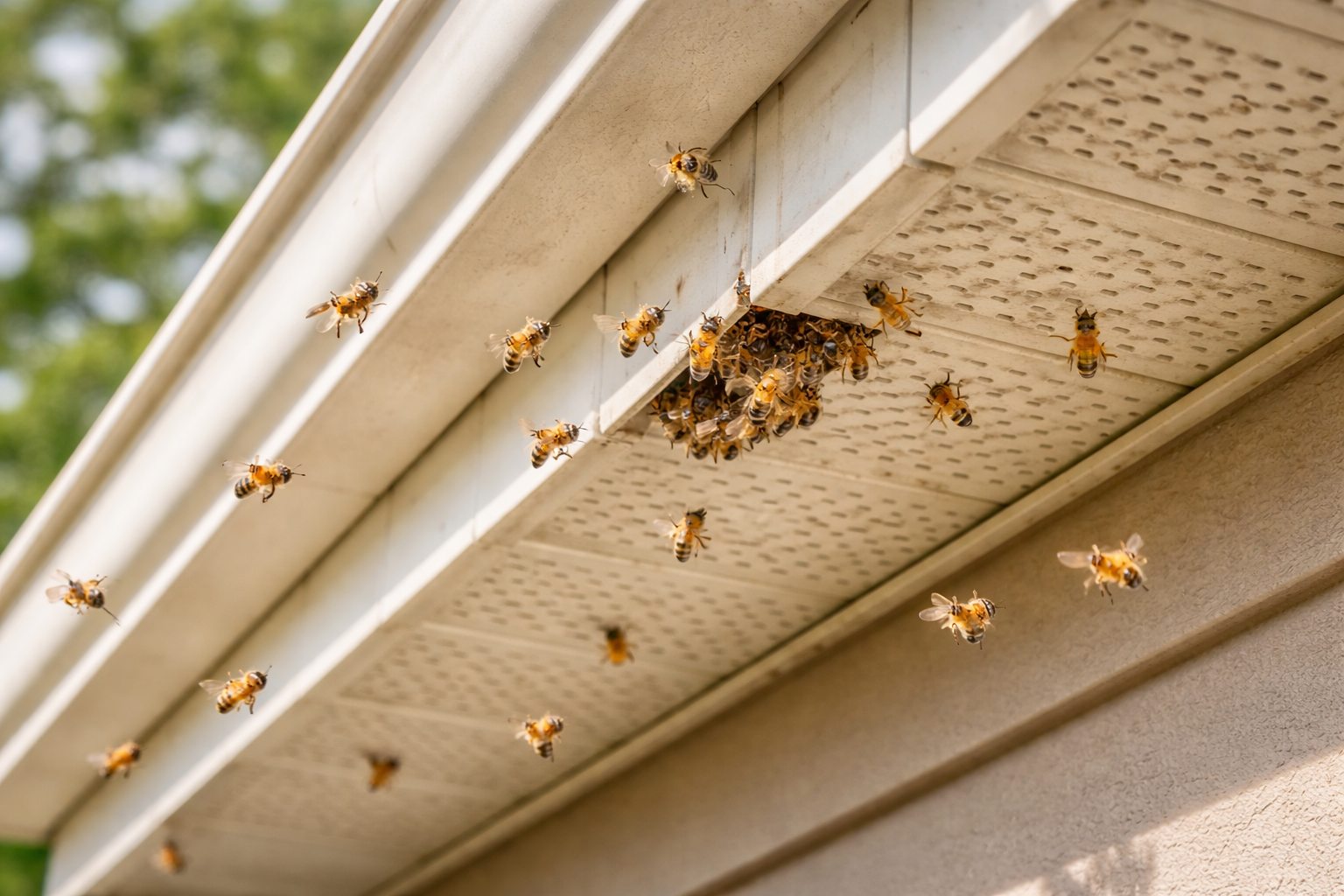
How to Identify Bees Nesting in Your Walls or Soffits
At first, it may just sound like faint buzzing. Then you notice increased bee activity near your roofline. In Florida, honey bees often move from roaming swarms to fully established nests inside homes.
Once they move in, the problem grows quickly. Knowing how to identify the signs early can save you from costly structural damage and safety risks.
Signs Bees Have Nested in Your Walls
Bees nesting inside walls can go unnoticed at first, but there are clear warning signs homeowners should watch for.
Increased Traffic
If you see bees repeatedly entering and exiting a small gap in siding, brick, or trim, that’s a strong indicator of an active nest.
Constant Buzzing
You may hear faint buzzing or vibrations coming from inside the wall, especially during warmer parts of the day when bees are most active.
Interior Stains
As honey and wax accumulate, they can melt in Florida's heat. This seeps through drywall, creating yellow or brown stains on walls or ceilings.
Sweet or Musty Odors
Large hives can produce a noticeable smell from honey, wax, and heat buildup inside enclosed spaces.
Signs Bees Are Nesting in Soffits
Soffits are especially attractive to bees because they provide warmth and protection from rain. Look for these specific indicators:
Hovering Activity
Consistently seeing bees gathering near the same soffit panel, vent, or corner suggests nesting activity behind it.
Visible Entry Points
Small cracks, gaps, or lifted soffit panels allow scout bees to access enclosed spaces easily.
Dripping Honey
In advanced infestations, honey may begin to drip from soffit seams or fascia boards, leaving a sticky residue.
The Risks of Ignoring a Bee Nest
Ignoring a bee nest inside your home can lead to serious problems beyond just the noise:
- Structural Damage: Honeycomb weight and moisture damage drywall and framing.
- Increased Stings: A disturbed hive inside the home increases defensive behavior.
- Secondary Pests: Honey attracts ants, cockroaches, and rodents.
- Expensive Repairs: The longer a hive remains, the more complex removal becomes.
Why Nesting is Common in Florida
Florida’s warm climate allows bees to remain active longer than in northern states. Early swarming, year-round food sources, and warm attic spaces make homes ideal nesting sites. Because colonies grow quickly in Florida’s heat, early detection is critical.
Contact Insect IQ for Professional Removal
If you suspect bees have nested in your walls or soffits, don’t wait for the damage to escalate. Call Insect IQ today at 813-930-2847 to schedule your inspection.
Schedule Your Inspection