
BED BUGS - LIFE CYCLE - DETECTION - CONTROL
BED BUGS - LIFE CYCLE - DETECTION - CONTROL
Bed bugs are parasitic insects that survive by feeding on the blood of humans primarily, but they can also consume blood from other creatures like birds, bats, and rodents. These pests typically feed during the night when people are asleep, taking advantage of the host's unawareness. While bed bugs feed, they release a salivary secretion into the bite to prevent blood clotting. This fluid often leads to itching and swelling of the skin. Scratching the affected area can result in sores, which have the potential to become infected. While bed bugs do not transmit human pathogens, their presence can cause significant emotional distress to those affected.
Bed bugs infest various types of human dwellings, including houses, hotels, dormitories, and cruise ships. They can also be found in places like subways, movie theaters, nursing homes, hospitals, and planes. These pests hide in cracks and crevices during daylight hours, such as wall outlets, baseboards, wallpaper, pictures, bed joints, slats, mattress seams, and bed linens. Their elusive nature makes detection and control challenging. Effective management of bed bug infestations typically involves a comprehensive and labor-intensive approach that combines insecticides with other methods.
Bed bugs are transported between locations by "hitchhiking" on various items such as clothing, suitcases, second-hand beds, furniture, and bedding. Among the different life stages, female bed bugs are more prone to dispersal, indicating that the majority of bed bugs transported through belongings are likely to be females. Since female bed bugs can retain male sperm for four to six weeks, there is a high likelihood that they are pregnant during transportation. Consequently, the transfer of a single pregnant female to a new location can initiate a fresh infestation. In cases of severe bed bug infestations, a distinct sweetish and unpleasant odor is often present, caused by an oily liquid emitted by the bed bugs.
LIFE CYCLE
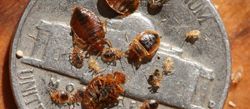
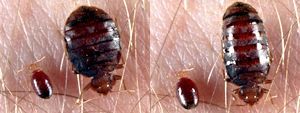
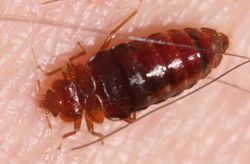
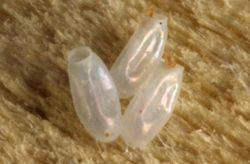
Adult bed bugs are around 1/4 inch (6 mm) long, flat, and wingless. They are usually brown but turn dark red after a blood meal. A female bed bug can lay 200 to 500 eggs in her lifetime, depositing 10 to 50 at a time. The eggs are small, curved, and sticky, attached to cracks or rough surfaces near their hiding spots. The eggs hatch in one to three weeks, and the nymphs, resembling smaller adults, are straw-colored before feeding. After a blood meal, they turn red or purple. It takes 35 to 48 days for bed bugs to reach maturity through five nymphal stages. Adult bed bugs can survive without feeding for up to six to seven months and can even feed on birds and rodents when humans are absent.
DETECTION
Detecting bed bug infestations is challenging due to their hidden behavior and people's varied reactions to bites. Early infestations are particularly difficult to find. Bed bug-detecting canines are valuable tools, especially in hotels and other high-turnover locations, as they can locate infestations before they become severe. Early detection leads to more successful and cost-effective control measures.
CONTROL
Contact Insect IQ today 813-855-2847 for effective bed bug control! There are various methods, both old and new, that can be used to combat bed bugs. Combining multiple methods generally yields the best results. Homeowners can also take steps to enhance the chances of success. Physically removing as many bed bugs as possible is important, such as vacuuming carpets and furniture to capture visible bed bugs. After vacuuming, seal and freeze the vacuum bag for at least a week. Placing the bed's four posts in glass dishes or traps can prevent bed bugs from climbing up, provided the bed is away from walls and covers don't touch the floor. Launder bedding with soap and borax additive, and dry at high temperatures. Dry-clean clothing, pillows, and drapery. Empty dresser drawers for insecticide application underneath.
Or visit us at https://www.insectiq.com/contact-us
Insect IQ / Nutrilawn Pest Services 27 years
- DACS JB131270 Pest Control License Insect IQ
- DACS JF8248 1994 Certified Pest Control Operator
- DACS Certified Categories:
- Pest Control
- Lawn & Ornamental
- Termite
- Fumigation
- State of Florida Registered Beekeeper: FL0290619S
- 1994 UF Entomologist Jonathan Simkins
- 2020 UF Entomologist Britton Simkins