
Yellowjackets, what to look out for.
Southern Yellowjacket
Vespula squamosa
Vespula maculifrons
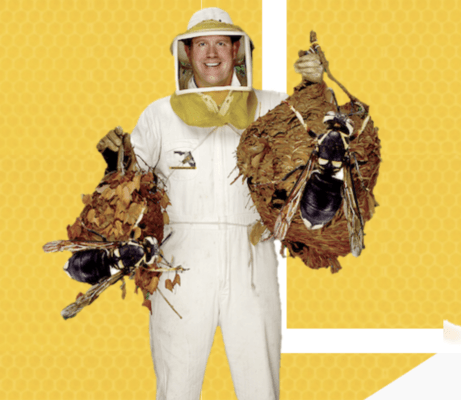
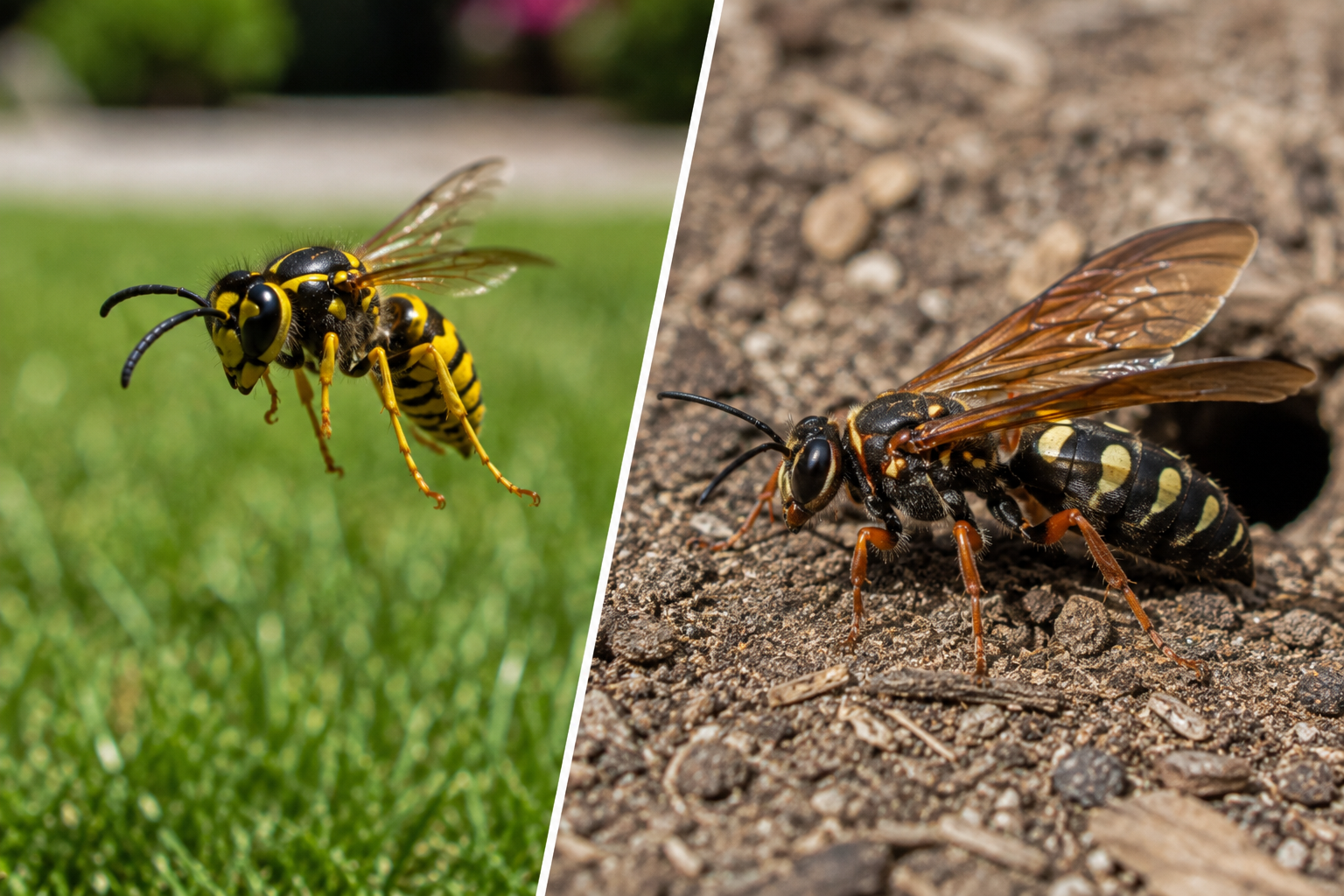
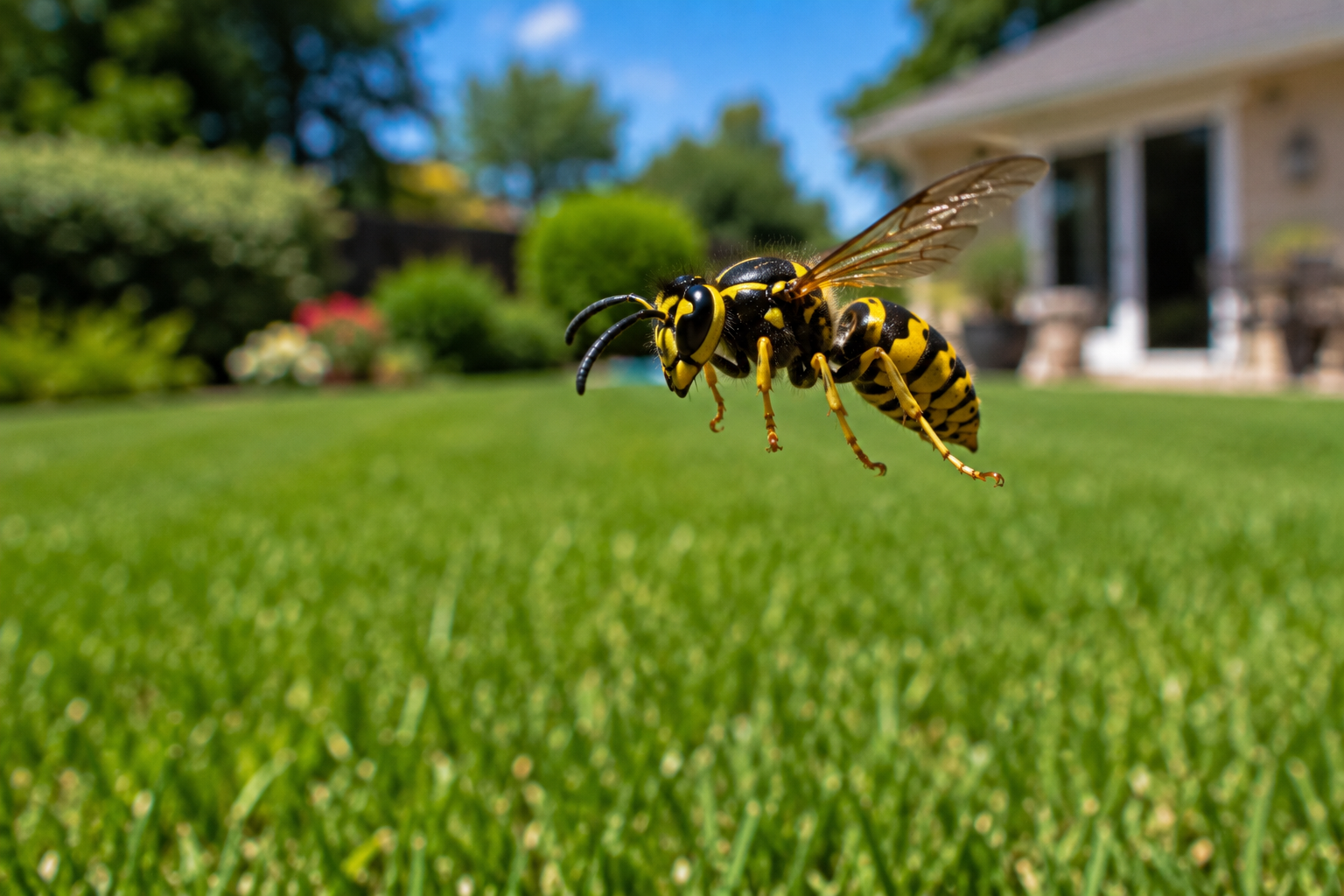
The southern yellow jacket is located throughout the entire south Florida area. Worker yellow jackets are around 1/2 inches in length. They are heavily marked with yellow and black markings on their abdomen.
Markings:
Although the yellow jackets are well marked and easily recognized, these insects can often be confused with paper wasps. Their long legs, slender bodies, and a light brown to dark brown body in color are a few classic characteristics of the paper wasp. The paper wasp nest always consists of an exposed single comb, which is located under eves, doorways, porches, and eaves.
Yellow jacket nest:
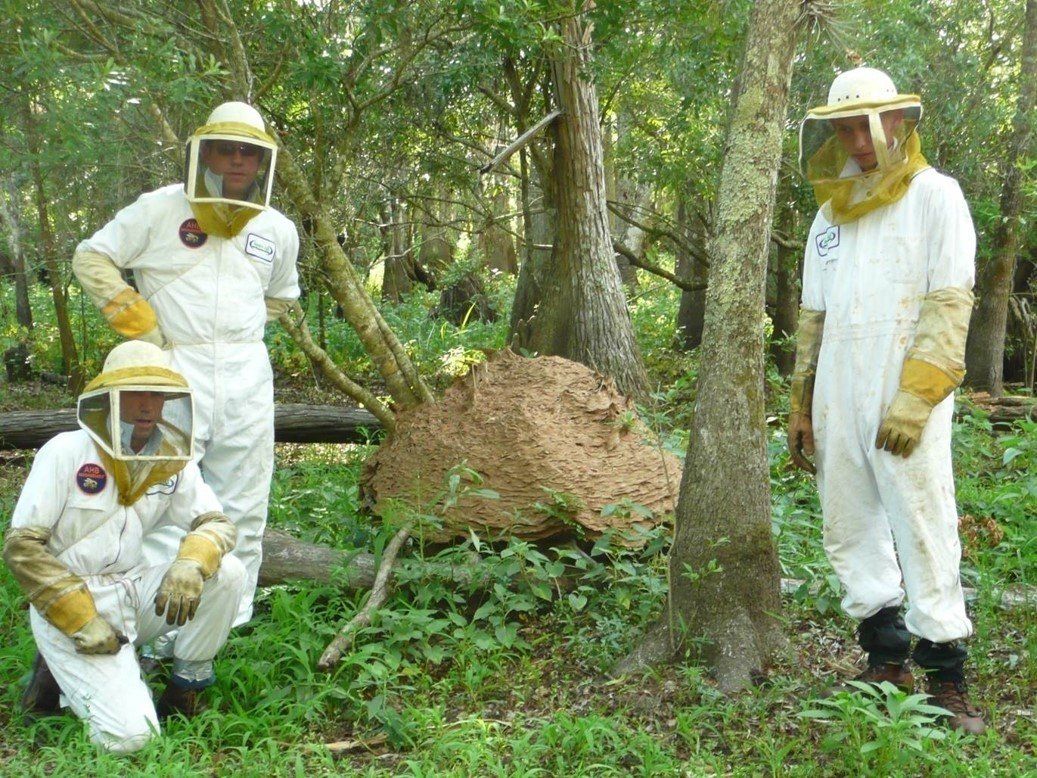
The nests of the southern yellow jackets are usually constructed subterranean and hidden. Some aerial nests and others utilize either location. Their nest is oval in shape with many different levels encased in a global envelope with highly colored stripes on the outside. Nest size can range from 300 to 120,000 cells. The nest is made out of the soil, cellulose, and other organic materials. Prey usually consists of live arthropods, which are fed to the young larvae. Adult workers feed primarily on sweet-producing materials.
Pheromones/Stings:
When a yellow jacket nest is disturbed, the guard yellow jackets alert the rest of the colony by releasing the alert or alarm pheromone. This scent alerts the entire colony to attack. The colony will quickly exit the nest and chase whatever has caused the disturbance. As many as ten to several thousand yellow jackets will quickly respond and attack the intruder. The yellow jacket will grip firmly with its legs, elevates the abdomen, then plunges the tip of the stinger into the victim and injects the venom. Furthermore, the stinger of the yellow jacket is not barbed like the honeybee but needle-like.
Allergic Reaction
A moderate systemic reaction can be one of the following:
1. Constriction of the throat or chest.
2. Abdominal pain, nausea, vomiting.
3. Dizziness.
4. Wheezing.
A severe systemic reaction can be one of the following:
1 Labored breathing.
2 Difficulty in swallowing, hoarseness, or thickened speech.
3 Weakness.
4 Confusion.
While immediate reactions are an instant cause for concern, anybody stung by a yellow jacket and has any of these symptoms should consult with their physician of choice.
The INSECT IQ / All Florida Bee Removal team members are the recognized experts in stinging insect control in Florida. Our team consists of a University of Florida graduate entomologist, state certified pest control operators & registered beekeepers. Did you know that we offer removal services of all stinging insects for the entire state of Florida? Need service NOW? You can trust the INSECT IQ/ALL Florida Bee Removal team to give the best service, guaranteed! Call Toll Free 1-855-930-BEES (2337) or feel free to contact us:
https://insectiq.com/contact-us/