
Ant Control in Florida: Get Rid of Infestations Fast
Learn how to identify and eliminate ants in your Florida home. Discover the best way to stop infestations and prevent them for good.
Stop Ants Before They Take Over Your Florida Home
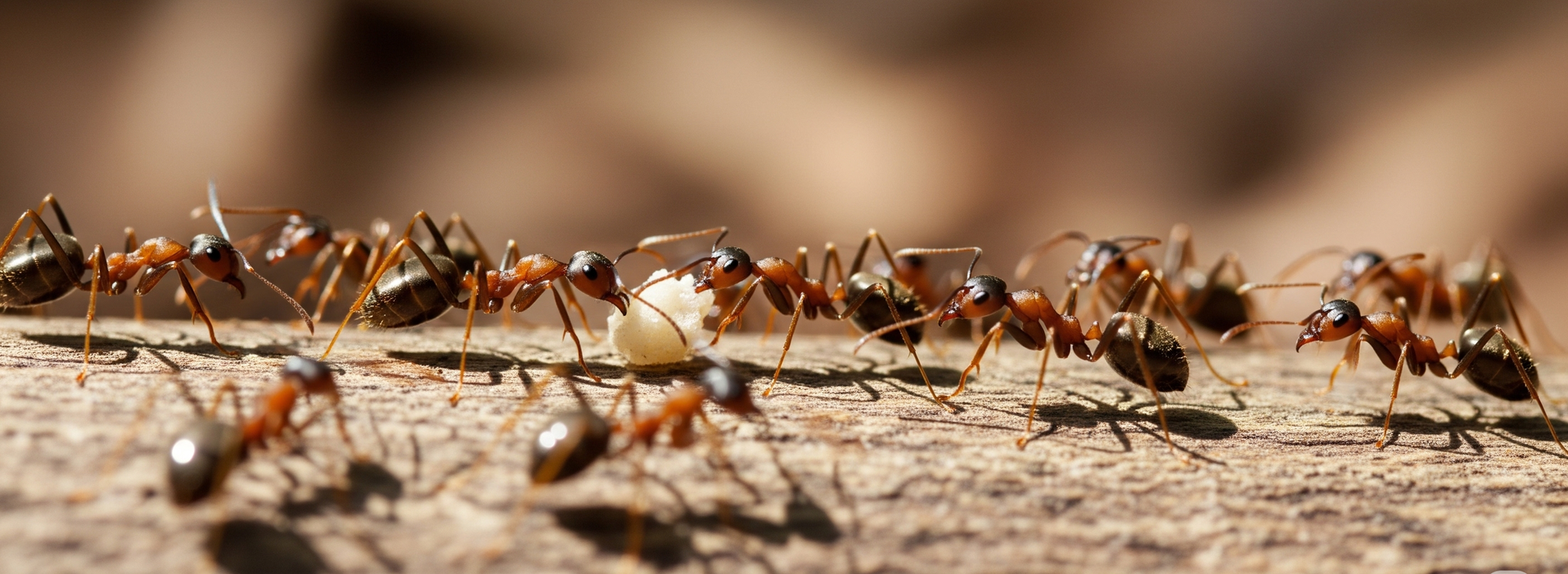
It starts with just a few—tiny ants trailing along your kitchen counter or bathroom sink. But in Florida's warm, humid climate, those few can turn into thousands overnight. Ant infestations happen fast, and once they find a reliable food source, they’re not going anywhere without a fight. From kitchen pantries to bathroom baseboards, ants will invade almost any space in your home, and the longer you wait, the harder they are to remove.
Understanding Ant Behavior: Why They Invade
Ants are social insects that live in large, highly organized colonies. A single colony can range from a few hundred to several hundred thousand ants, all working together to support the queen and expand the colony's reach. When ants invade your home, they’re not acting randomly—they’re following a well-coordinated system of foraging and communication.
The Foraging Process
Scout ants leave the nest in search of food and water. Florida homes are ideal for ants due to moisture, crumbs, sugary spills, and pet food. Once a scout ant finds a food source, it lays down a pheromone trail—a chemical path that directs other ants to the same location. This leads to those familiar lines of ants marching across your kitchen or bathroom.
How Colonies Expand
Many ant species create satellite colonies, making them hard to eliminate. These secondary nests allow ants to spread quickly across different parts of your home—even behind walls, under floors, or outside near foundations.
Why Ants Are Hard to Stop
Ants adapt. Killing a few foragers doesn’t remove the colony or the queen. In fact, disturbing a nest may cause the colony to split and spread further. Effective control requires targeting the entire colony at its source.
Common Florida Ants and How to Identify Them
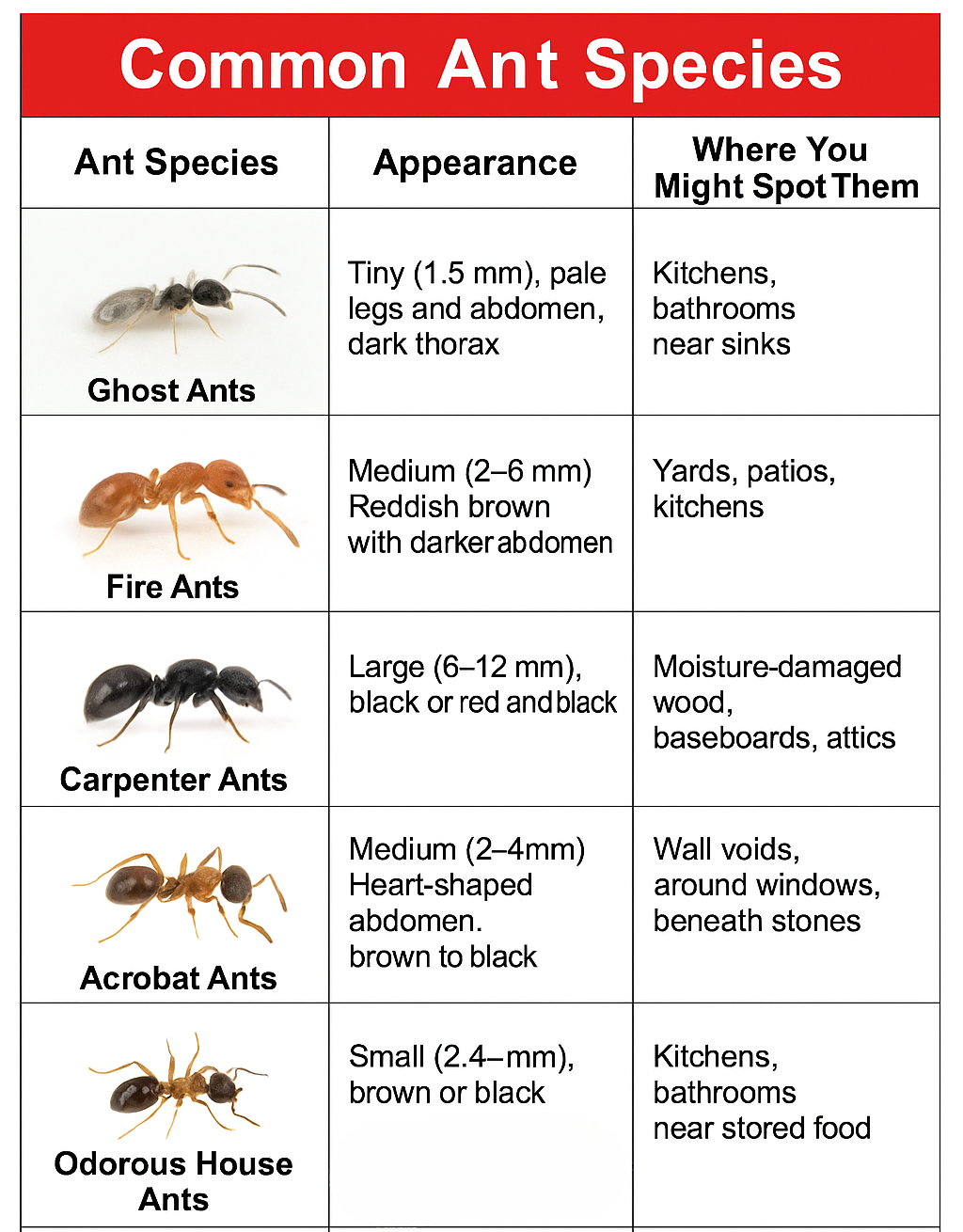
Florida is home to many ant species, and knowing what kind you’re dealing with is key to getting rid of them. The chart above shows some of the most common ants found in Florida homes, including Ghost Ants, Fire Ants, Carpenter Ants, Acrobat Ants, and Odorous House Ants.
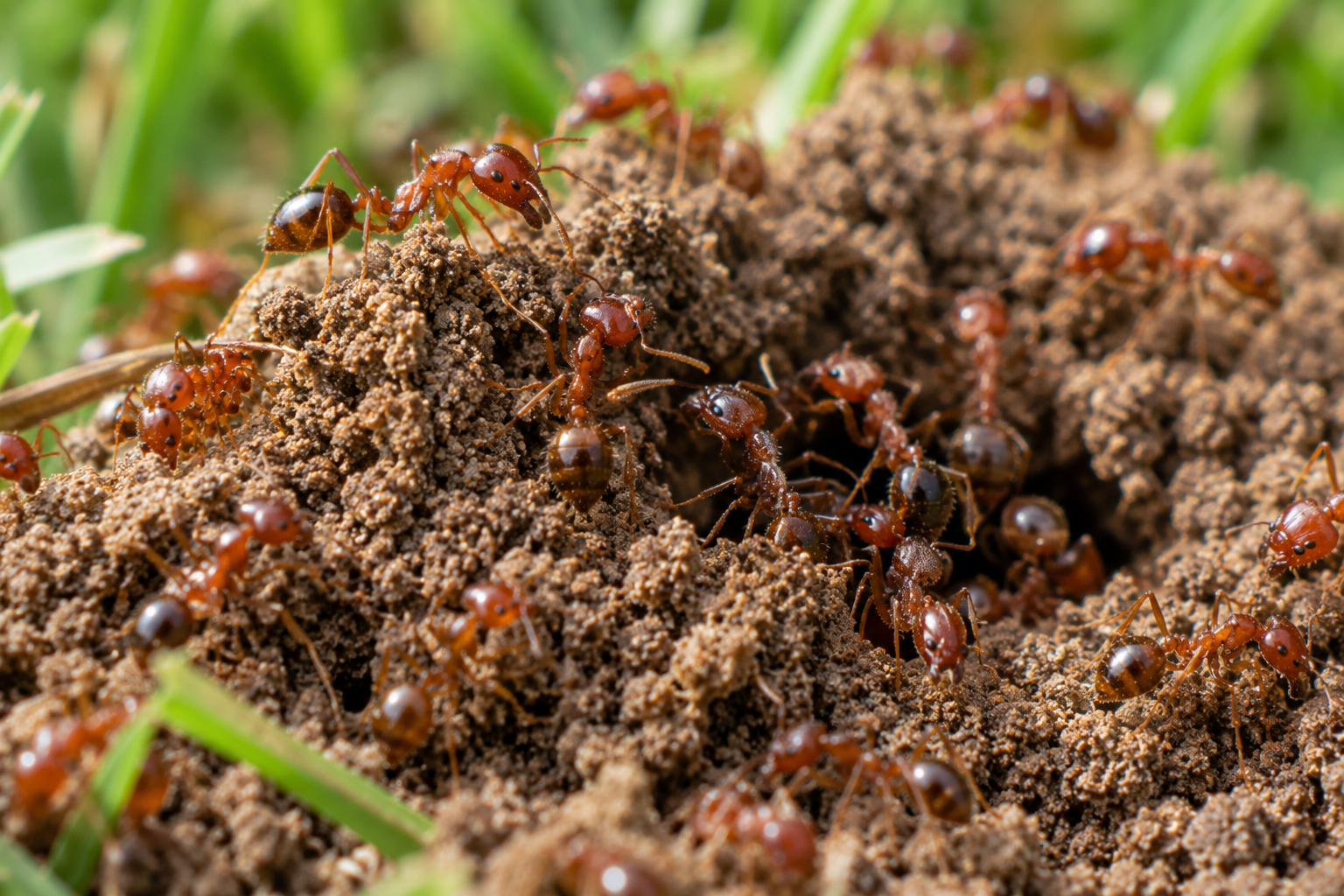
Each species looks and behaves differently. For example, Ghost Ants are tiny and often appear near sinks, while Fire Ants are aggressive and found outdoors. Carpenter Ants prefer damp wood, and Odorous House Ants are known for the foul smell they give off when crushed.
Keep in mind—this chart highlights just a few of Florida’s ant species. If you’re unsure which type is invading your home, a pest control expert can help with proper ID and treatment.
Why Home Remedies Aren’t Enough
While DIY tricks like vinegar sprays, cinnamon, borax, or essential oils might slow ants down temporarily, they rarely eliminate the colony. You might kill a few ants, but without reaching the queen or hidden nests, the infestation returns.
Some remedies may even make things worse—scattering the colony or causing ants to split into multiple nests. Without professional insight, you’re treating symptoms, not solving the problem.
Images on this page were created using AI and are for illustrative purposes only. Some visual details may vary from real-life appearances.
Why Professional Pest Control Is the Best Solution
To truly get rid of ants and keep them from coming back, professional pest control is the most reliable option. Technicians can:
- Identify the exact ant species and nesting sites.
- Use safe, targeted treatments that eliminate entire colonies.
- Apply long-lasting preventative barriers around your home.
With expert help, you don’t just remove ants—you reclaim your home and prevent future invasions.
Ant Control – Schedule an Inspection
Seeing ants inside your home or business? Don’t wait until a few become a full-blown infestation.
Our pest experts know exactly what to look for. From hidden trails to nesting hotspots, we’ll identify the species, find the source, and recommend the safest, most effective treatment.
✅ Identify the ant species
✅ Inspect your home’s entry points and nesting areas
✅ Get a customized treatment and prevention plan
Stop the infestation at the source—before it spreads.
📞 Call now, 813-930-2847 or schedule your inspection online.
Request a visit