
Are Sugar Ants Invading Your Home? Here is the solution to your problem.
Insect IQ / Nutrilawn Solving Your Ant Problems, Guaranteed!
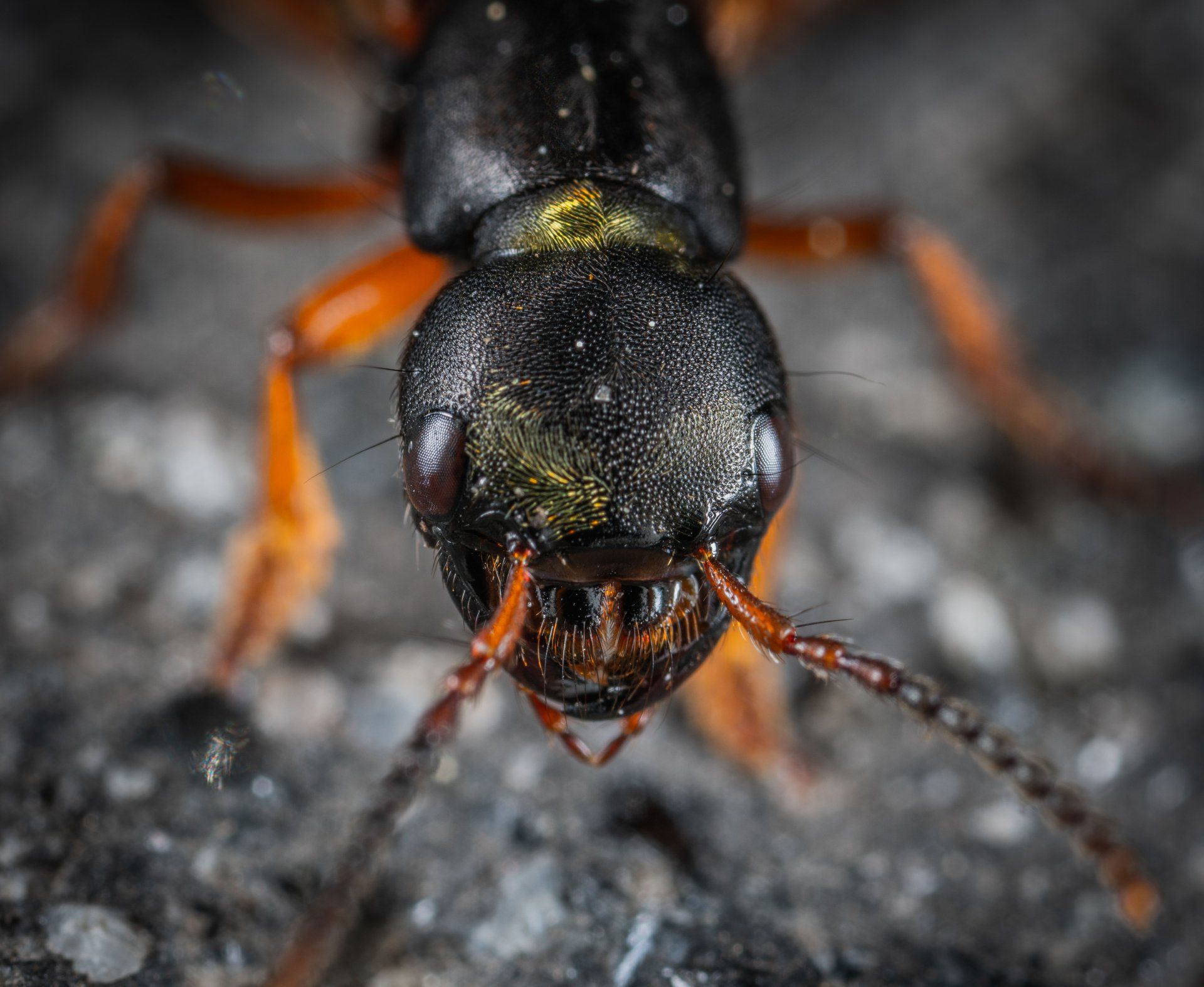
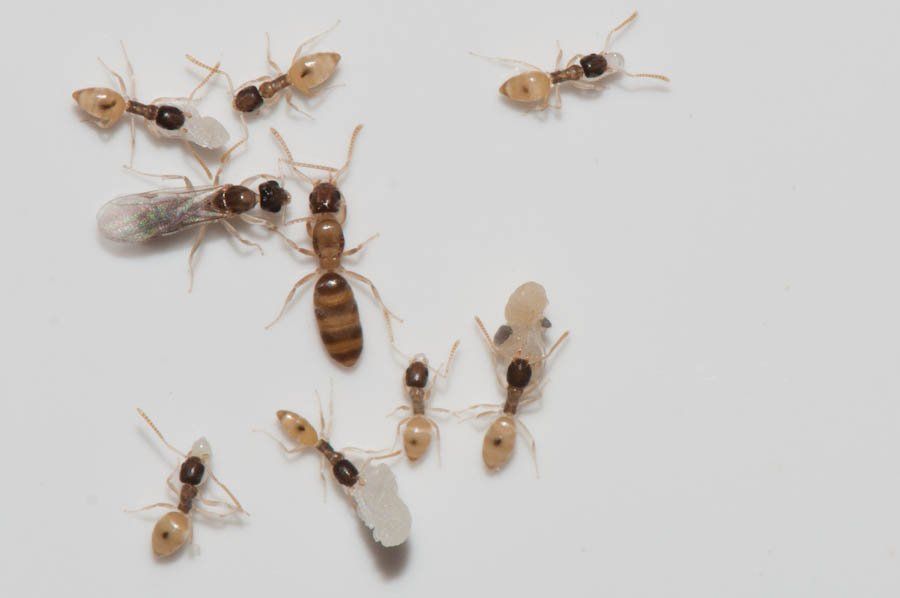
The Pharaoh Ant (Monomorium pharaonis), Sugar Ant (Monomorium floricola) or the Ghost Ant (Tapinoma melanocephalum, commonly known as the sugar ant or grease ant, or piss ant, these ants ar a minute, ant about 2mm. long. The Pharaoh ant is a honey colored ant, the Sugar ant has a black head and a black abdomen, and the Ghost ant has at black head and a translucent body. You've probably seen these ants trailing from a socket or crack in your wall to a cookie crumb or a box of candies. Don't confuse the Pharaoh, Sugar or Ghost ant with the thief ant, the pavement ant, the little black ant, or the fire ant! The other ants are faster moving and often require different methods of control. Pharaoh and Sugar ants are very slow moving and are easy to clean up with a sponge. As for the Ghost ant, they are fast moving and look like tiny little spiders on your counter tops.
The Pharaoh, Sugar and Ghost ant colonies consist of queens, males, workers, and immature stages (eggs, larvae, and pupae). A colony may have a few dozen to several thousand members.
Hundreds of eggs that the queen lays in small batches become adults in less than 2 months. In southwest Florida I have found them colonizing within the walls of buildings, in the sand below cement slabs, under bricks and stepping stones, between the ground cover and the soil, in garbage bags, and below stationary garbage cans. From natural colonies in the soil they may enter newly constructed buildings to obtain food and water. The mother colony can produce numerous daughter colonies throughout the wall voids of a condominium or office complex. The queen and worker ants often leave an established colony and move nearby to produce hundreds of new ants. Even without a queen, the workers can produce a new queen from immatures transported from the mother colony.
Due to their nesting in inaccessible areas, control of these ants is difficult, and sprays alone rarely eliminate the colonies. A greater degree of success can be achieved when baits are used in conjunction with sprays. Insect growth regulators are now being marketed for indoor control of these ants. The growth regulator sterilizes the queens and prevents emergence of further immature stages. A high degree of success may be achieved in a short period by proper and thorough baiting.
Sometimes more than one type of ant will infest your residence. The key to controlling your ants is to first identify them properly. Pruning limbs off of the home can considerably reduce their presence inside. Sealing up pipes entering the home, and caulking door plates and windowsills helps keep these ants outside where they belong.
Insect IQ has always been willing to identify bugs free of charge. Take a picture and email it to CustomerService@Insectiq.com.
For more information
Contact us today,
855-930-2847, and ask about our lawn & shrub pest management services. Mention our post–get a free evaluation and an additional 25% off your first service.